
149
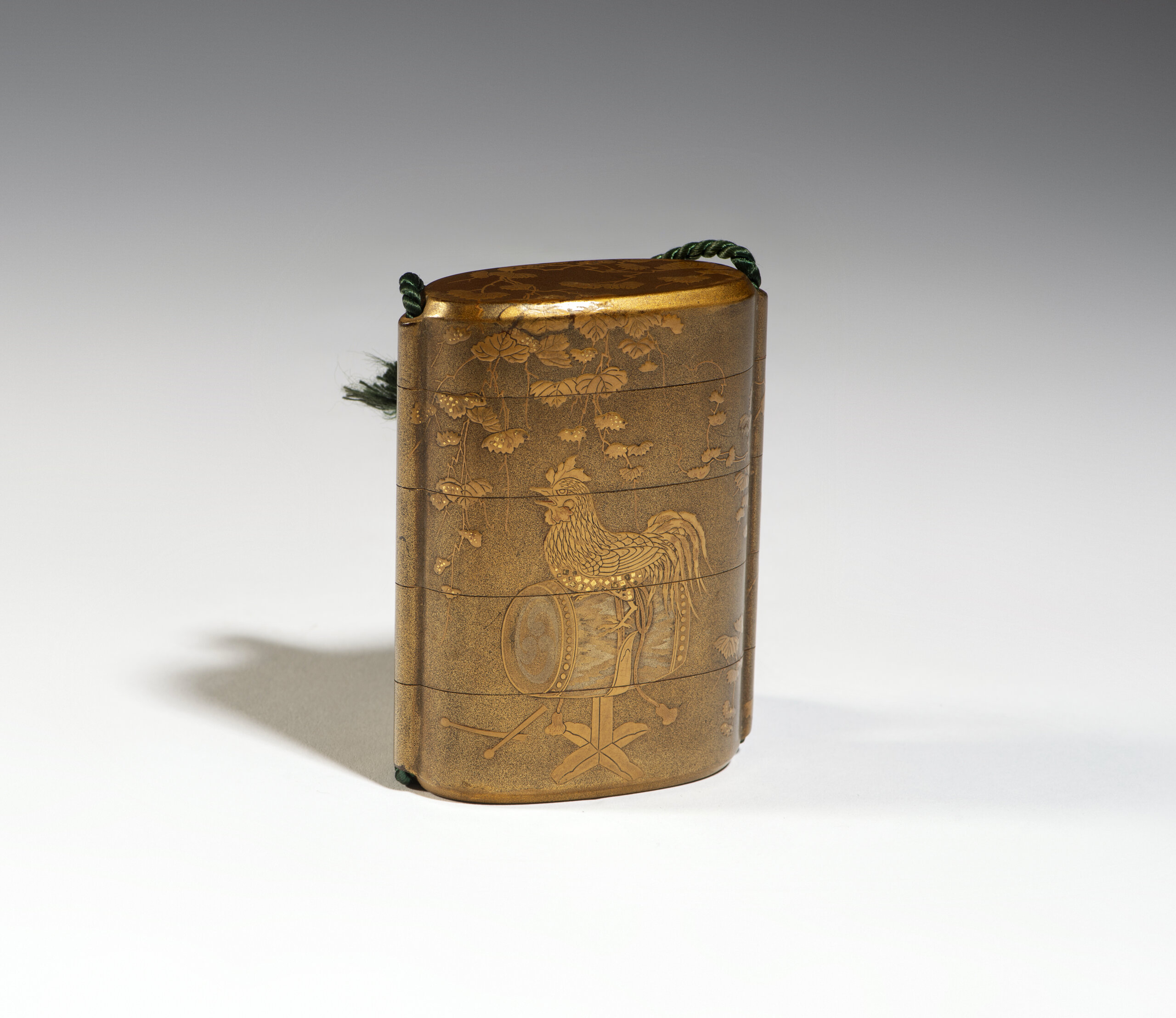
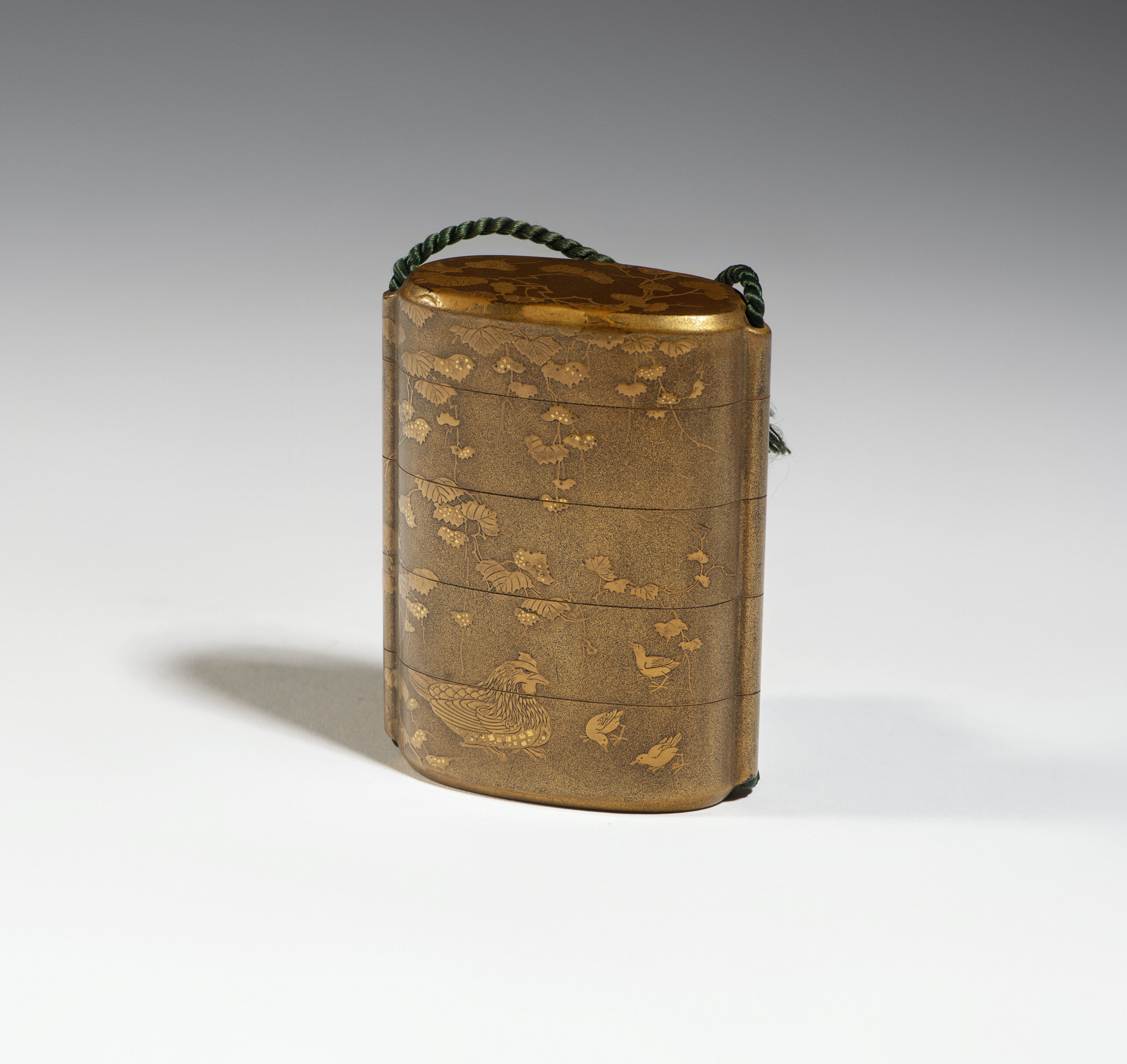
An unusual single-case inrō with simulated case divisions, hokkai-gata
Estimate
2.000 - 3.000
Session
8 May 2026
Description
Japan, Edo period, 18th/19th century
Of rounded rectangular section and slightly arched profile, the body of single-compartment construction simulating four cases externally
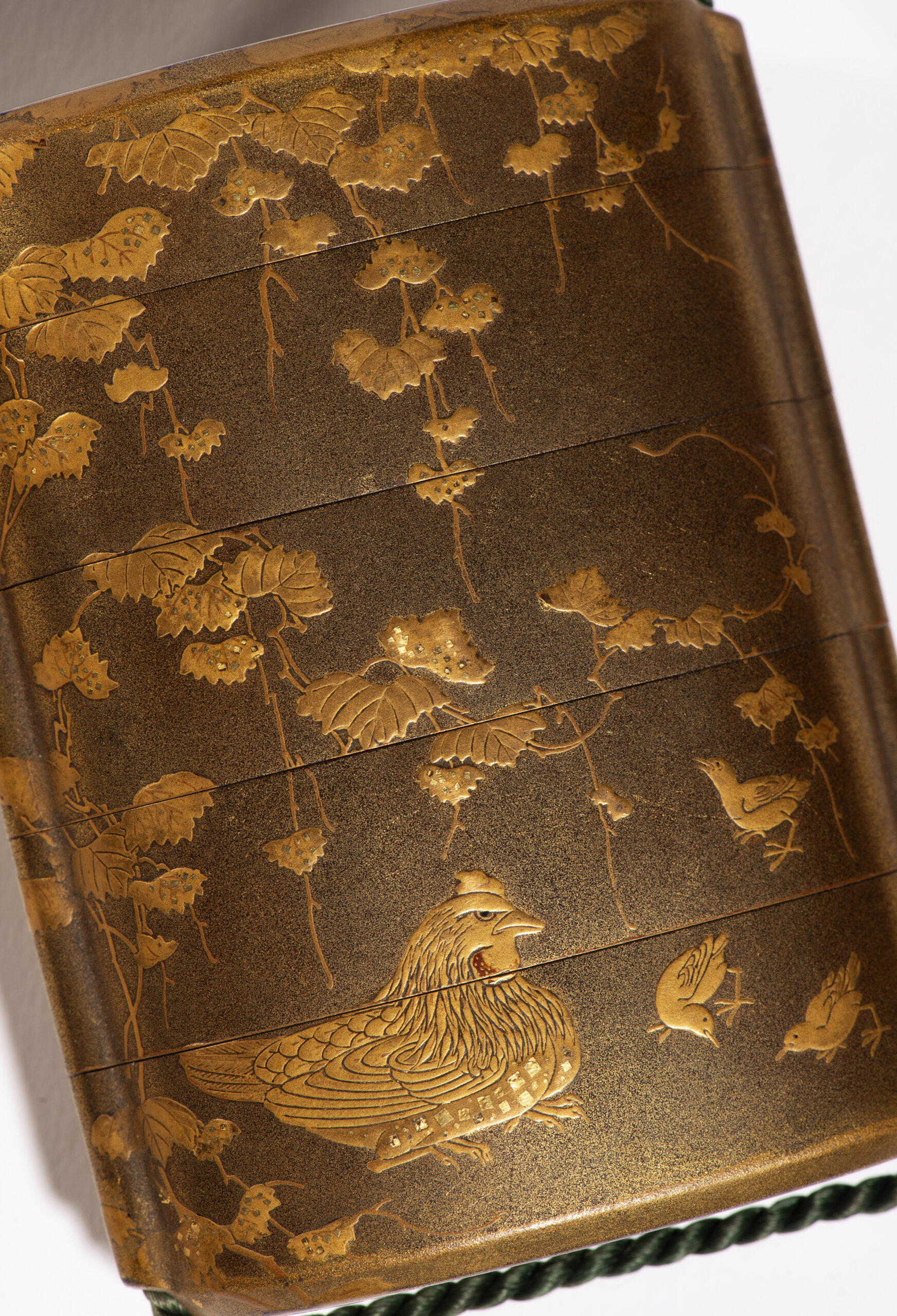
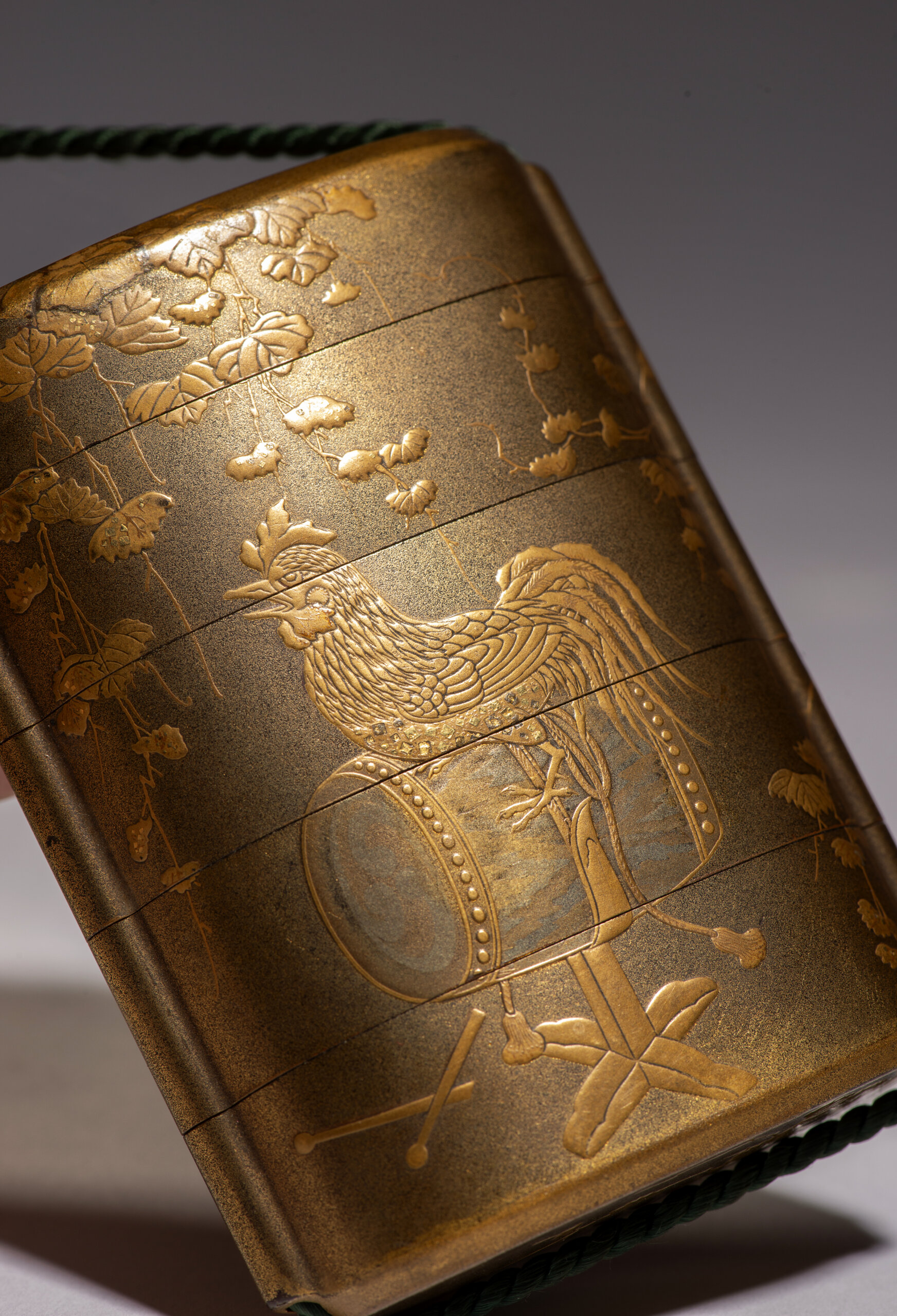
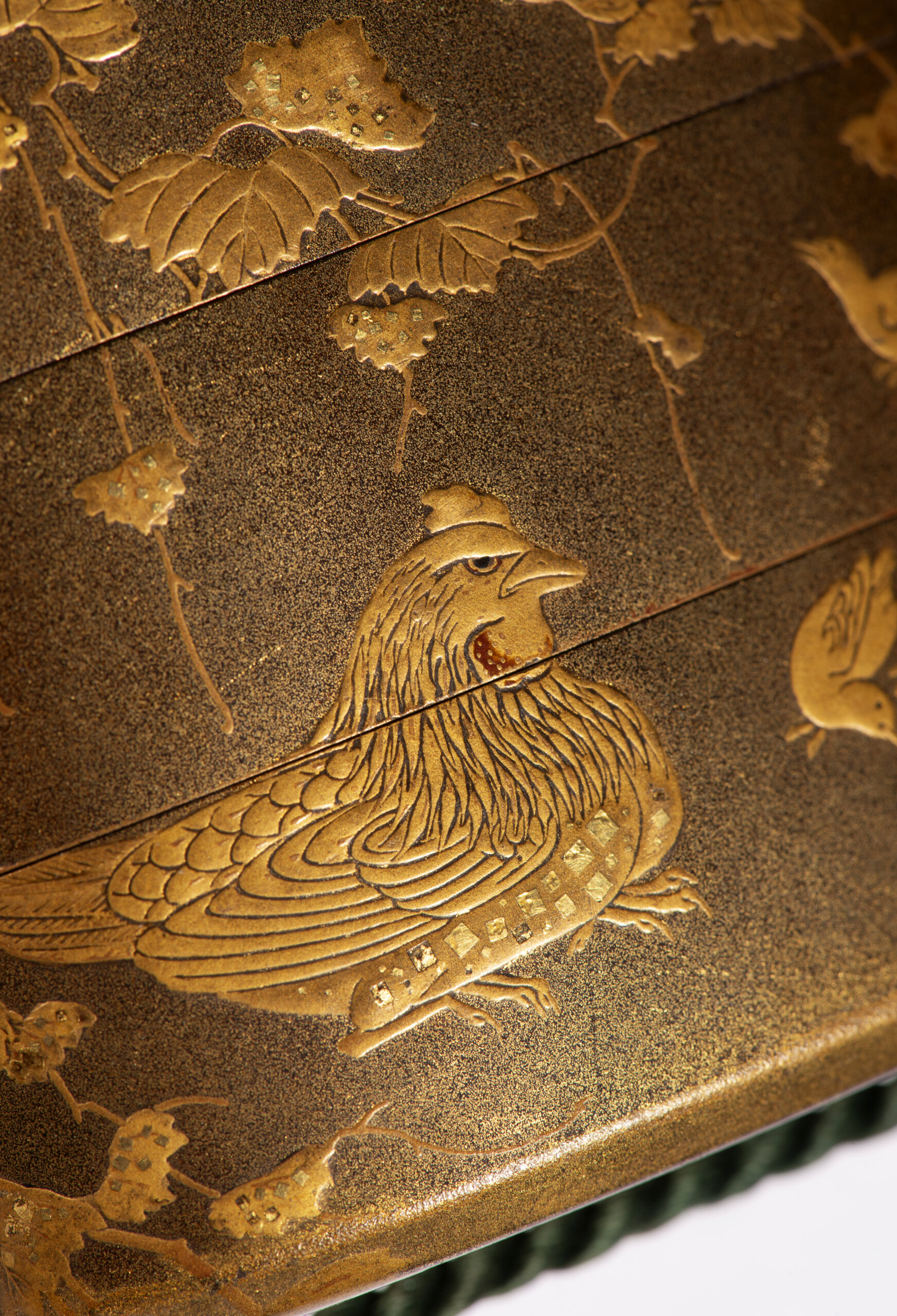
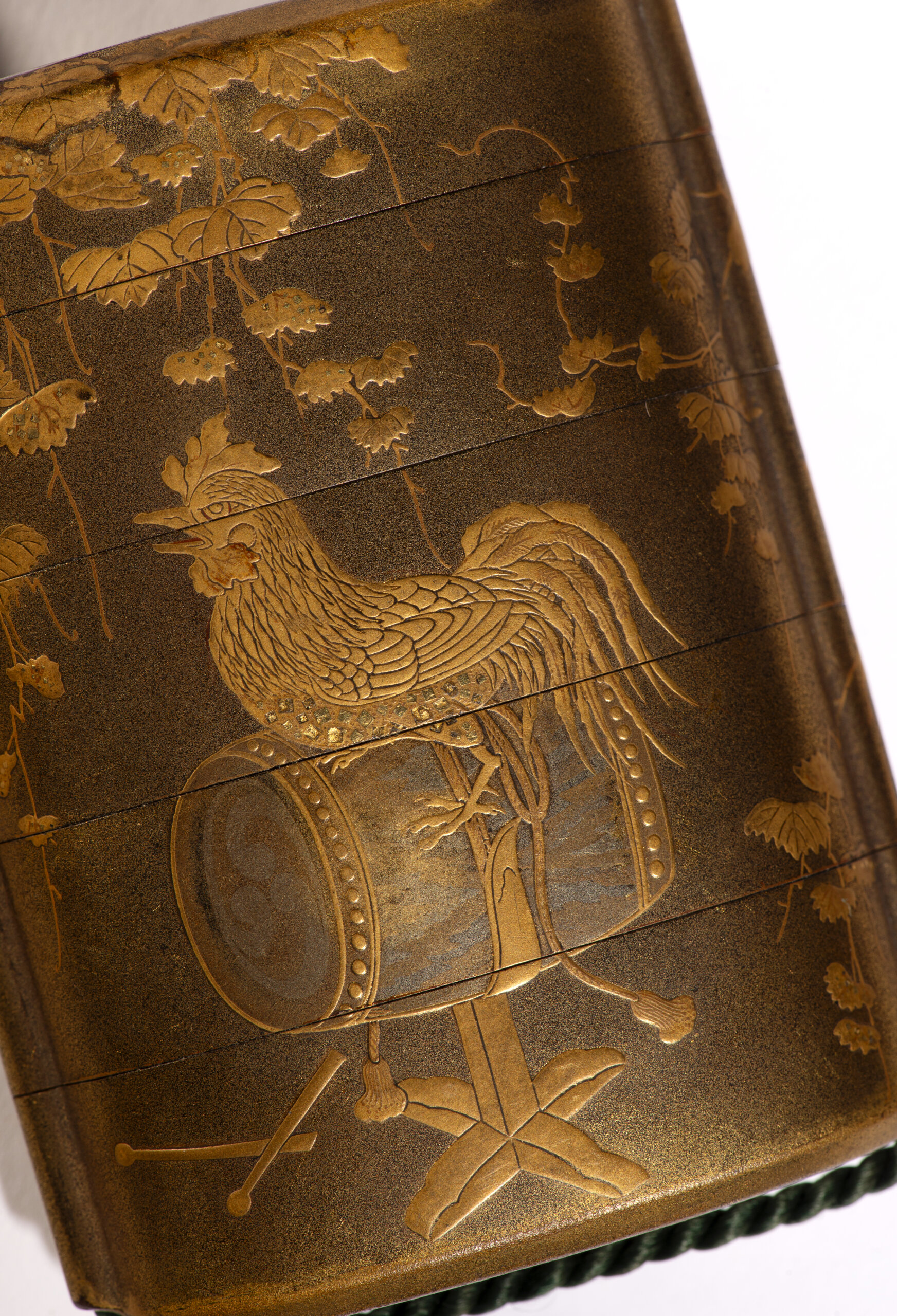
Decorated in gold hiramaki-e and takamaki-e with kirikane details on a nashiji ground
With a continuous design depicting, on one side, a cockerel perched upon an o-daiko drum with its sticks resting on the ground and, on the other, a hen with chicks, both framed by trailing gourd vines extending around the sides, top and base
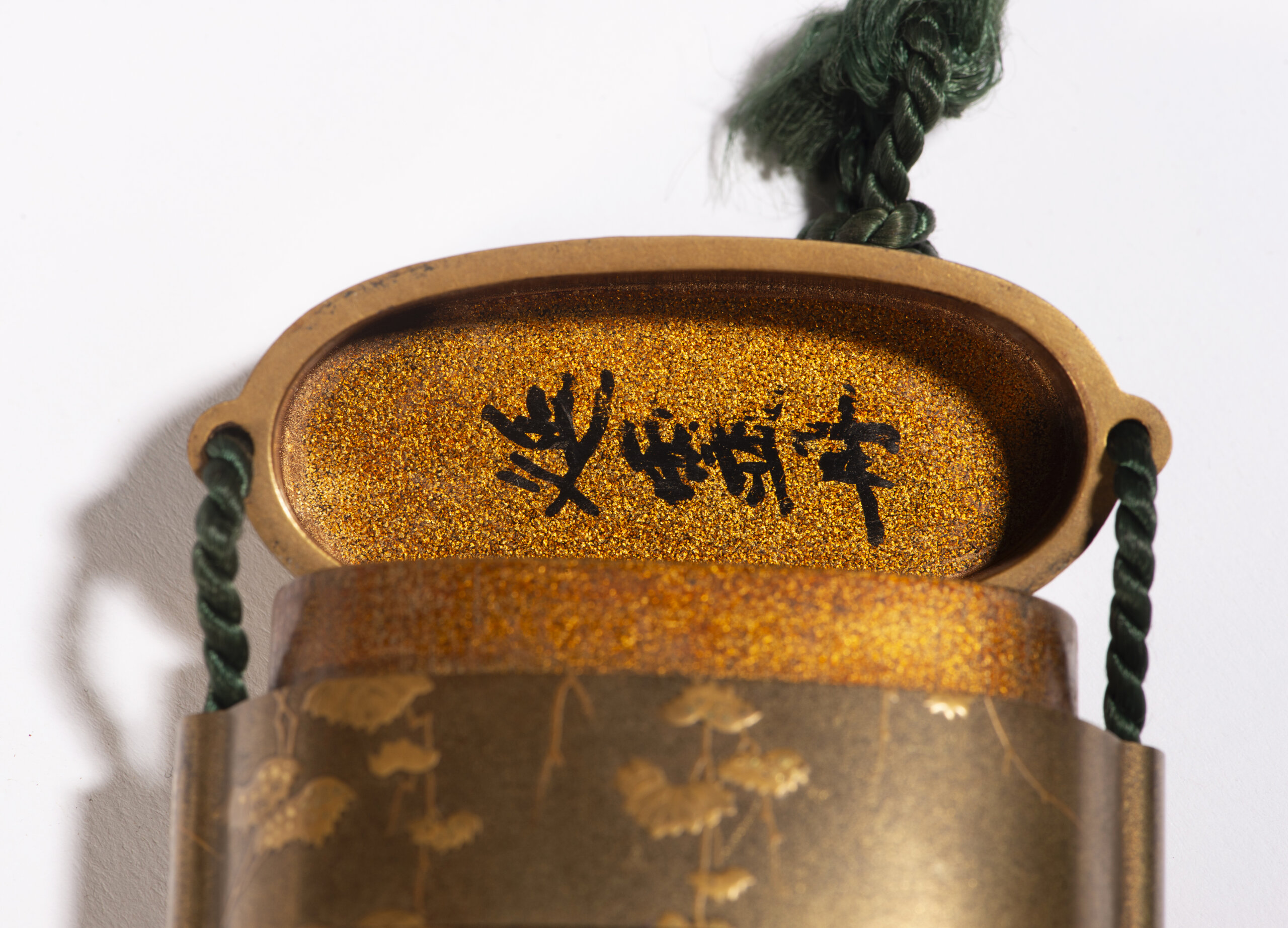
The interior of nashiji with fundame rims
Inscribed in tategaki "Enrei Kotan" (延霊壺丹) to the inside of the lid
日本 江户时期 十八/十九世纪 莳绘金漆印笼
罕见单层仿四层式(盒形)印笼,椭圆形断面,通体施洒金地,以平莳绘、高莳绘及切金技法饰金漆。一面绘大鼓上雄鸡,另一面绘母鸡携雏,周围葫芦藤蔓缠绕。盖内以竖书题「延霊壺丹」款。
8,5x6,4x2,7 cm
Additional Information
Note:
The motif of the cockerel perched upon a drum (kanko-dori) is a traditional Japanese symbol of peace and good governance, derived from the Chinese legend of the petitioners' drum placed at the palace gates: during long periods of peace and justice, the drum remained silent long enough to become overgrown with moss and serve as a perch for birds. The inscription "Enrei Kotan" (延霊壺丹) corresponds to the name of a traditional medicinal formula, drawing on Taoist longevity pharmacopoeia, which accounts for the unusual single-compartment construction, designed to hold a greater quantity of a single substance.
Closed Auction
