
150
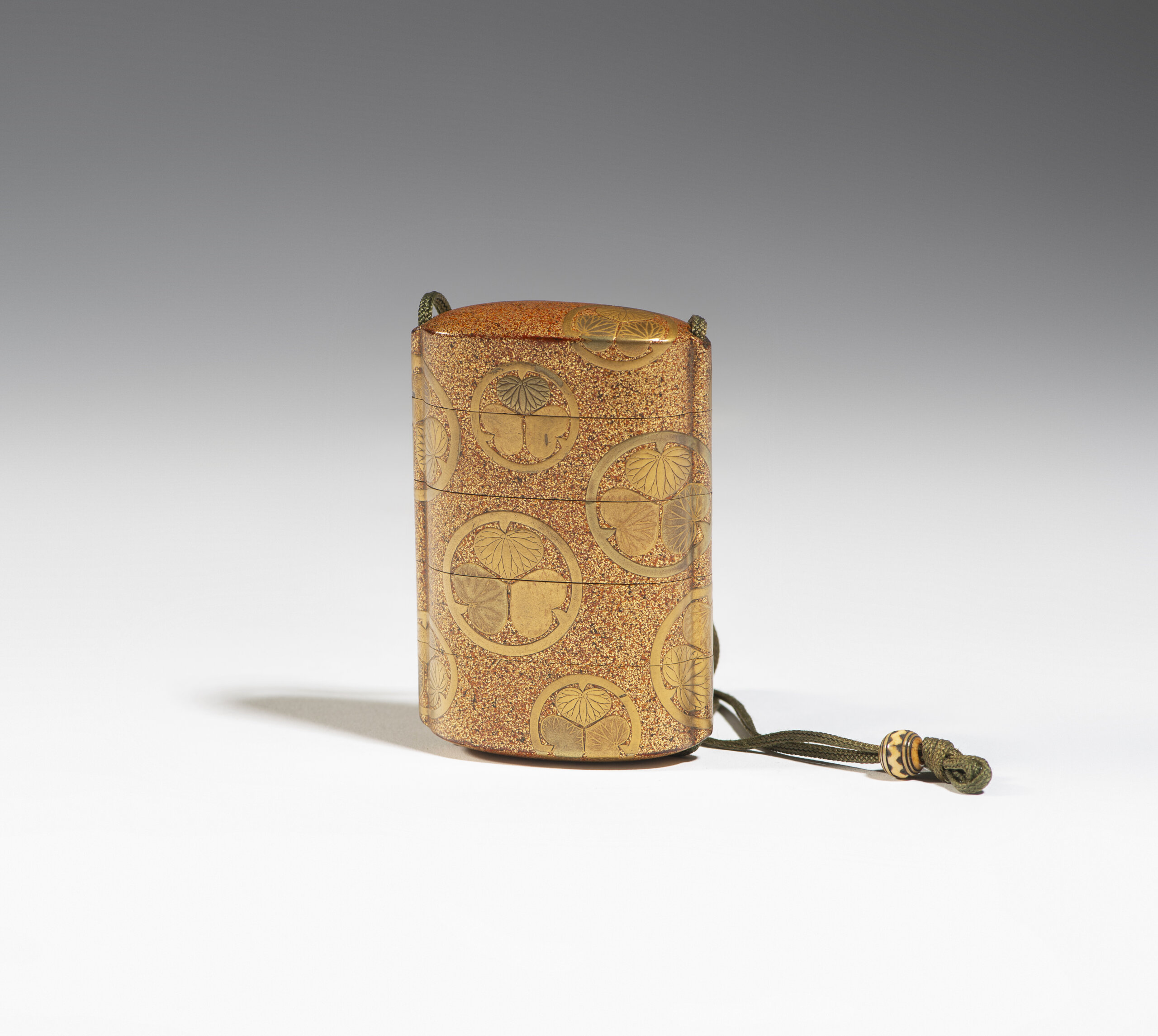
A four-case nashiji lacquer inrō with Tokugawa aoi mon
Estimate
3.000 - 4.000
Session
8 May 2026
Description
Japan, Edo period, 18th/19th century
Of elongated oval section, with domed top and base
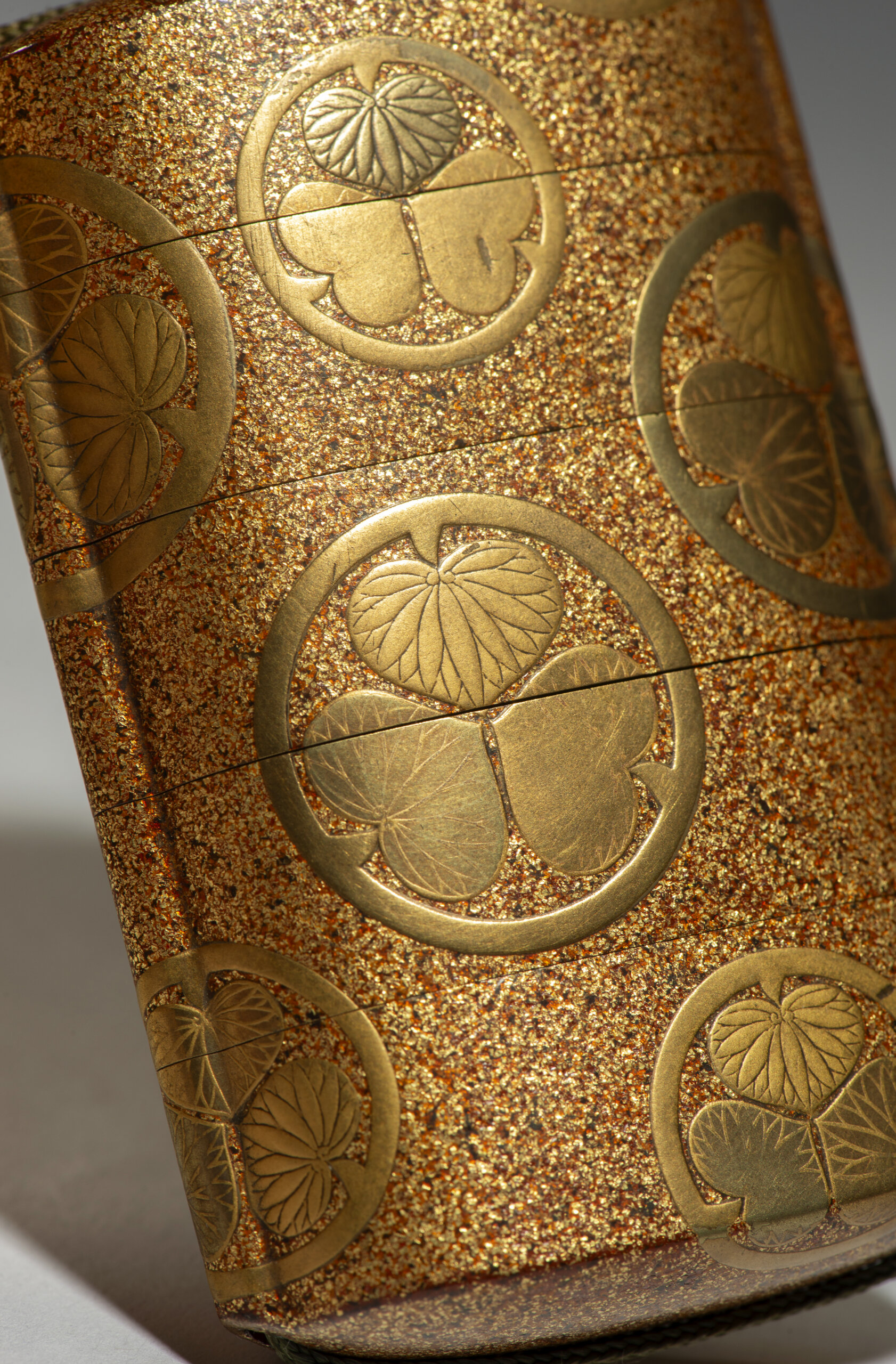
In lacquer decorated in gold hiramaki-e on a rich nashiji ground
With mitsuba aoi mon within circular medallions scattered across the outer surface
The interiors in nashiji and the rims in fundame
日本 江户时期 十八/十九世纪 梨地葵纹莳绘四段印笼。椭圆纵形,盖底浑圆,金梨地上以平莳绘饰圆形开光,内绘三叶葵纹,内壁梨地,口缘平金涂。
7,5x5x2,1 cm
Additional Information
Nota:
The mitsuba aoi mon, composed of three hollyhock leaves (Asarum caulescens) arranged around a central axis within a circle, is the heraldic emblem of the Tokugawa clan, the shogunal house that ruled Japan throughout the entire Edo period (1603-1868). Its use was strictly regulated and reserved for members of the main lineage and the three collateral branches known as the gosanke (Owari, Kii and Mito), as well as, in specific circumstances, highly trusted retainers. The presence of the mon as the sole and repeated decorative motif suggests that this piece was made for use by a member of the Tokugawa family or by someone granted the privilege of bearing it, lending it particular historical significance.
Provenance:
Christie's, The Japanese Aesthetic, London, 15 May 2013, lot 435
Closed Auction
