
128
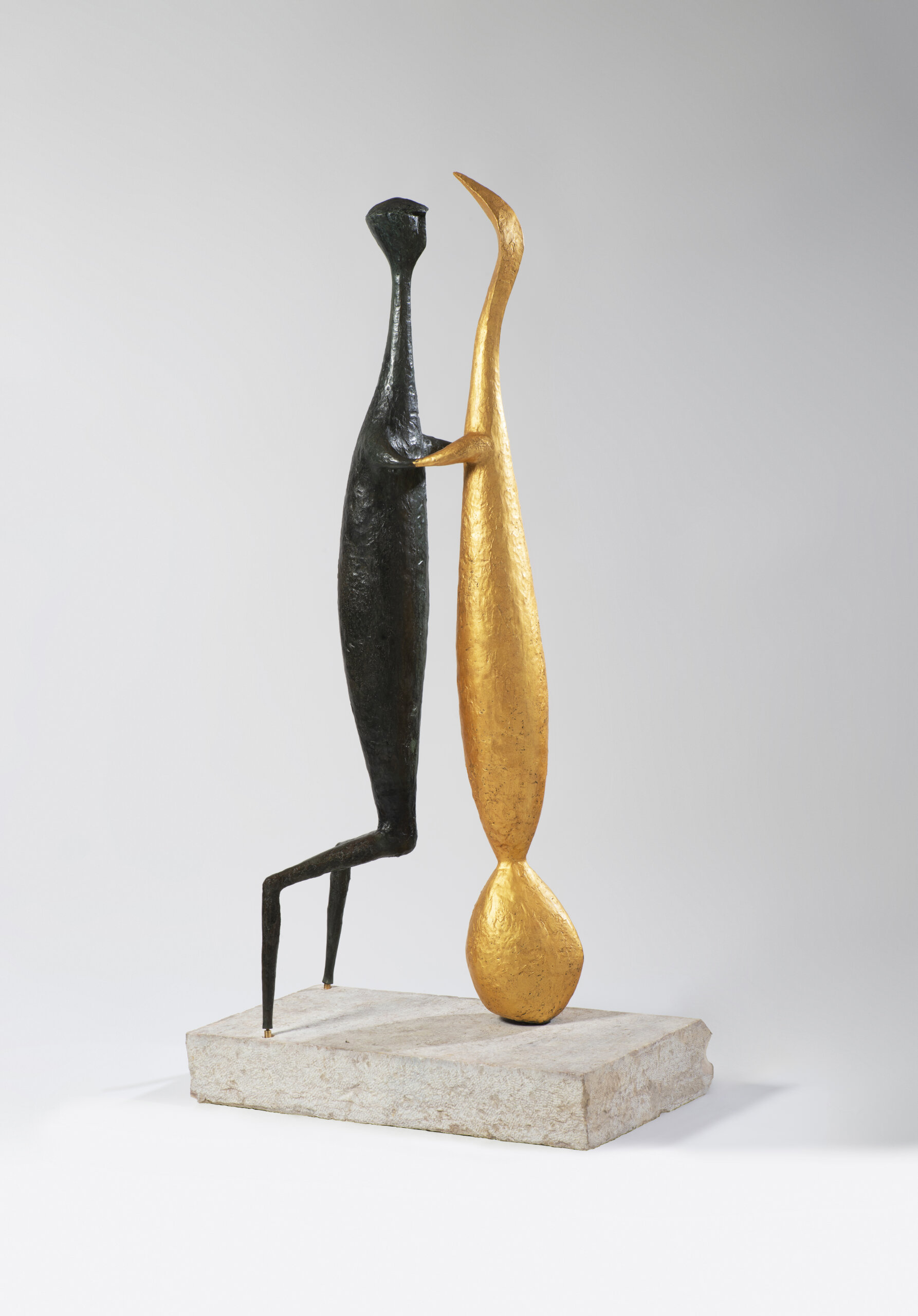
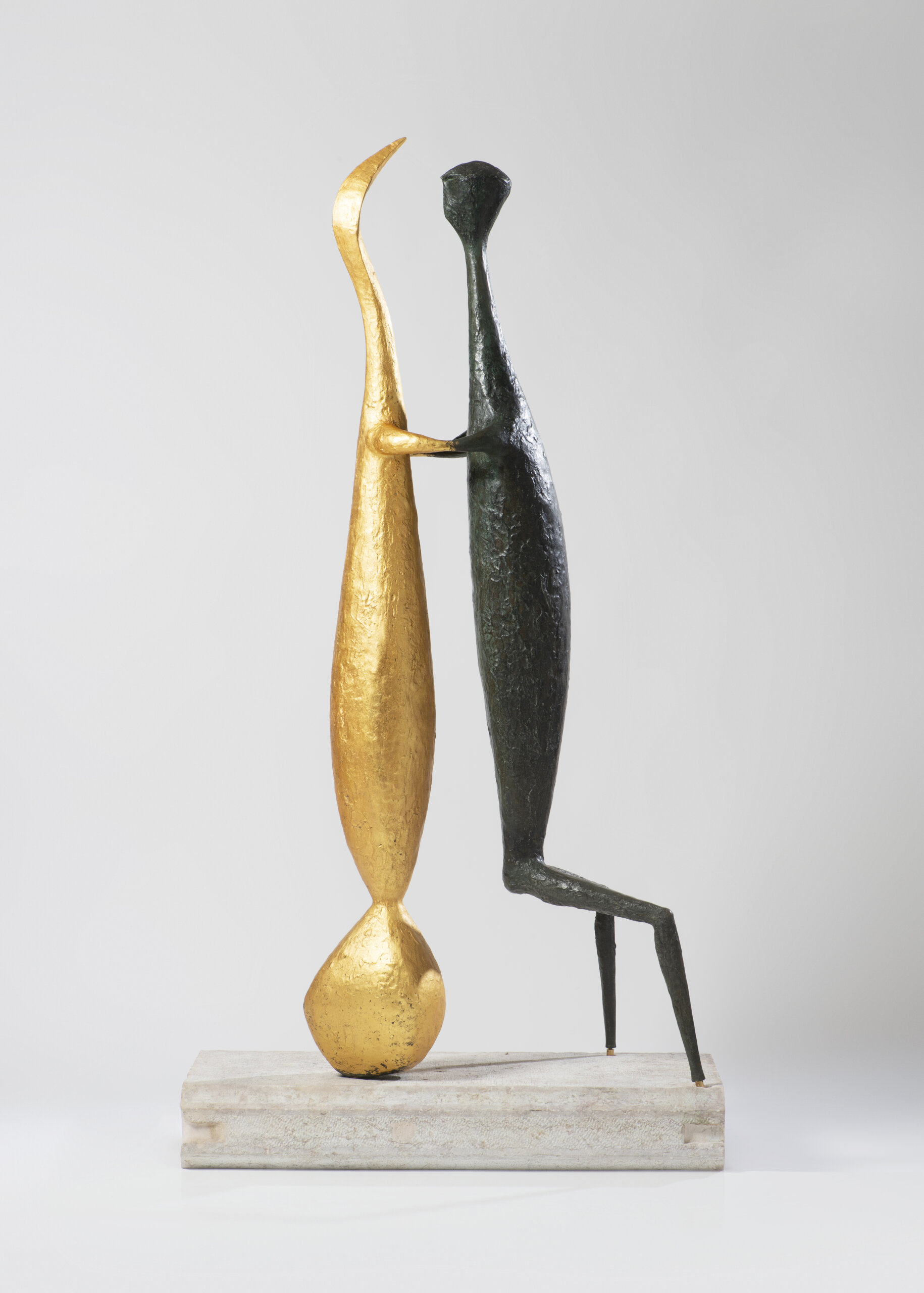
Untitled, 1957
Jorge Vieira (1922-1998)
Estimate
35.000 - 50.000
Session
31 March 2025
Hammer Price
Register to access this information.Description
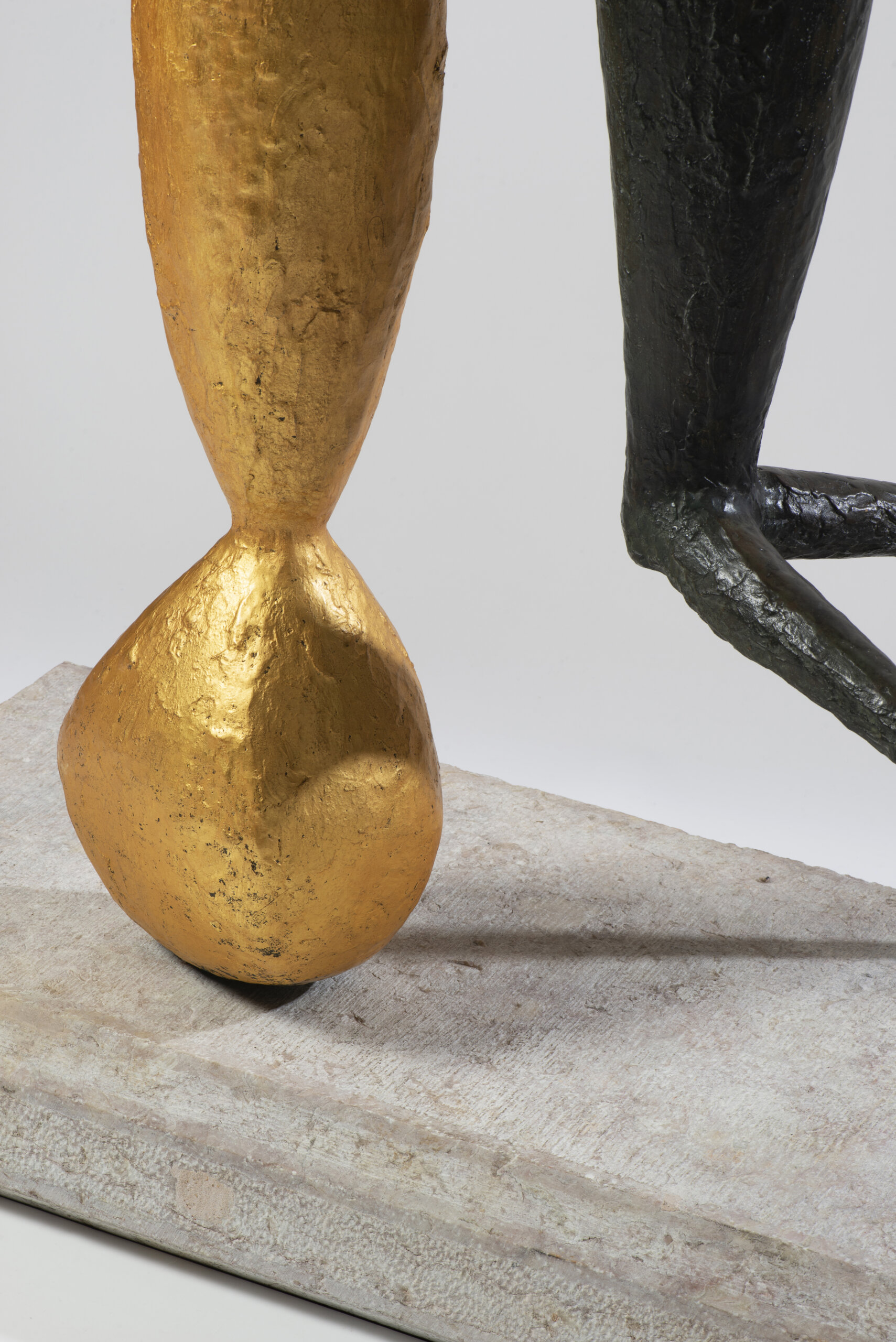
Bronze and gilt bronze
173x51,5 cm
Category
Modern and Contemporary Art
Additional Information
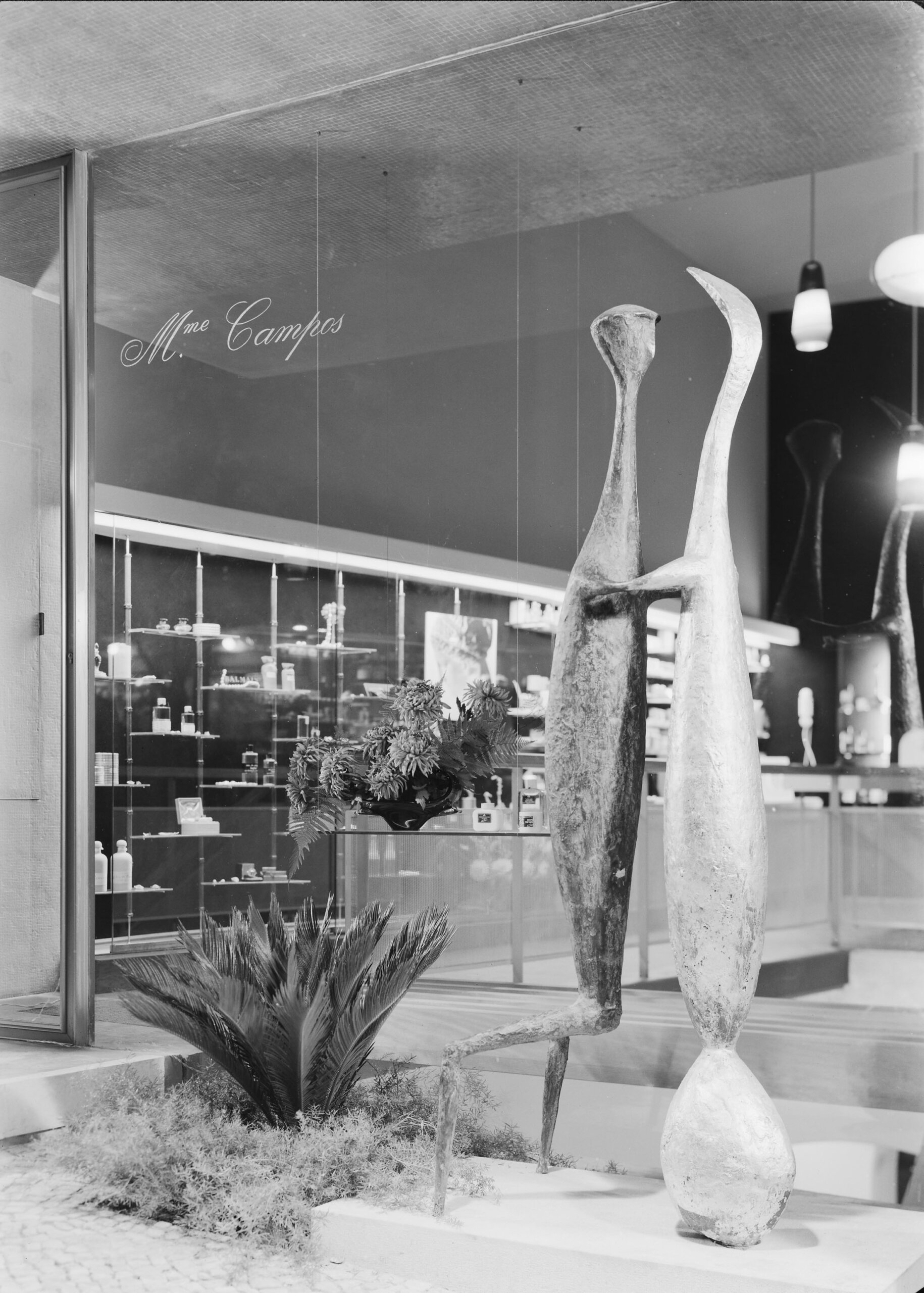
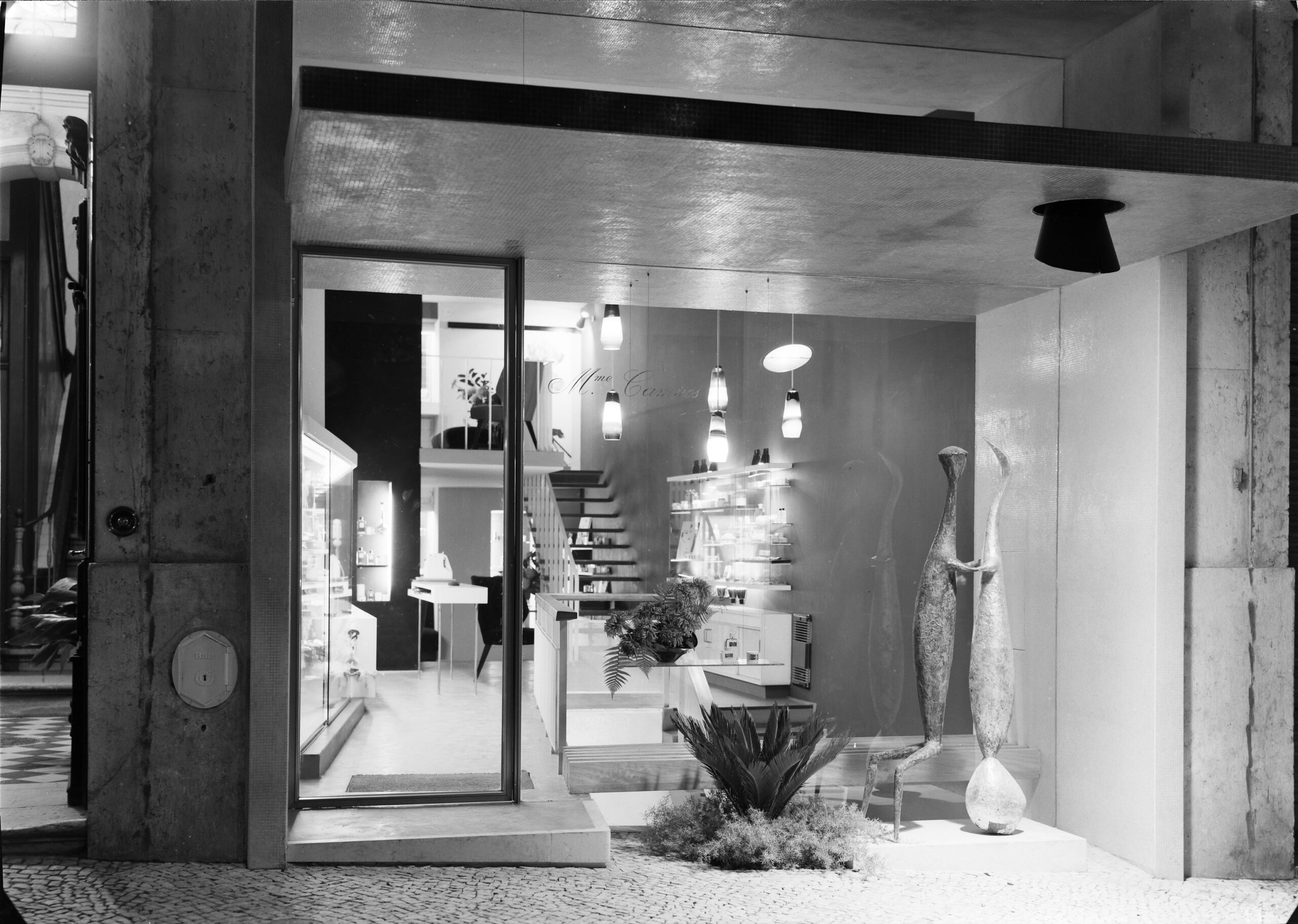
Sculpture commissioned for the Madame Campos Boutique in Lisbon, on Av. Alexandre Herculano, in 1956, whose architectural project was designed by Conceição Silva, together with José D. Santa-Rita. The work is similar, on a smaller scale, to another realised by the artist in the same year for the Portuguese Pavilion at the Comptoir Suisse in Lausanne - also designed by Conceição Silva - and which now belongs to the MNAC collection.
Exhibitions:
"Cheira Bem, Cheira a Lisboa", Museu de Lisboa, Palácio Pimenta, Lisboa, 2024/2025.
Literature:
Arqto. João Pedro Conceição Silva (Coord.), "Francisco da Conceição Silva, Arquitecto", Sociedade Nacional de Belas Artes, Lisboa, 1987, p. 37; Francisco Pereira Coutinho, "Escultor Jorge Vieira em Lisboa: O Sentido da Sua Obra", Edição Câmara Municipal de Lisboa, 2023, pp. 32-33; Pedro Lapa, "Escultura em Espaços Públicos", in Jorge Vieira, Museu do Chiado, 1995, pp. 121-122.
Archive Image Credits:
Col. Estúdio Mário Novais I Biblioteca de Arte Gulbenkian
Catalogue Essay
Un animal couple without a title
Pedro Lapa
Art Historian and Professor at FLUL
Curator of the Jorge Vieira Retrospective, National Museum of Contemporary Art, 1995
Modernist sculpture in Portugal found its main protagonist in Jorge Vieira (1922 – 1998). Through his work, sculpture underwent profound transformations, driven by new understandings of its materiality and substance in relation to the surrounding space or other cultural traditions, whether geographically or temporally distant. This approach allowed him to find formal affinities in the synthesis of volumes or their articulations beyond naturalistic limitations, to which his sculptures assigned new meanings, often subverting the symbolic values traditionally associated with them.
Jorge Vieira developed a dreamlike language, sensitive to the impulses of the unconscious and their manifestations, materialized through his exploration of different materials, usually clay or bronze, to create fantastic figures. His surrealist poetics, independent of the organized groups that shaped the artistic landscape of his generation, reached a singular level of development in the late 1940s and early 1950s. After winning a prize at the Tate Gallery in 1953 for his sculpture ‘Maquete para o monumento ao prisioneiro político desconhecido’, 1952, [Model for the monument to the unknown political prisoner], he moved to London, where he worked with Henry Moore and Reg Butler, marking the beginning of a new phase in his sculpture. Moving away from the compact, rounded, and organic mass of clay, he then dedicated himself to vertical forms structured by metallic filaments and empty spaces or by balanced arrangements of oblong bronze shapes, creating compositions of biomorphic configuration.
In 1956, he exhibited at the renowned Hanover Gallery alongside Eduardo Paolozzi, Lynn Chadwick, Cesar, and Reg Butleran unprecedented achievement for modern Portuguese sculpture and a testament to the prestige he had attained.
During this same decade, modern architects in Portugal began to receive commissions for shop designs and even full building projects, integrating collaborations with artists from their generation. One of the leading architects engaged in these collaborations was Conceição Silva, who, together with Santa Rita, was commissioned to design the Boutique Madame Campos on Avenida Alexandre Herculano in Lisbon, in 1957. Jorge Vieira was invited to contribute with a sculpture, which was installed outside in front of the shop window. The window was set back from the facade, allowing the sculpture to be viewed from 360 degrees and from inside the shop, as both the display and entrance door were made of large glass panels.
This sculptural group was a variation of another untitled work created the same year for a project by Conceição Silva for the ‘Comptoir Suisse’ fair in Lausanne, in 1958, which is now exhibited in the garden of the National Museum of Contemporary Art – Museu do Chiado.
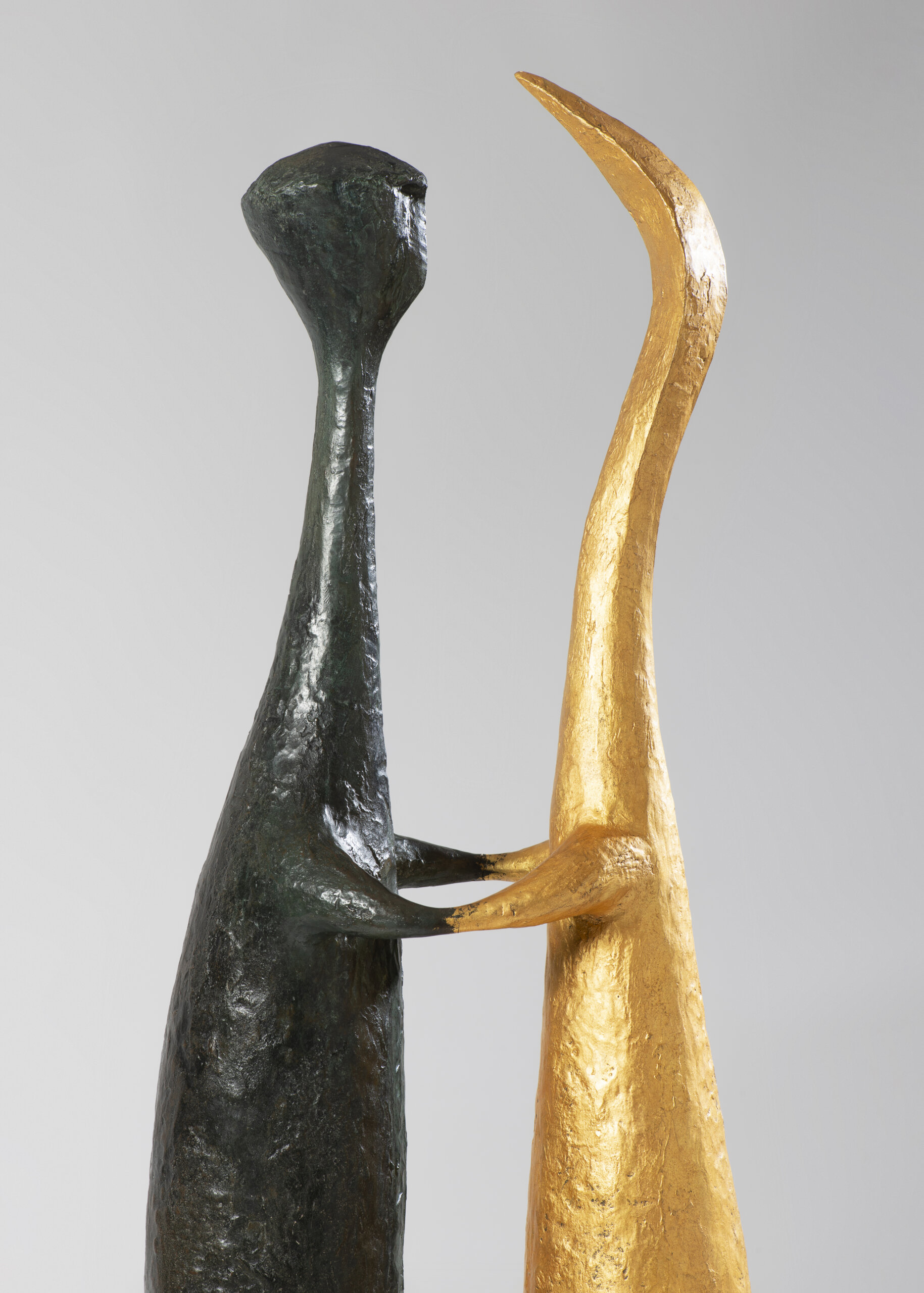
The sculpture made for Boutique Madame Campos presents an embracing pair. Their bodies are synthetically composed of two large oblong forms, from whose extremities emerge, at the top, their heads—one an inverted cone, the other undulating and pointed—and at the bottom, thin, bent legs or feminine hips. While the configuration of the pair is explicitly zoomorphic, resembling insects—an aspect surrealism often explored to blur distinctions between the human and other species—there are also subtle details referring to the sexual morphology of the figures, which humorously reintroduce an anthropomorphic dimension. This aspect, present throughout Jorge Vieira’s work, enabled him to redirect unconscious impulses toward everyday habits, thereby opening the possibility of their subversion.
The scale of this sculpture is unusual in Jorge Vieira’s work, which was typically confined to the gallery pedestal – a condition of modern sculpture in Portugal at the time. Through these public space commissions, his sculpture was able to explore a different scale, allowing for new developments in his modernist expression.
Closed Auction
