
539
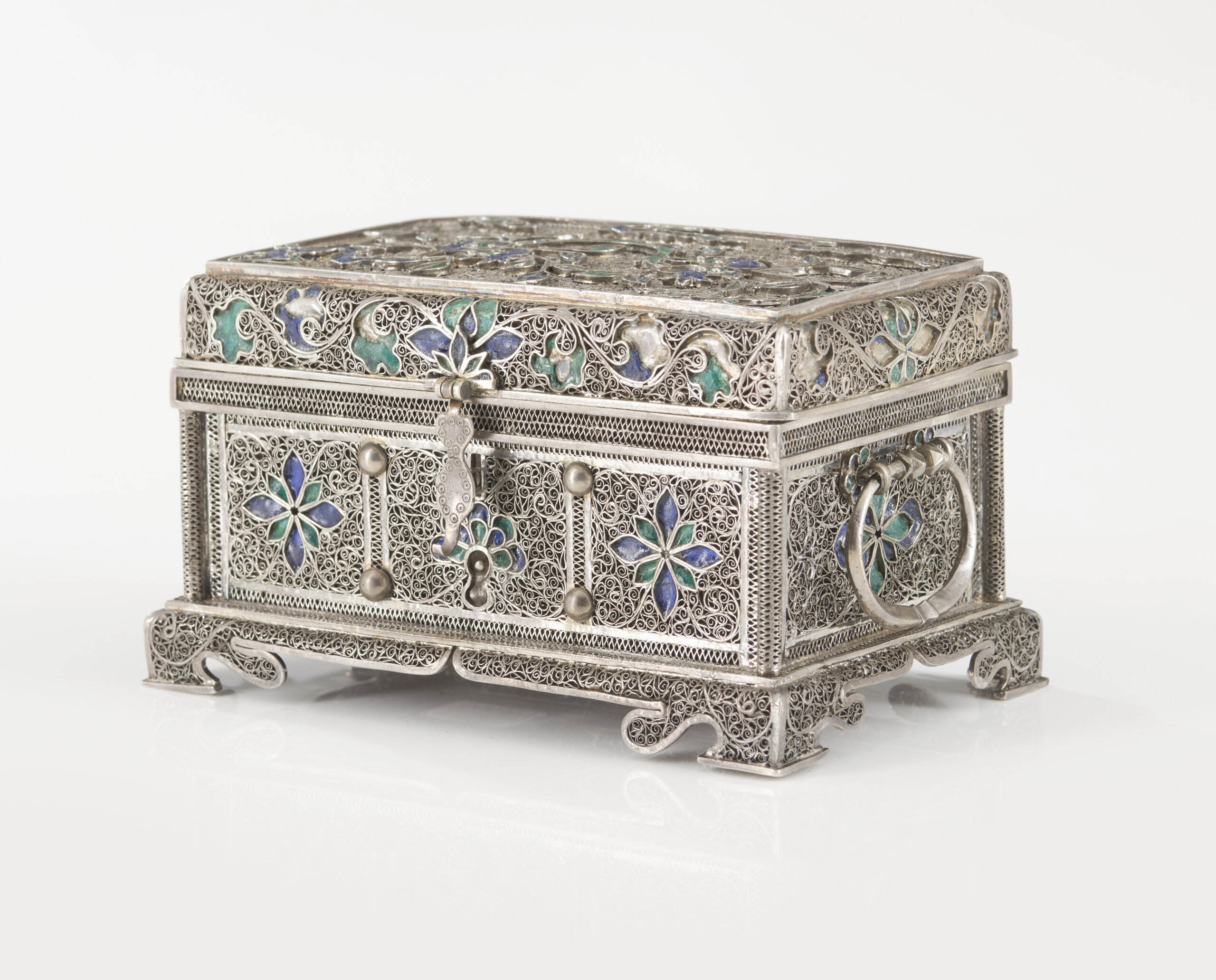
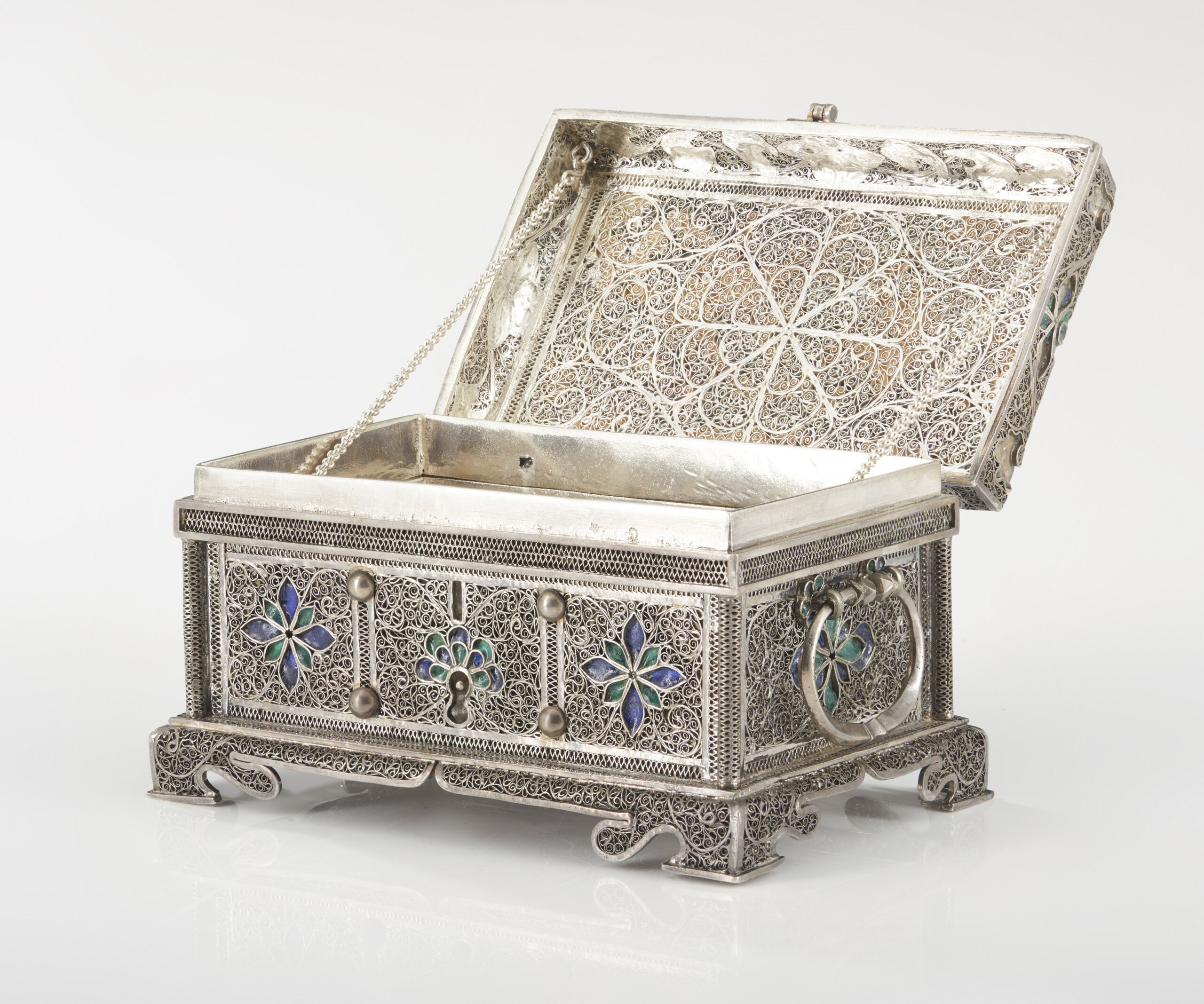
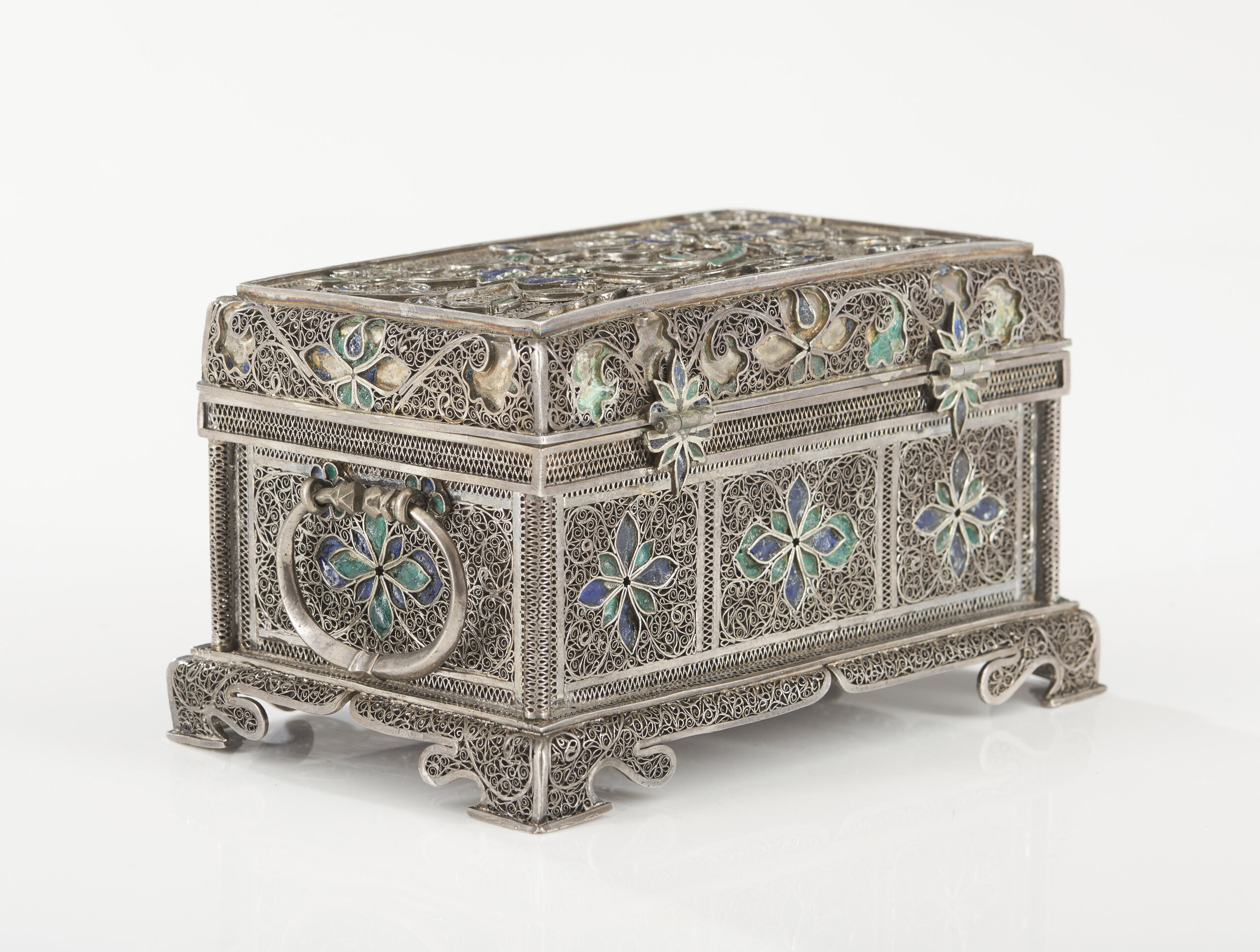
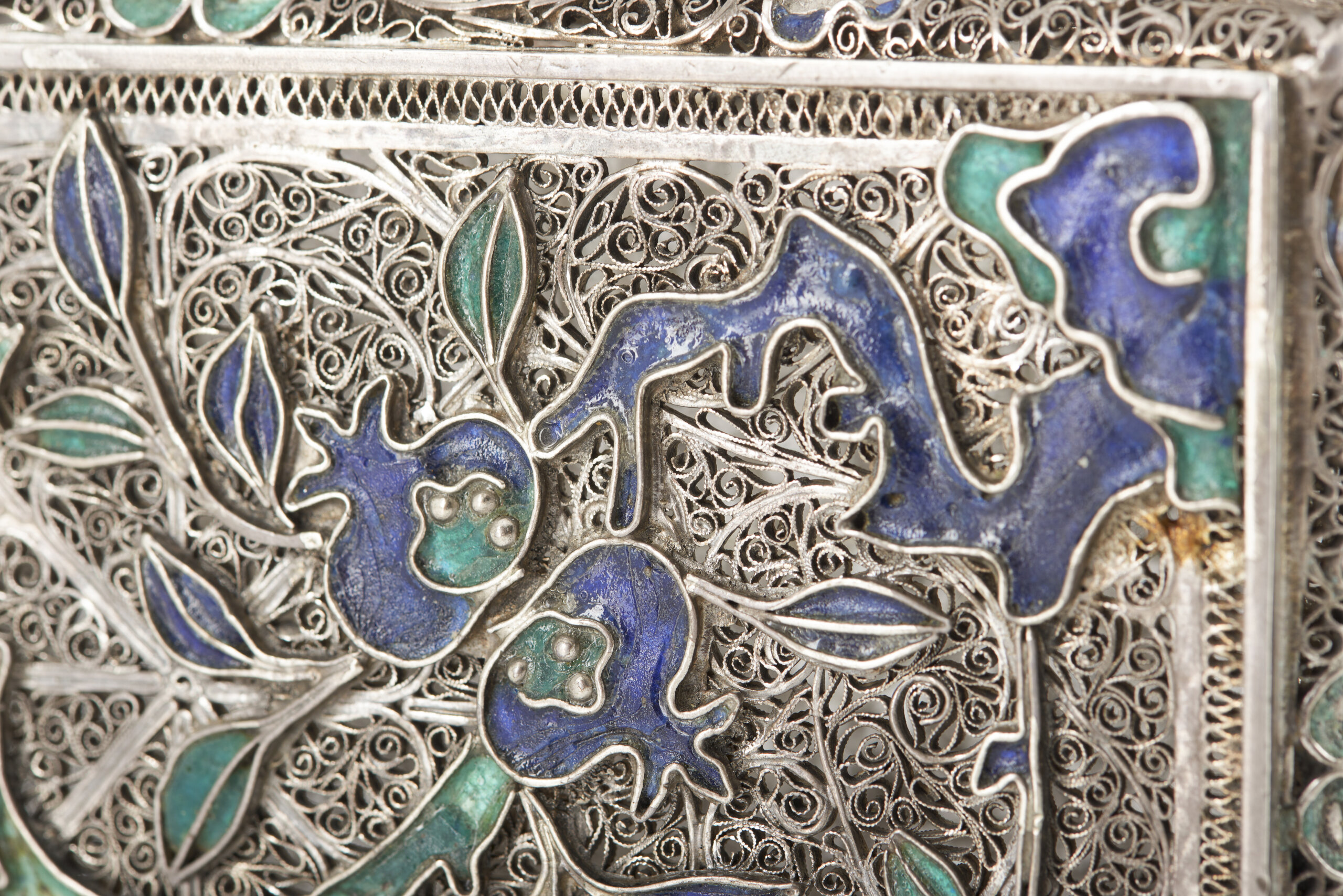
A Sumatran silver filigree casket with polychrome enamel decoration
Estimate
3.000 - 5.000
Session 2
26 March 2026
Hammer Price
Register to access this information.Description
Silver filigree
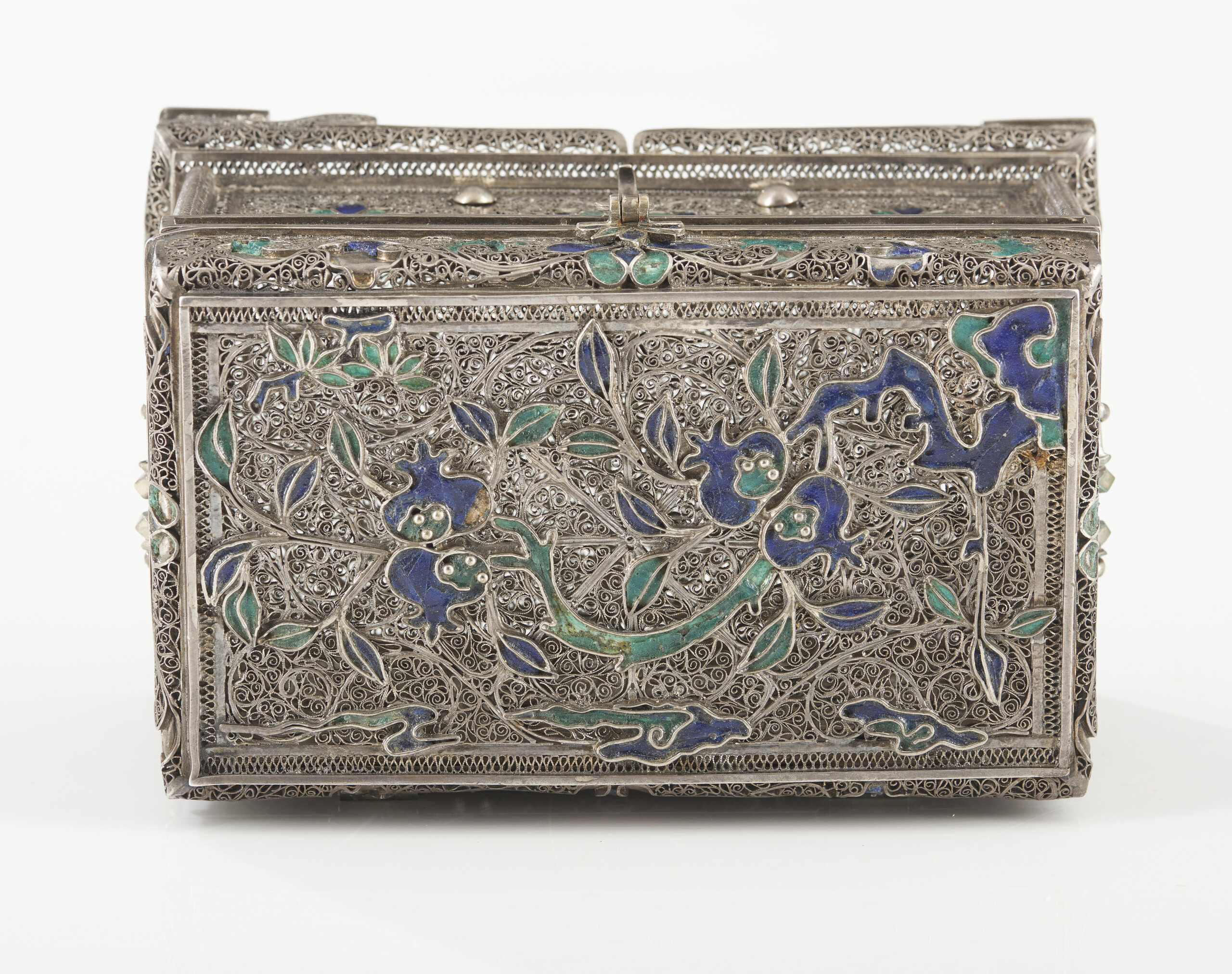
Decorated with polychrome enamels depicting foliage motifs
Lid decorated with branch, pomegranates and clouds in Chinese style
With key
Possibly Sumatra, 17th/19th century
Unmarked
(signs of wear, enamel losses)
8,5x14,5x9,5 cm
750,9 g (bruto)
Additional Information
A closely comparable piece, with the same enamelled floral motifs and Chinese-inspired ornaments, was sold at Christie's Amsterdam, 15-16 December 2008, lot 275 (initially catalogued as 'Chinese export, mid-18th century', reattributed in 2014 to West Sumatra, circa 1700). This latter attribution appears on p. 122 of Asian Art and Dutch Taste (Gemeentemuseum Den Haag, 2014), by Jan Veenendaal, which distinguishes the technical filigree styles of Indian, Philippine, Chinese and Sumatran origin.
Veenendaal identifies the west coast of Sumatra — attested by inventories and eyewitness accounts from the 18th century — as the principal regional centre for the production of gold and silver filigree in the 17th and 18th centuries. The style of this casket corresponds to the Sumatran description: 'composed of scrolls... usually interspersed with small ovals, resembling a miniature plant with two leaves and a flower (...); at times, floral motifs were soldered onto the filigree surfaces and filled with green enamel'. The enamel was probably executed in Batavia (present-day Jakarta, Java, capital of the Dutch East India Company), renowned for this technique.
Distinctive details include the four hemispherical 'bun-shape' pin heads securing the lock, set on zigzag filigree 'stairs' — a feature exclusive to Sumatran caskets. Sumatran goldsmiths adapted their style to target markets (Chinese, Indian or European). It is not excluded that the piece was once equipped with tea caddies, following the example of another with compartments marked by Reynier Brandt, Amsterdam, 1754 (Christie's Amsterdam, 27 April 2004, lot 251)
Closed Auction
