
11
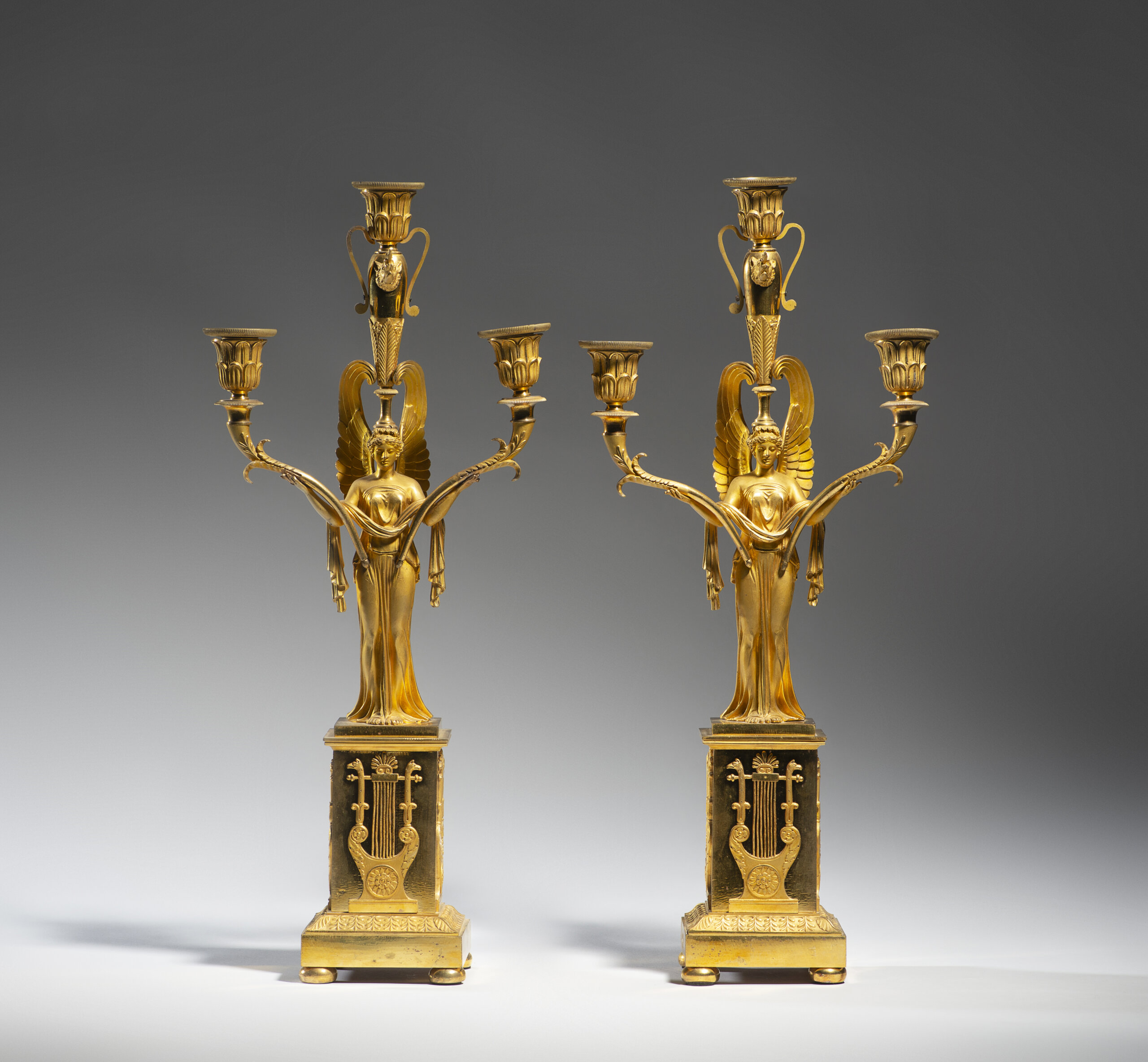
A pair of Empire ormolu three-light candelabra
Estimate
8.000 - 12.000
Session 1
26 October 2026
Description
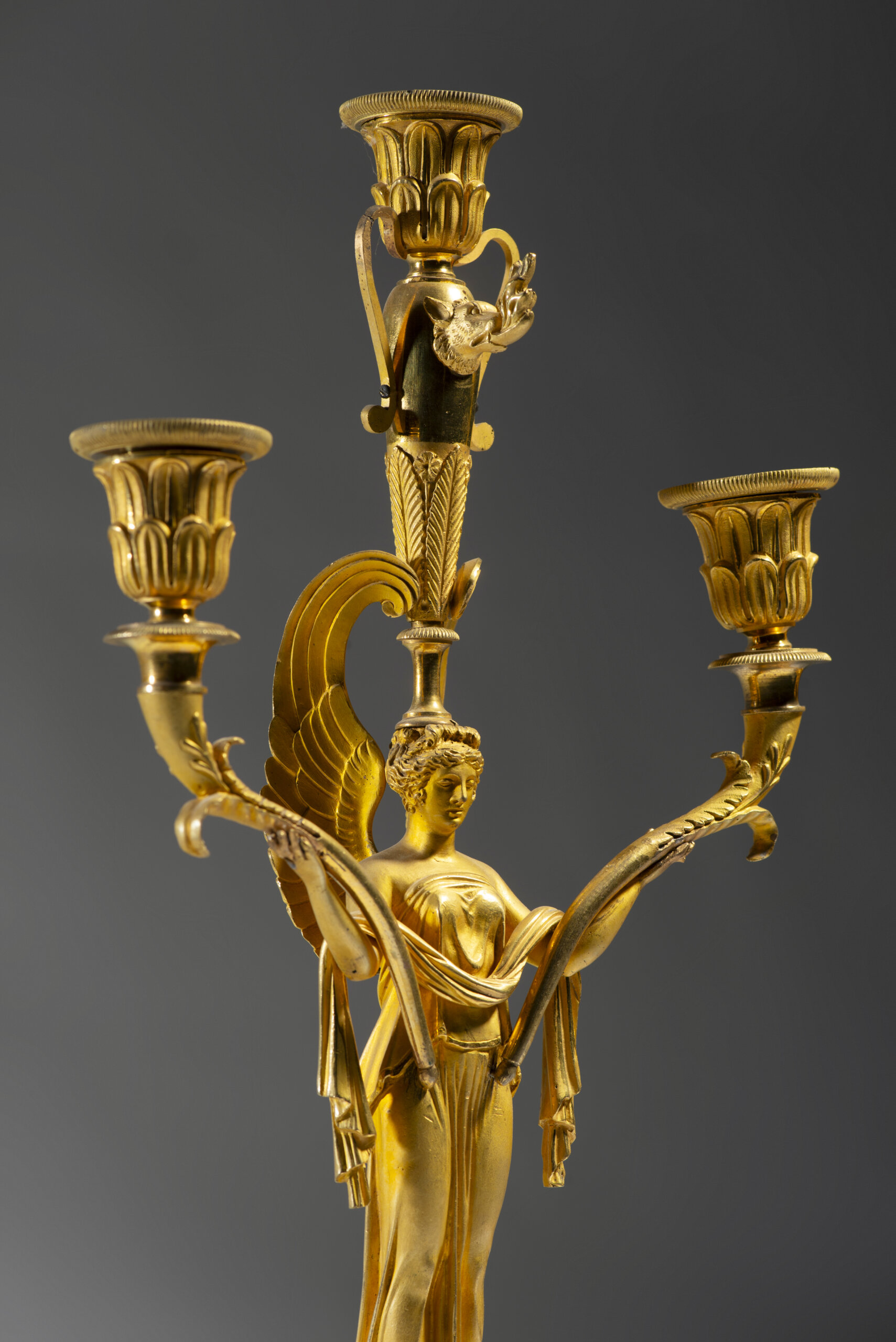
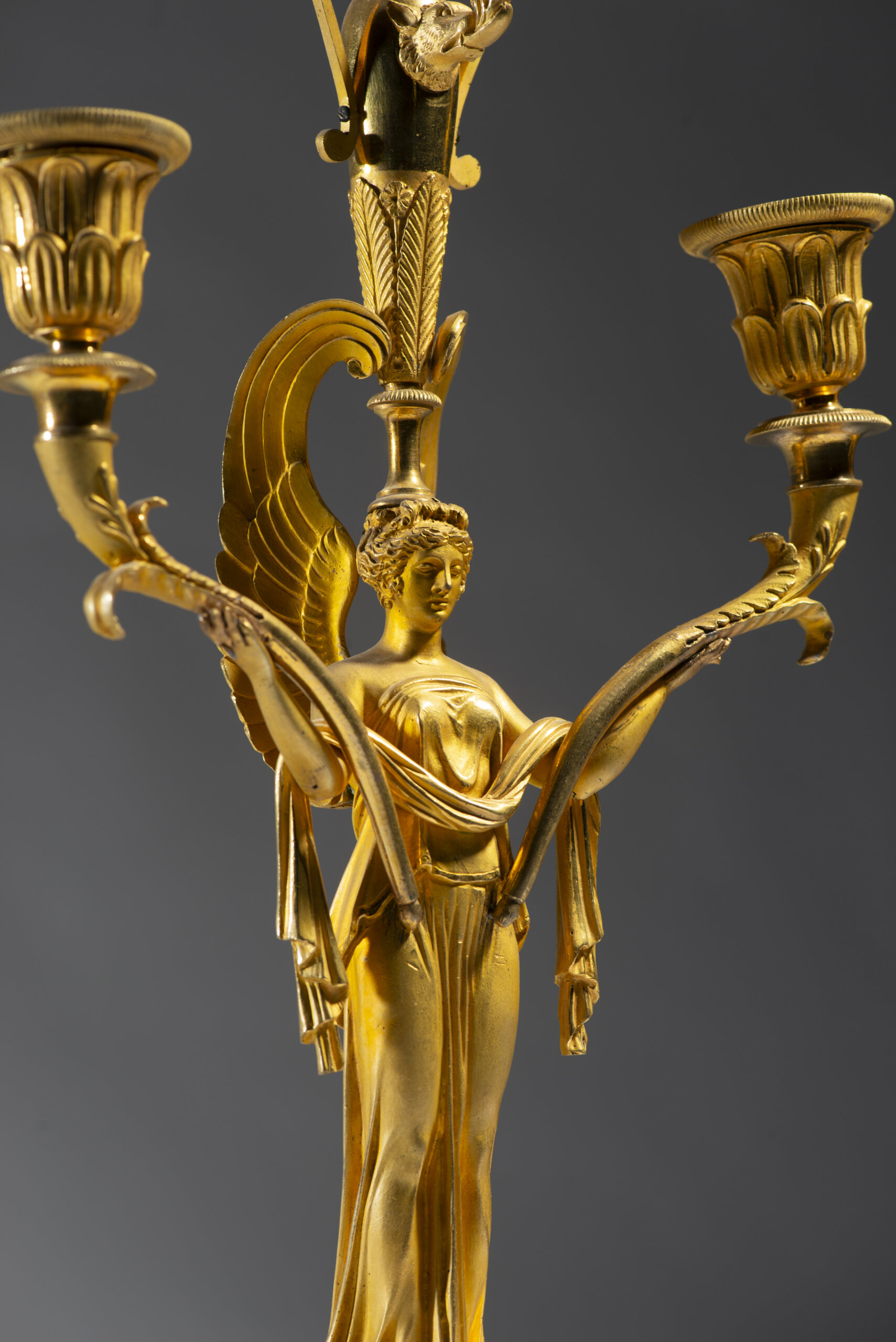
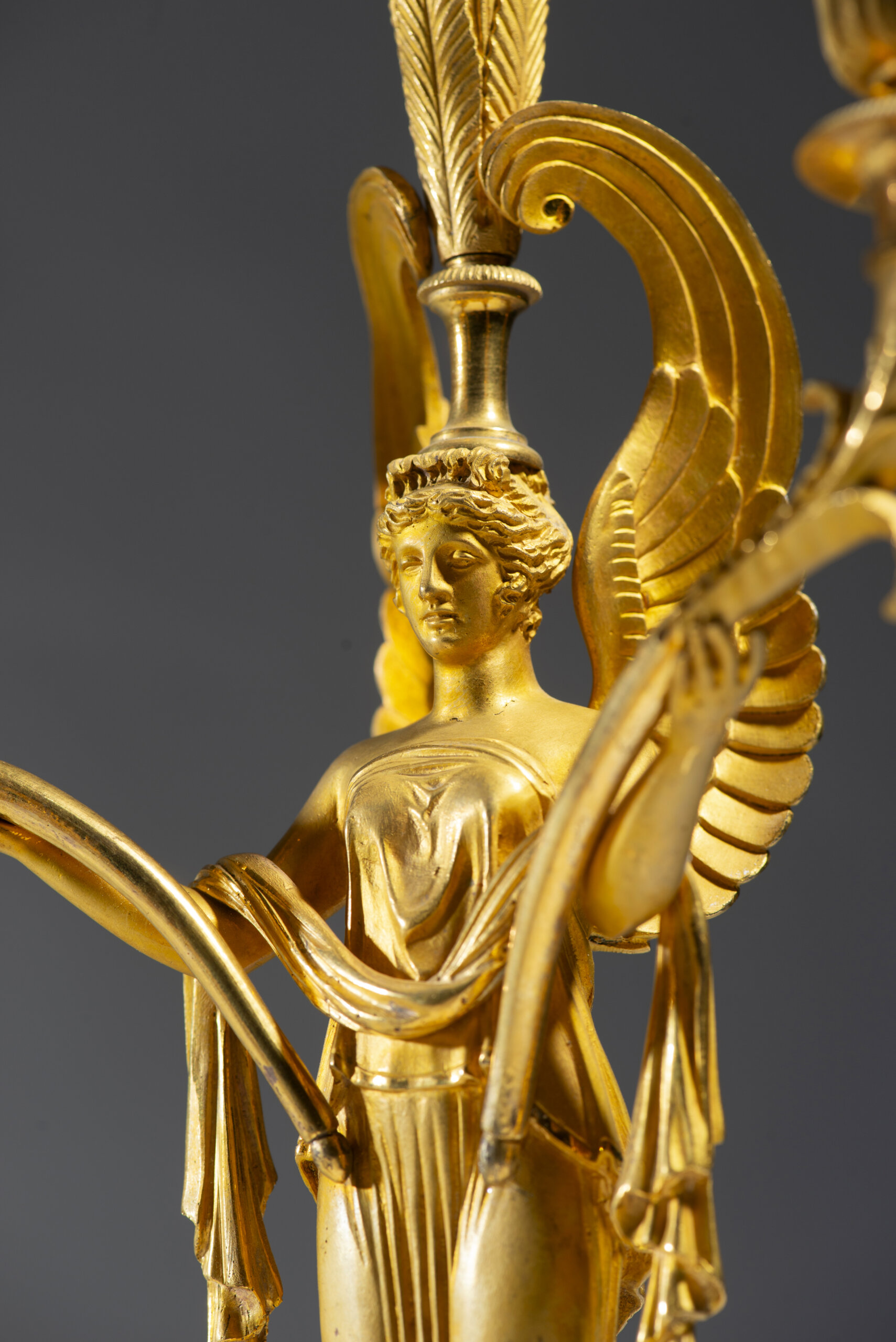
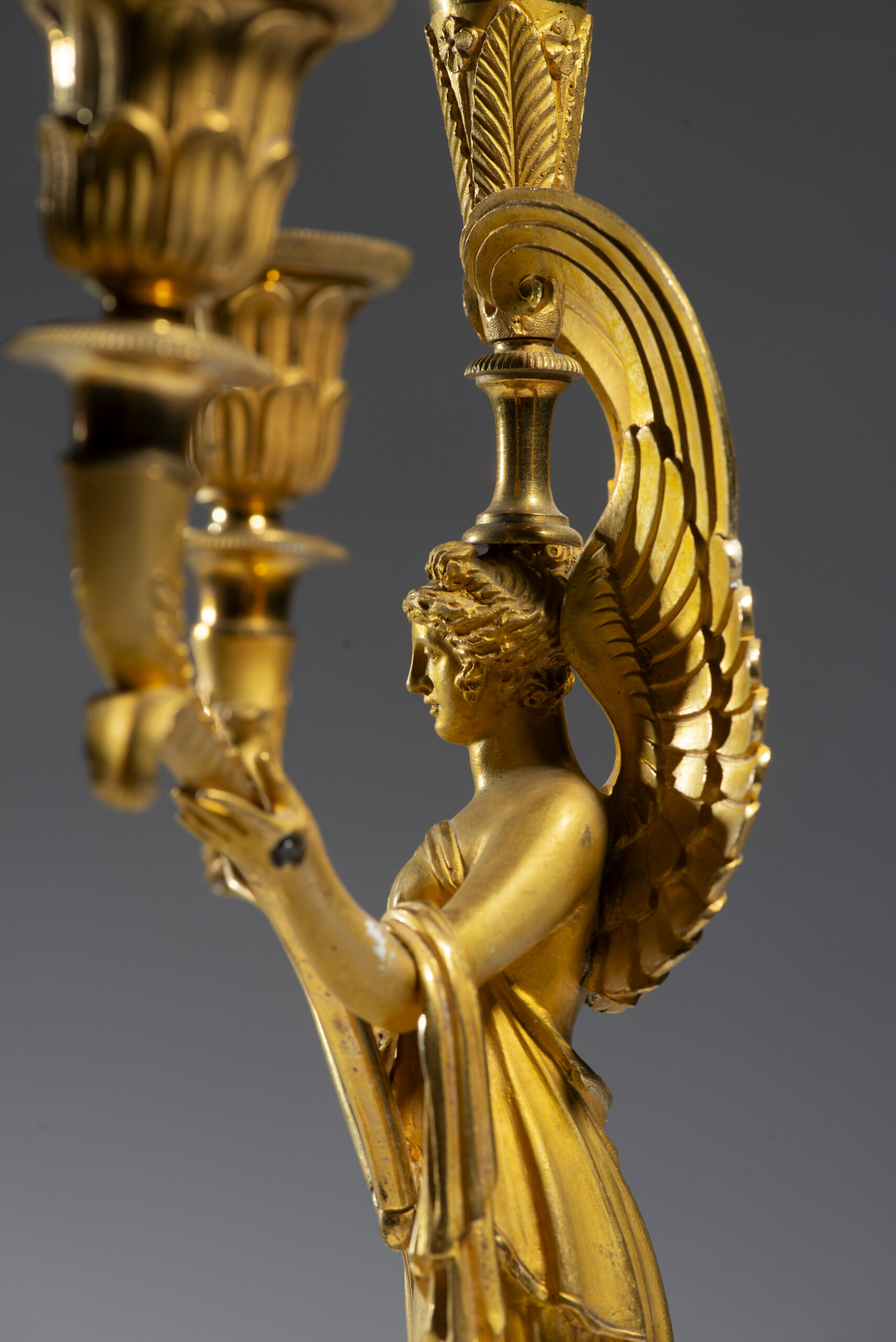
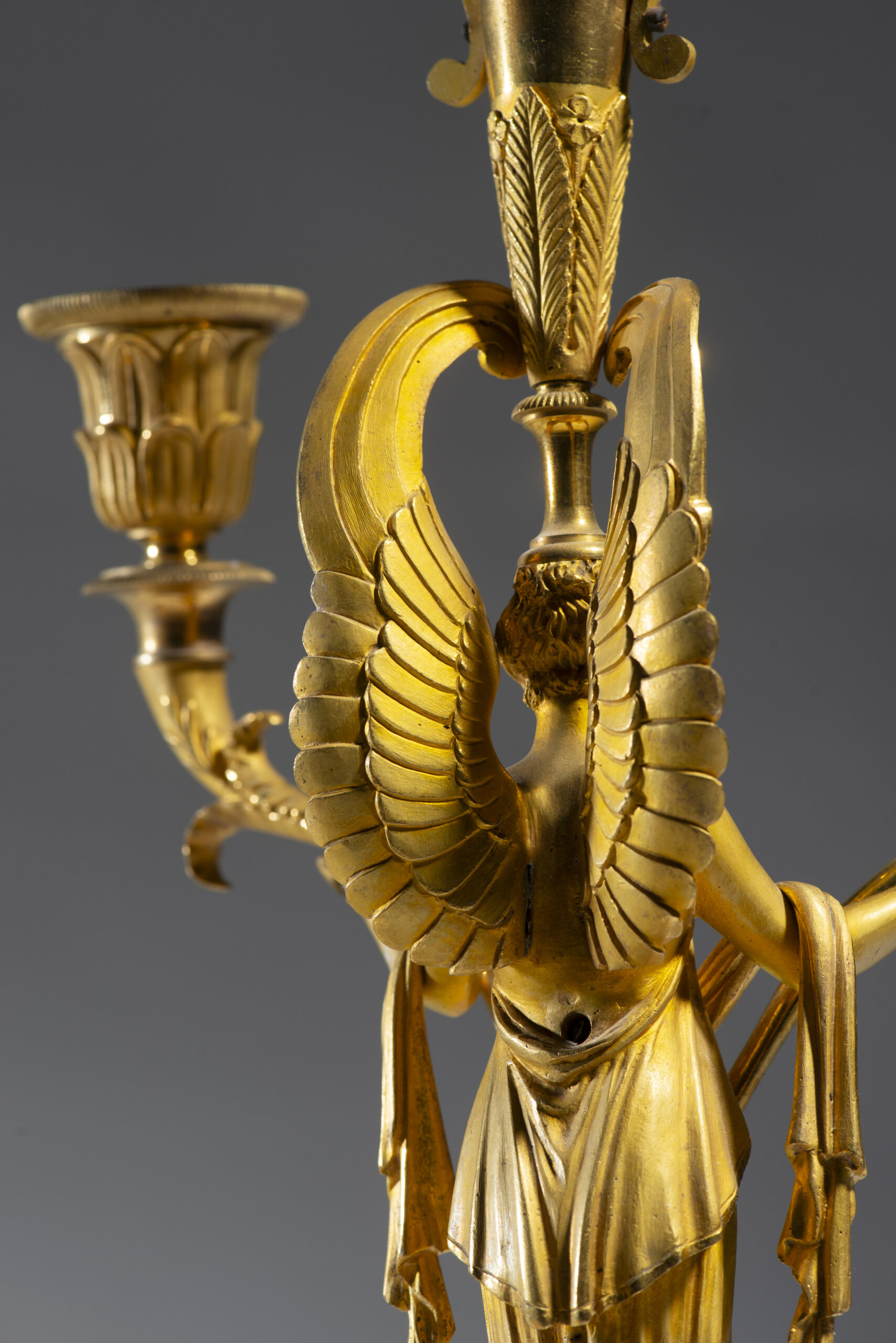
Each centred by a winged female figure representing Victory, standing on a square pedestal and supporting the scrolling candle branches
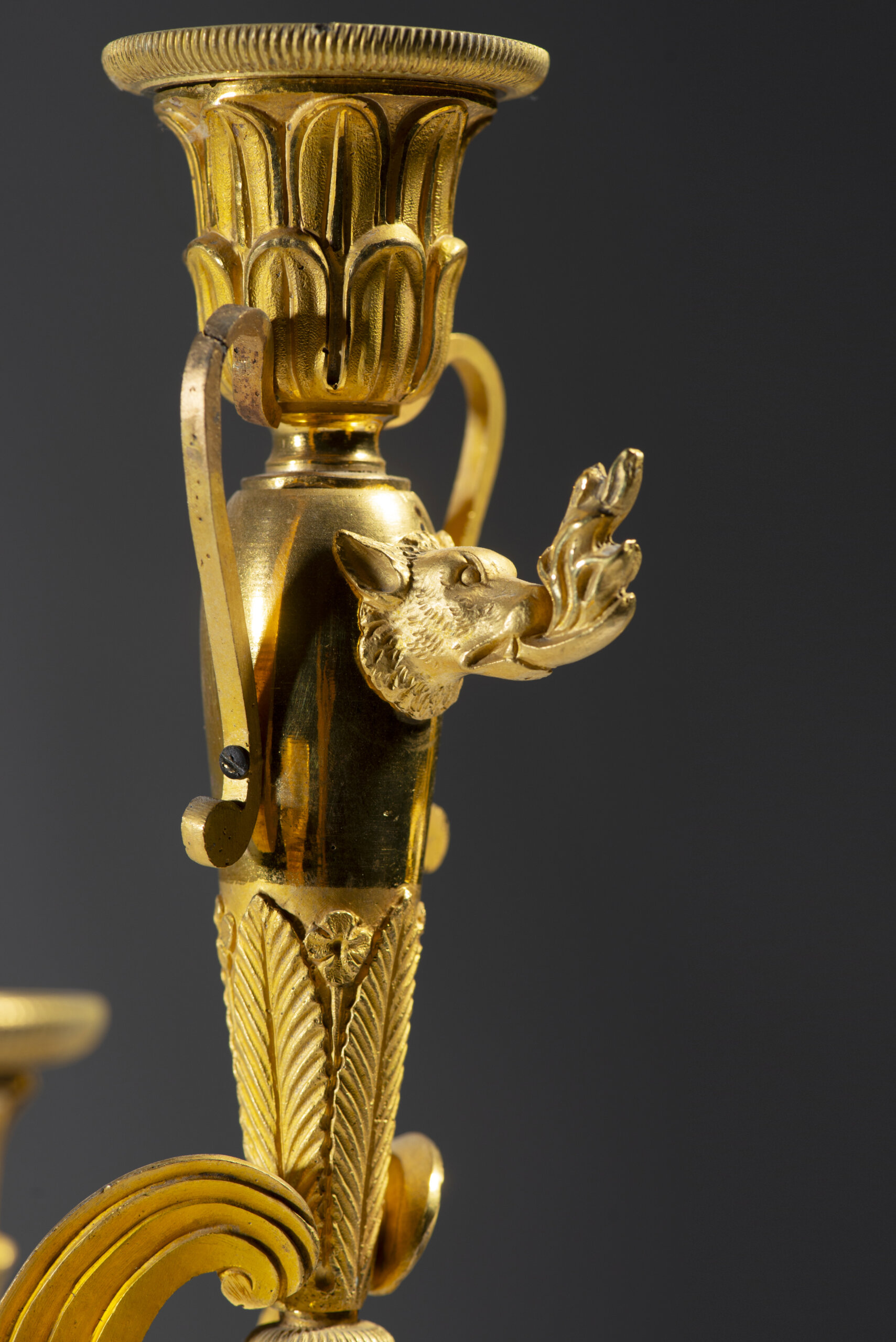
The side branches decorated with foliate motifs and terminating in campana-shaped nozzles
The central stem rising between the figure’s wings and surmounted by a vase à l’antique with scrolling handles, applied with a wolf’s head issuing flames and supporting the central light
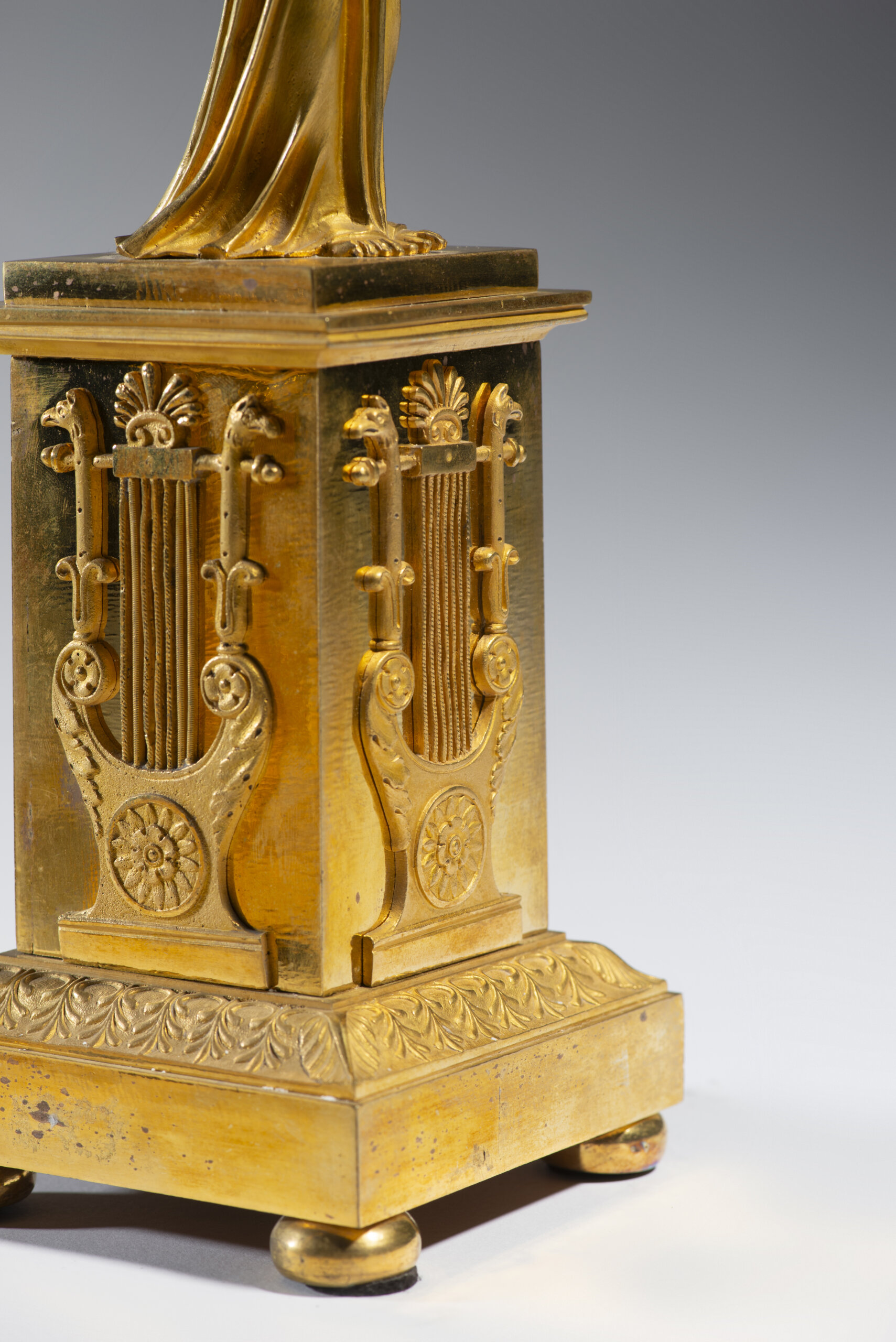
The bases applied with lyres and decorated with palmette and foliate friezes, raised on ball feet
Possibly Russian, St Petersburg, first quarter of the 19th century
After a model attributed to Claude Galle (1759-1815)
Height: 51 cm
Additional Information
The present pair of candelabra draws on the decorative vocabulary developed in Paris in the early 19th century from the designs of Charles Percier and Pierre-François-Léonard Fontaine, in which winged female figures personifying Victory or Fame serve both a sculptural and a structural function. This type of composition was adopted by some of the leading bronziers of the period, including Claude Galle (1759-1815) and Pierre-Philippe Thomire (1751-1843), and was particularly favoured in Imperial Russia.
The relationship between the present model and the work of Claude Galle is especially apparent in the use of a winged female figure supporting a vase or amphora above her head, from which the central axis of the candelabrum rises. Comparable arrangements are found in several candelabra attributed to Galle, in which female figures support vases of classical form surmounted by candle branches. This association is further supported by another known pair of the same model, also in chased and gilt bronze, with figures of Fame, wolf heads issuing flames and lyres applied to the pedestals, offered in Lille in 2022 as a "Modèle de Claude Galle".
Other details, however, find closer parallels in the decorative repertoire associated with Pierre-Philippe Thomire, particularly the use of wolf heads from which elements connected with the candle branches emerge. The presence within a single design of features associated with different Parisian workshops is significant when considering a possible Russian origin. During the first decades of the 19th century, workshops in St Petersburg did not simply reproduce French models, but adapted and combined motifs drawn from the work of the leading Parisian bronziers. The presence in the present pair of elements associated with both Galle and Thomire may therefore reflect this process of adaptation and reinterpretation within Russian production.
The circulation of such models between Paris and St Petersburg is well documented. Russian candelabra made after models by Claude Galle are known, including a pair dated circa 1820-1830 incorporating hound masks and combining French and Russian decorative elements. That pair has in turn been related to a model produced in Galle's workshop for the Russian market circa 1805. The work of bronziers active in St Petersburg, including Friedrich Bergenfeldt and Andrei Schreiber, likewise demonstrates the direct use and adaptation of contemporary French models.
The scale of the present pair, approximately 50 cm high, their square pedestals and the use of winged female figures also find parallels in Russian candelabra of the first quarter of the 19th century. Taken together, these typological features and the combination of motifs associated with both Claude Galle and Pierre-Philippe Thomire support a cautious attribution to St Petersburg manufacture, after French models and, more specifically, after a composition associated with Claude Galle.
Can’t attend the saleroom?
Bid by Telephone or place and Absentee Bid
Telephone Bidding
Bidding by phone, which can be requested by the buyer, by previously indicating which lots he/she wants to bid on the phone, as well as indicating the telephone number(s) through which he/she can be contacted with a minimum of a 3-hour notice before the auction starts. A phone bid implies that the buyer is committed to at least cover the minimum estimate on the portfolio.
Absentee Bidding
Written bidding, giving the auctioneer full powers to bid on behalf and at the expense of the potential buyers who explicitly request it on an appropriate form that should be filled in according to the instructions there listed, namely the maximum bid amount offered for each lot, if this form is received at least 3 hours before the auction starts.
Lot added to your bidding order.
Back to lots page