
138
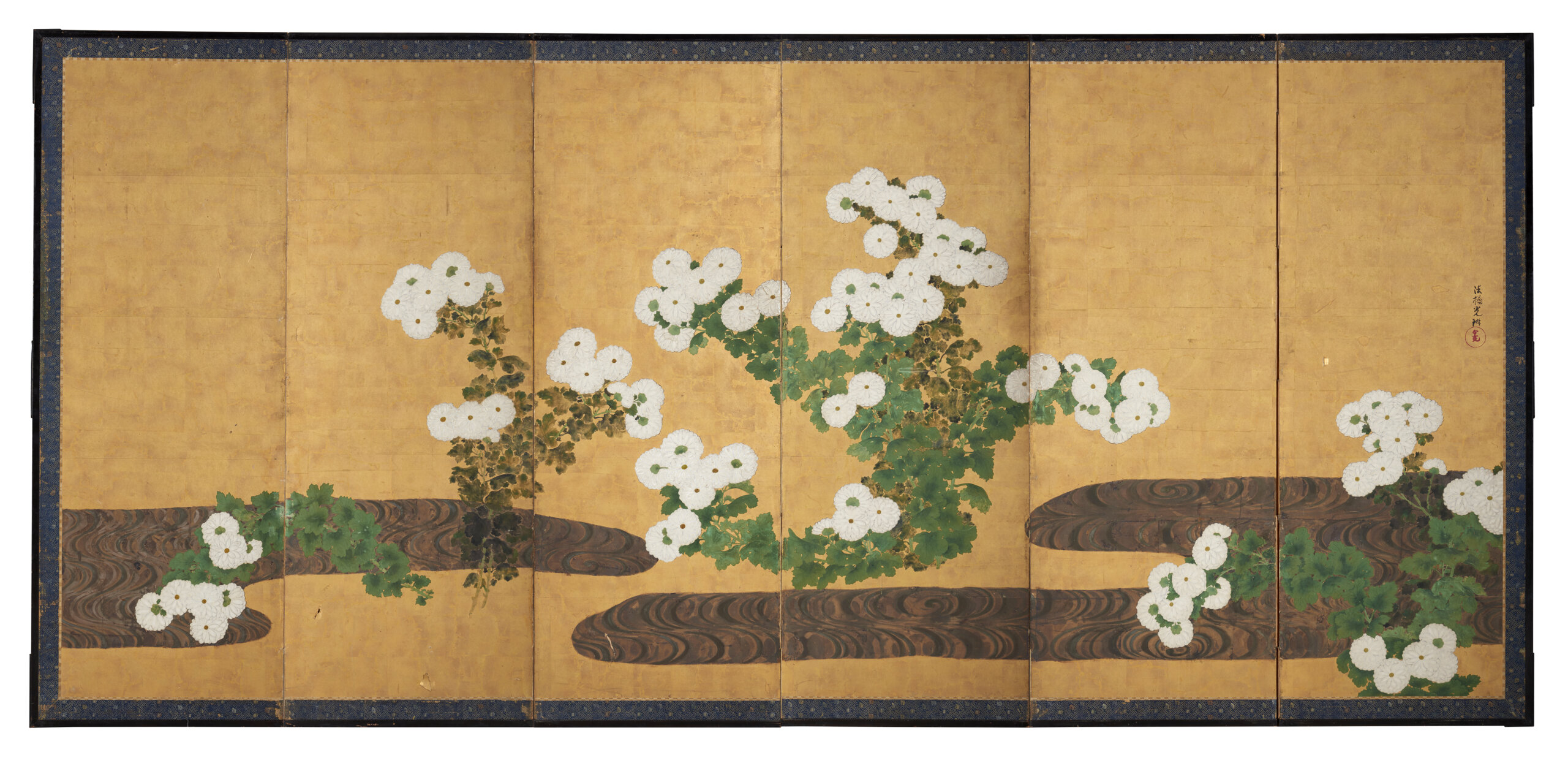
A six-panel byōbu screen
Estimate
18.000 - 22.000
Session
8 May 2026
Description
After Ogata Kōrin (1658-1716)
Japan, Edo period, 18th/19th century
Ink, pigments and gofun on gold leaf
Depicting white chrysanthemums in bloom by a stylised stream, the blossoms raised in relief against the gilt ground
In the Rinpa school tradition, following the celebrated models by Ogata Kōrin
Signed "Hokkyō Kōrin" and sealed, the signature and seal apocryphal
Silk brocade borders in blue and black-lacquered frame
The screen would benefit from conservation
(Signs of use and ageing commensurate with age, minor tears and scattered losses, paper hinges in need of attention between two panels)
六曲屏风,仿尾形光琳(1658-1716)风格,日本江户时代,十八至十九世纪。金地之上以水墨、彩绘及胡粉绘流水白菊,花瓣以胡粉堆塑,富立体感,承琳派之风。
169x357 cm
Additional Information
Ogata Kōrin (1658-1716) stands as one of the towering figures of Japanese painting and the supreme exponent of the Rinpa school, an artistic tradition founded in Kyoto in the early seventeenth century by Hon'ami Kōetsu and Tawaraya Sōtatsu. Rinpa is distinguished by its lavish use of gold and silver leaf, the decorative stylisation of natural motifs, and the evocation of the classical aesthetic of the Heian court. Kōrin was awarded the honorary Buddhist title of hokkyō in 1701, thereafter signing his works "Hokkyō Kōrin", as seen on the present screen.
Among his most celebrated compositions are precisely the chrysanthemum screens set beside flowing streams, a subject that became emblematic of the school and was repeatedly taken up by his followers throughout the eighteenth and nineteenth centuries, including Ogata Kenzan, Watanabe Shikō, Tatebayashi Kagei, and, during the so-called Edo Rinpa revival, Sakai Hōitsu and Suzuki Kiitsu.
The practice of executing works in the manner of Kōrin, reproducing his established compositions and affixing his signature and seal, should not be understood as forgery in the modern sense, but rather as an act of homage and an affirmation of artistic lineage, a current and fully legitimised practice within the Rinpa tradition. Screens of this kind, produced by painters of the school across the eighteenth and nineteenth centuries, stand today as important testimonies to the continuity and vitality of one of the most influential currents in Japanese art.
Closed Auction
