
137
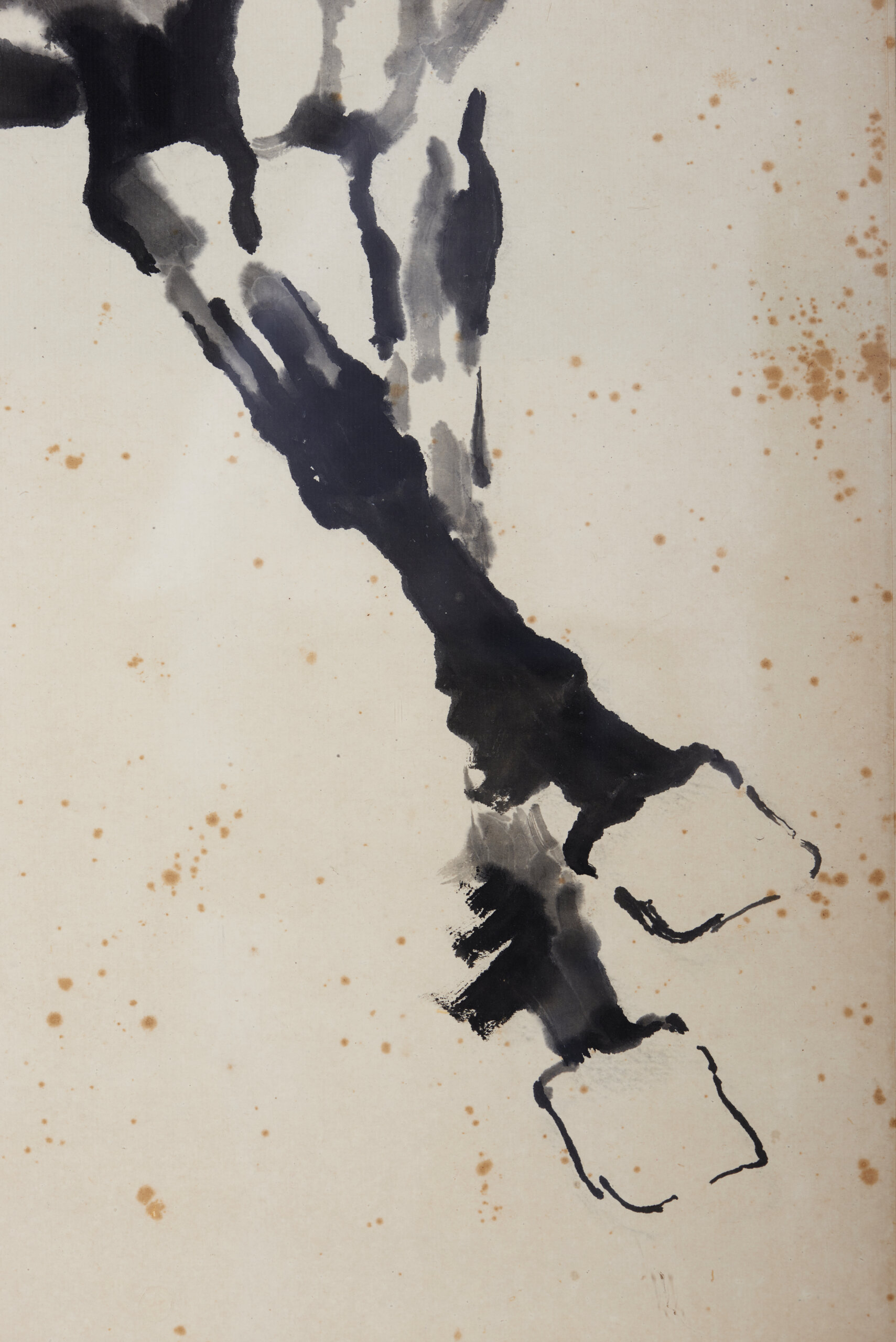
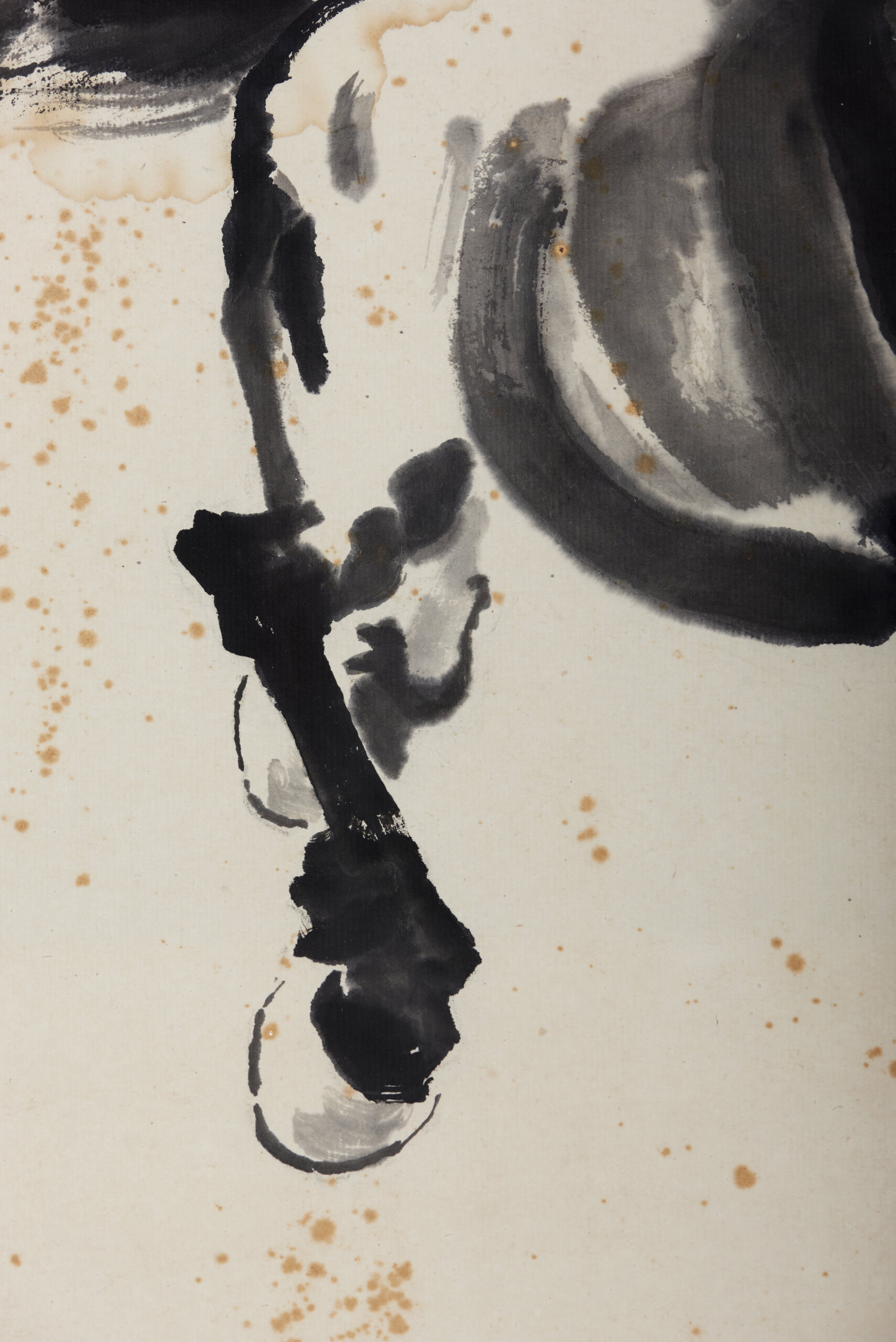
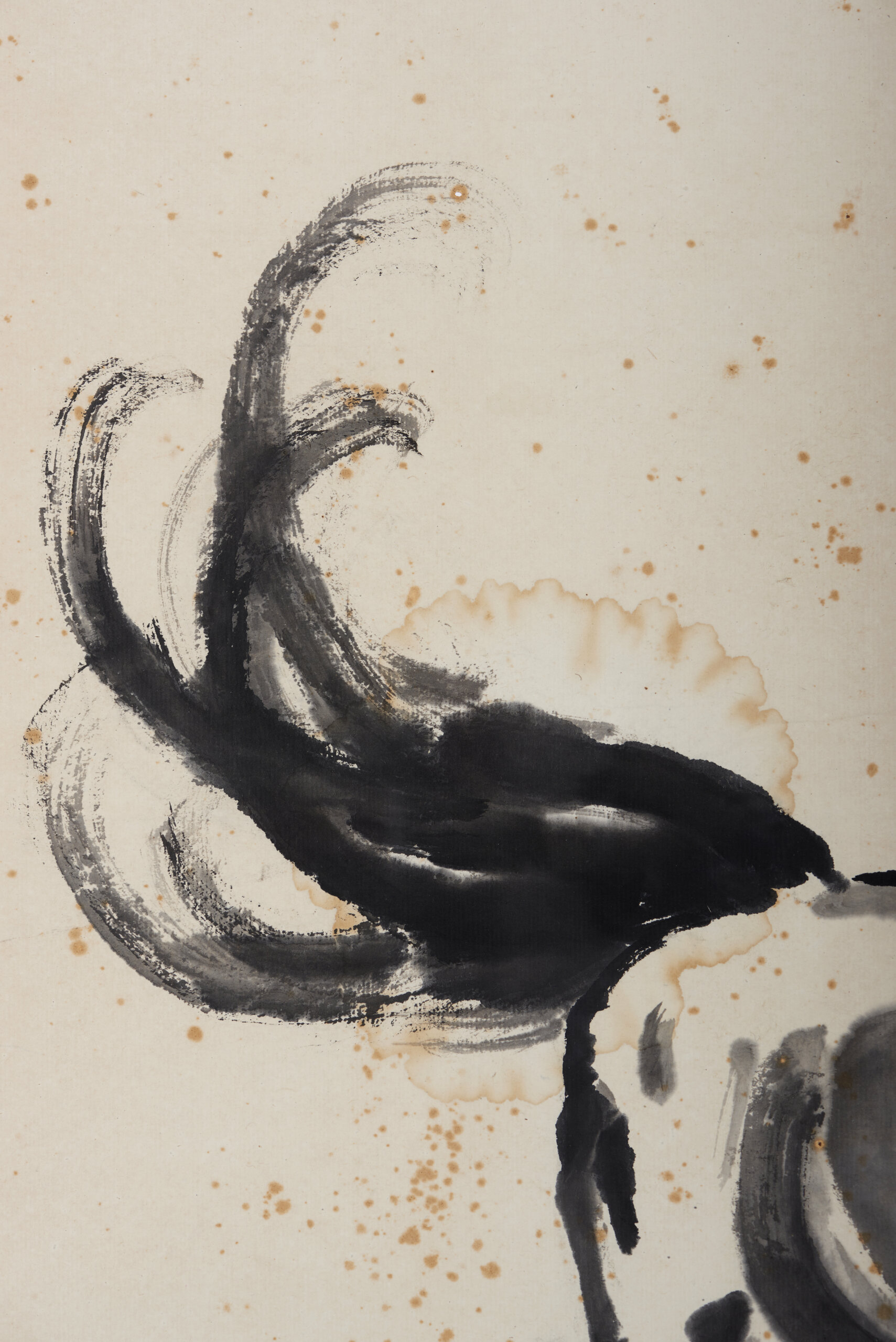
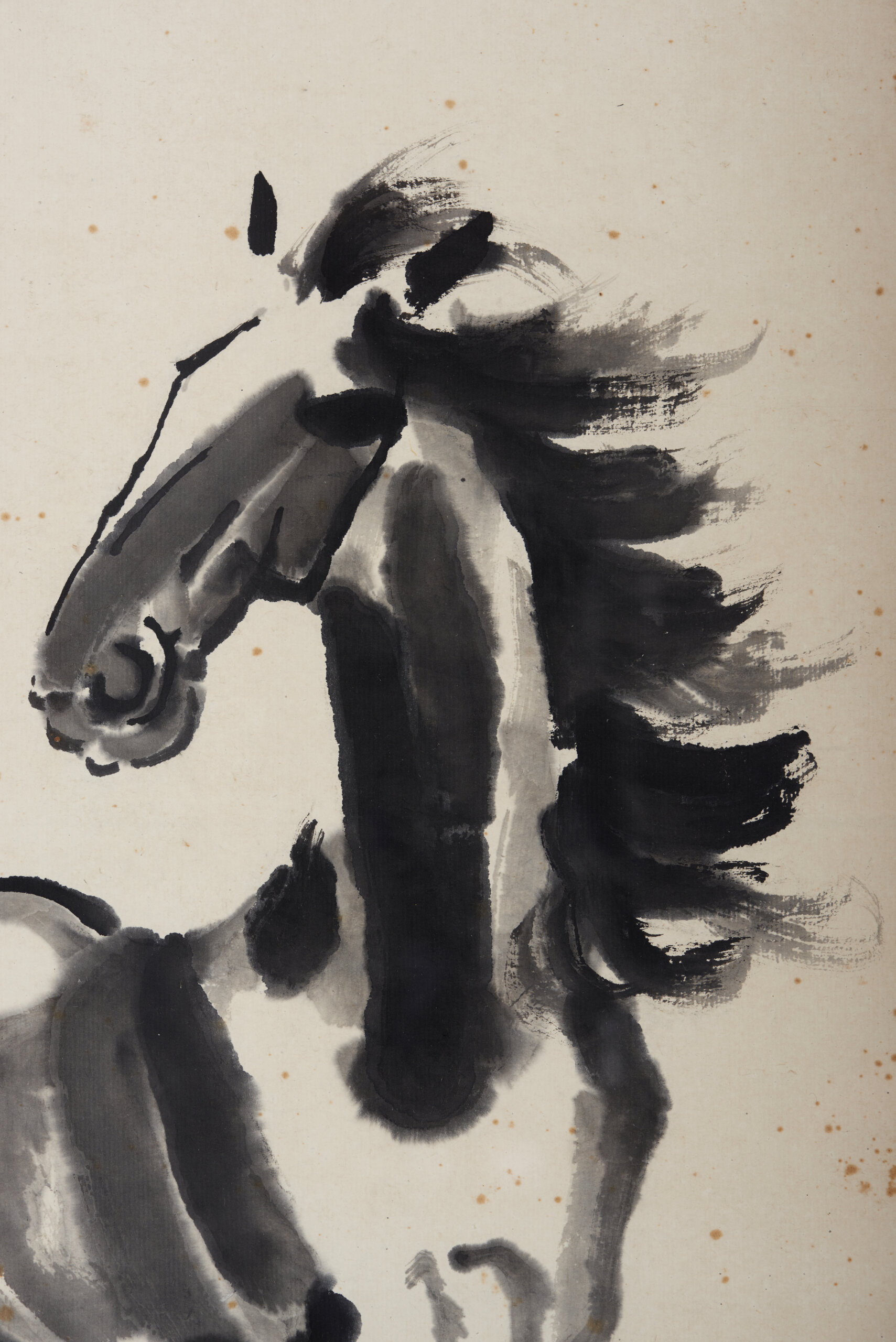
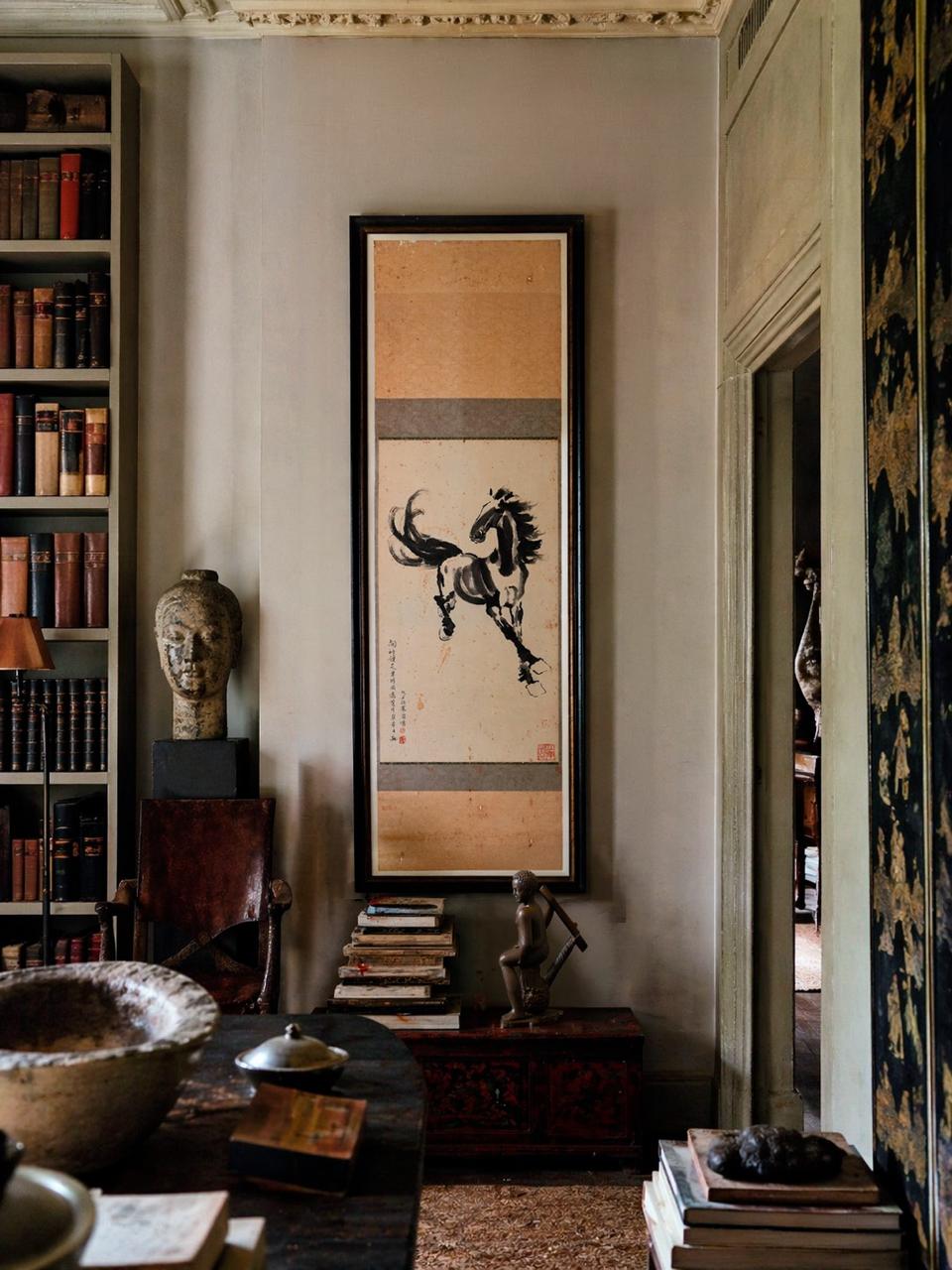
A galloping horse
Xu Beihong Attrib. (1895-1953)
Estimate
20.000 - 30.000
Session
8 May 2026
Description
China, dated to the cyclical year Wuzi, corresponding to 1948
Ink on paper, mounted as a hanging scroll (li zhou)
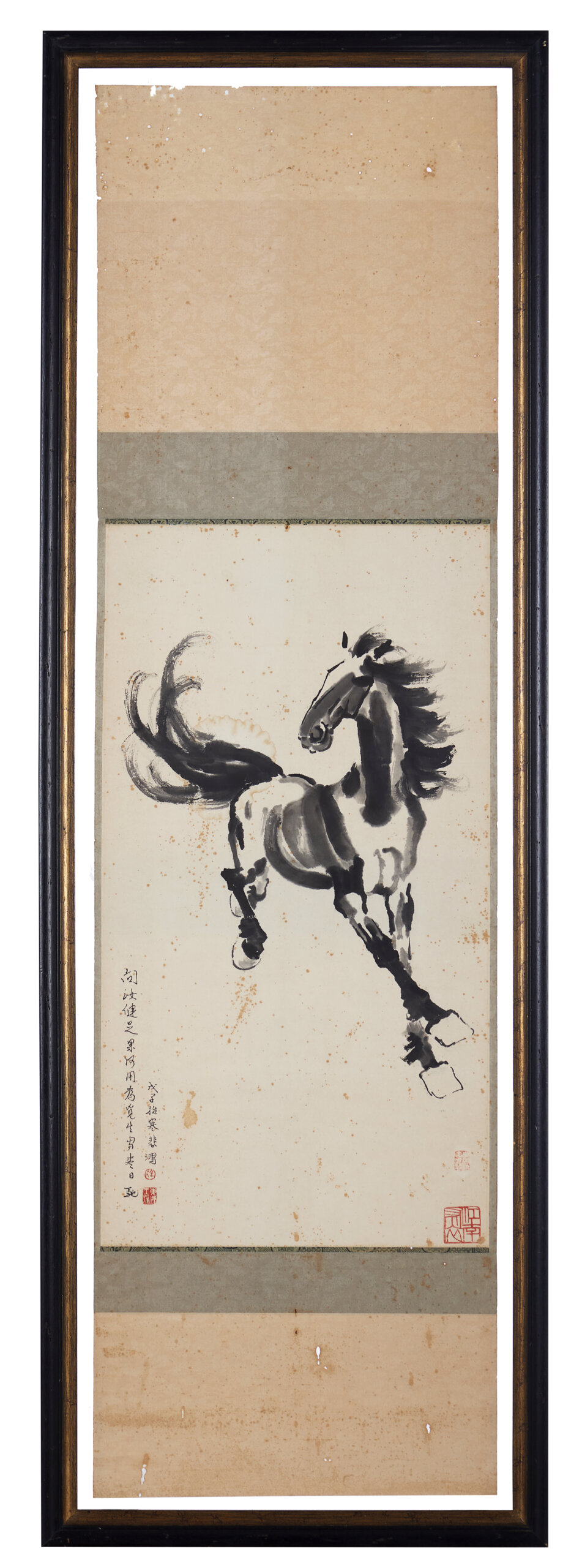
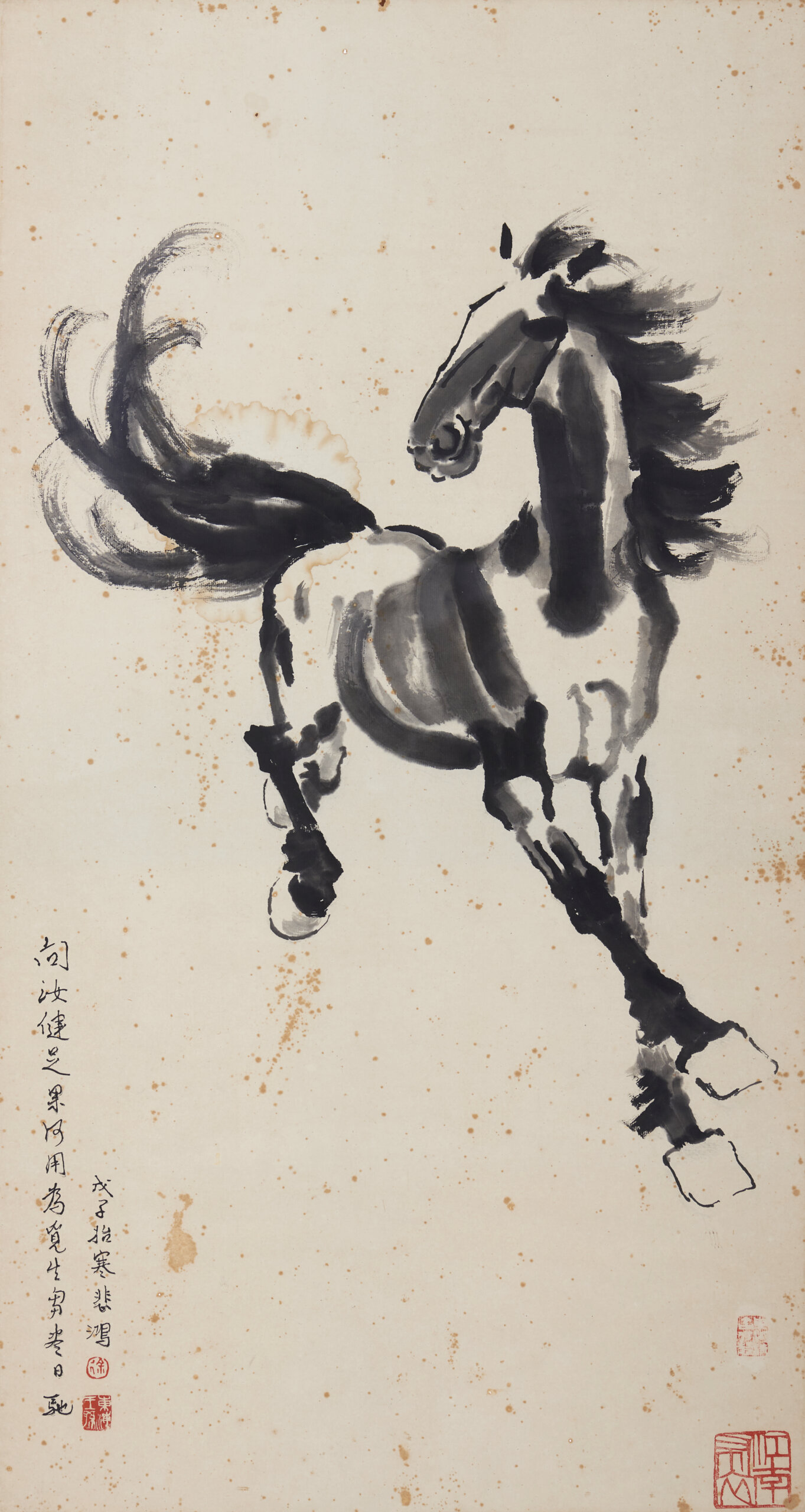
Depicting a galloping horse rendered in dynamic motion, with mane and tail swept by the wind, executed in vigorous brushwork and bold tonal contrasts characteristic of the master's oeuvre
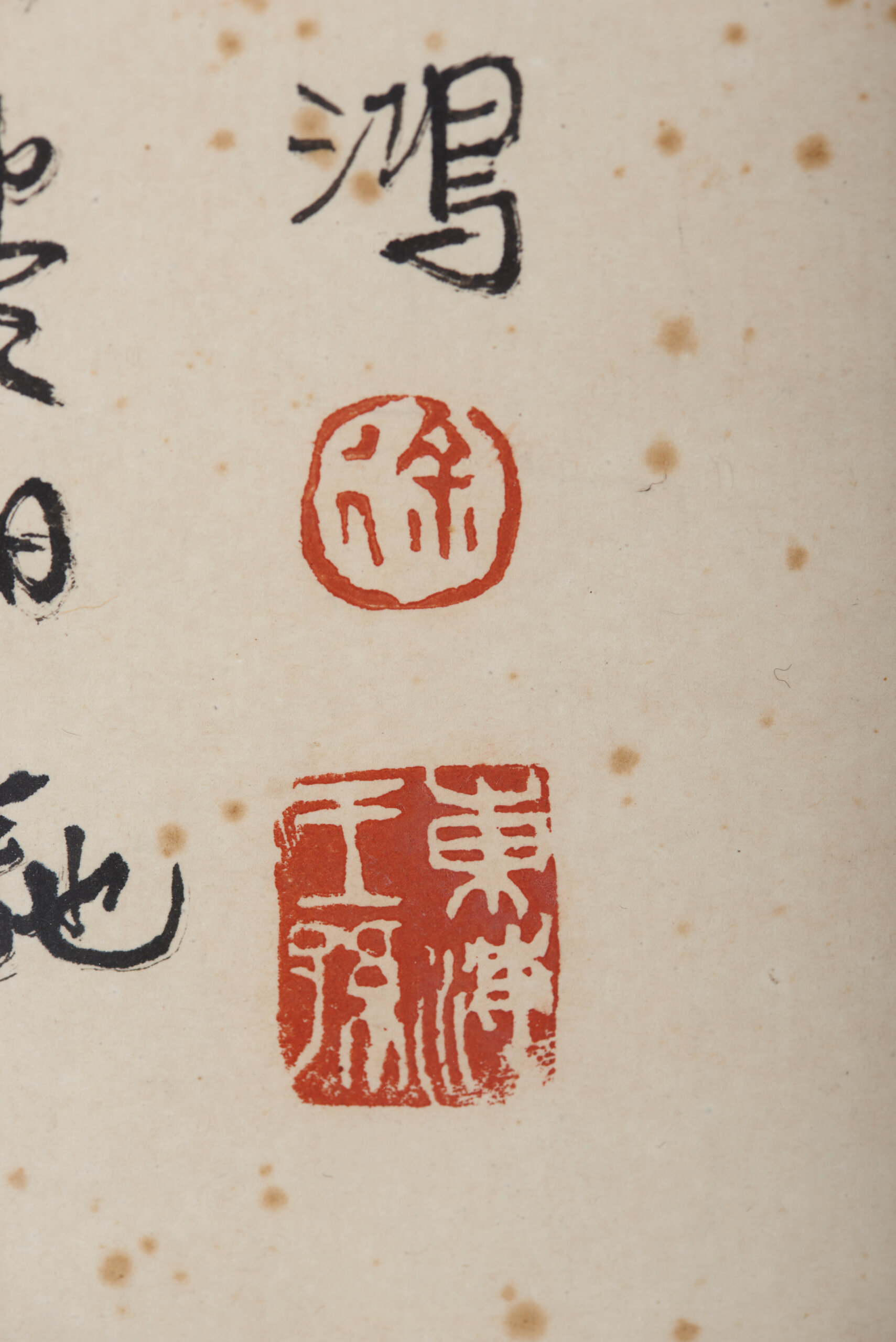
Inscribed by the artist at the lower left in two columns, with a poem reading "問汝健足果何用 為覓生芻盡日馳" (I ask you, what use are your strong legs, if to seek fresh fodder you gallop all day long), followed by the signature "戊子始寒 悲鴻" (Wuzi, beginning of winter, Beihong)
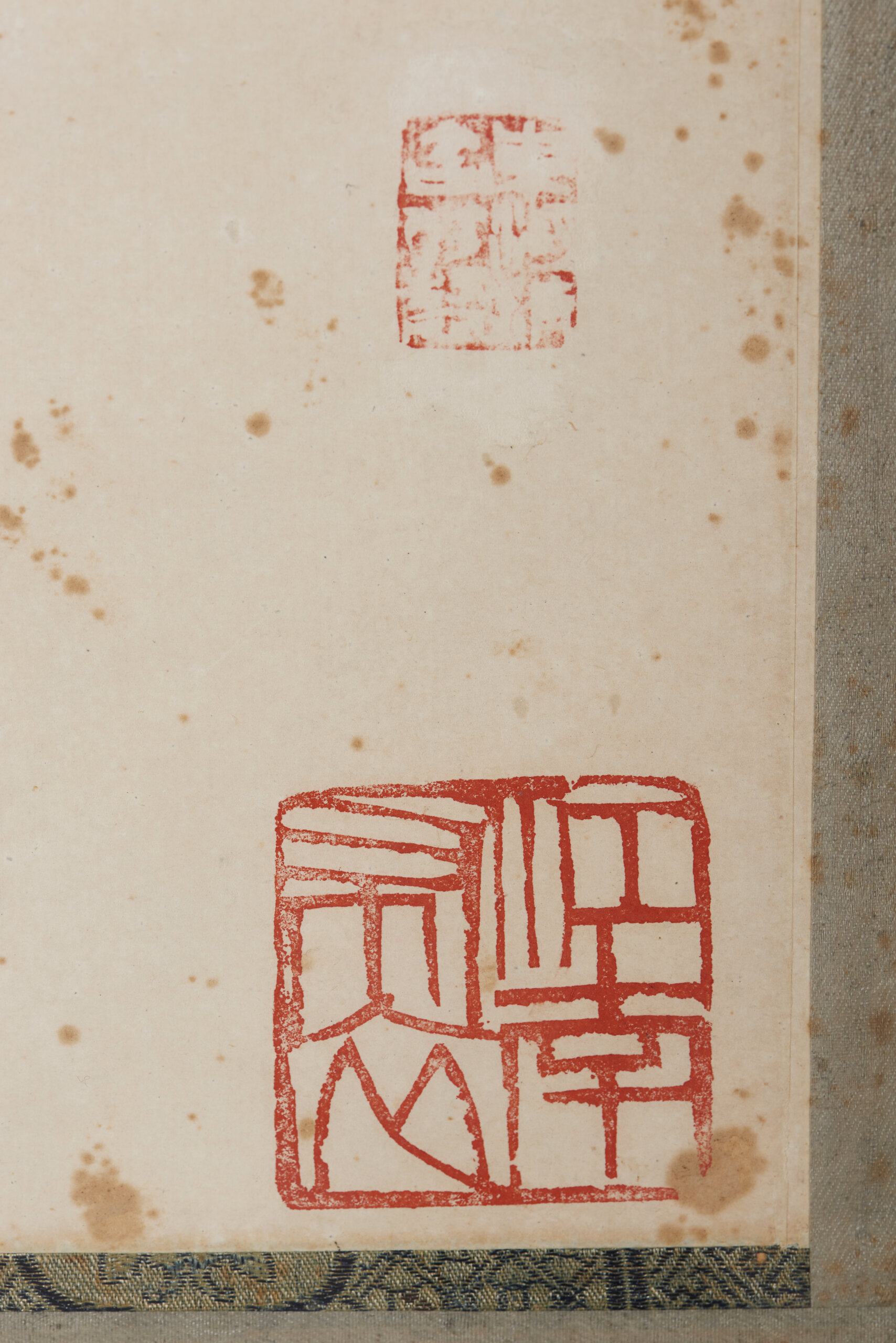
Bearing two red seals of the artist beside the signature and two further seals at the lower right
Traditional Chinese silk mounting, with inner border (jidao) of fine green brocade, intermediate section of grey-green silk with foliate pattern and upper panel (tiantou) of light beige silk with matching decoration
Presently presented flattened under glazed frame
(extensive foxing and water stains visible on the painted surface and on the mounting)
奔马图
175x49,5 cm (rolo)
88,5x48 cm
Additional Information
Xu Beihong (1895-1953) stands as one of the defining figures of twentieth-century Chinese painting, having played a decisive role in renewing traditional ink painting through the integration of Western academic principles acquired during his years in Paris. His galloping horses, executed in ink on paper with economy of brushwork and expressive energy, became his most recognisable subject and a symbol of the Chinese national spirit during the turbulent 1940s. The Wuzi year (1948) corresponds to a particularly prolific phase of his career, when he served as director of the Beijing National Art Academy.
Provenance:
Acquired by Manuel Vicente (1934-2013) in Macao; given by him to Maria Palmira Vicente Fino as a wedding gift; thence by direct descent, Fino family collection.
Manuel Vicente (1934-2013) was one of the central figures of modern architecture associated with Macao. Trained in Lisbon, he settled in Macao from 1962, where he developed an essential part of his work. His architecture accompanied the urban transformation of the city during the second half of the twentieth century, mediating the Portuguese heritage, Chinese culture and the rapid urban expansion of its final decades. Among his works are the Fai Chi Kei housing complex, the Barra Towers, the TDM building, the World Trade Center and the masterplan for the closure of Praia Grande Bay. Owing to the depth of his connection to the territory and his influence on the modern image of the city, he is often remembered as the "architect of Macao". The presence of this painting in his collection, at a time when the work of Xu Beihong was already a major reference of modern Chinese art, reflects the taste and cultural sensibility of a figure deeply rooted in Macao's cultural life.
Closed Auction
