
64
"Nuage"
Guy de Rougemont (1935-2021)
Estimate
100.000 - 150.000
Session
8 October 2026
Hammer Price
Register to access this information.Description
Brass, plexiglass and interior lighting
Signed, dated 1972–2006 and numbered 2/8
Marked “Pierre Passebon éditeur”
(restorations)
46x149x83 cm
Category
Furniture Modern and Contemporary Art
Note about the lot
Guy de Rougemont, Nuage
Few pieces of furniture capture the daring of 1970s Paris as vividly as Guy de Rougemont's Nuage. Part table, part sculpture, part light source, it floats somewhere between categories, which is exactly where its creator wanted it.
Rougemont was trained as a painter and made his name as a sculptor of bold, colourful geometric forms. Furniture was not part of the plan until 1969, when Henri Samuel, one of the most influential decorators of his generation, came across Rougemont's Volumes sculptures at the Suzy Langlois gallery in Paris. Samuel saw in them the possibility of something new and asked the artist to try his hand at furniture. Rougemont accepted, on one condition he set for himself: the pieces would take on a function without giving up their identity as sculpture.
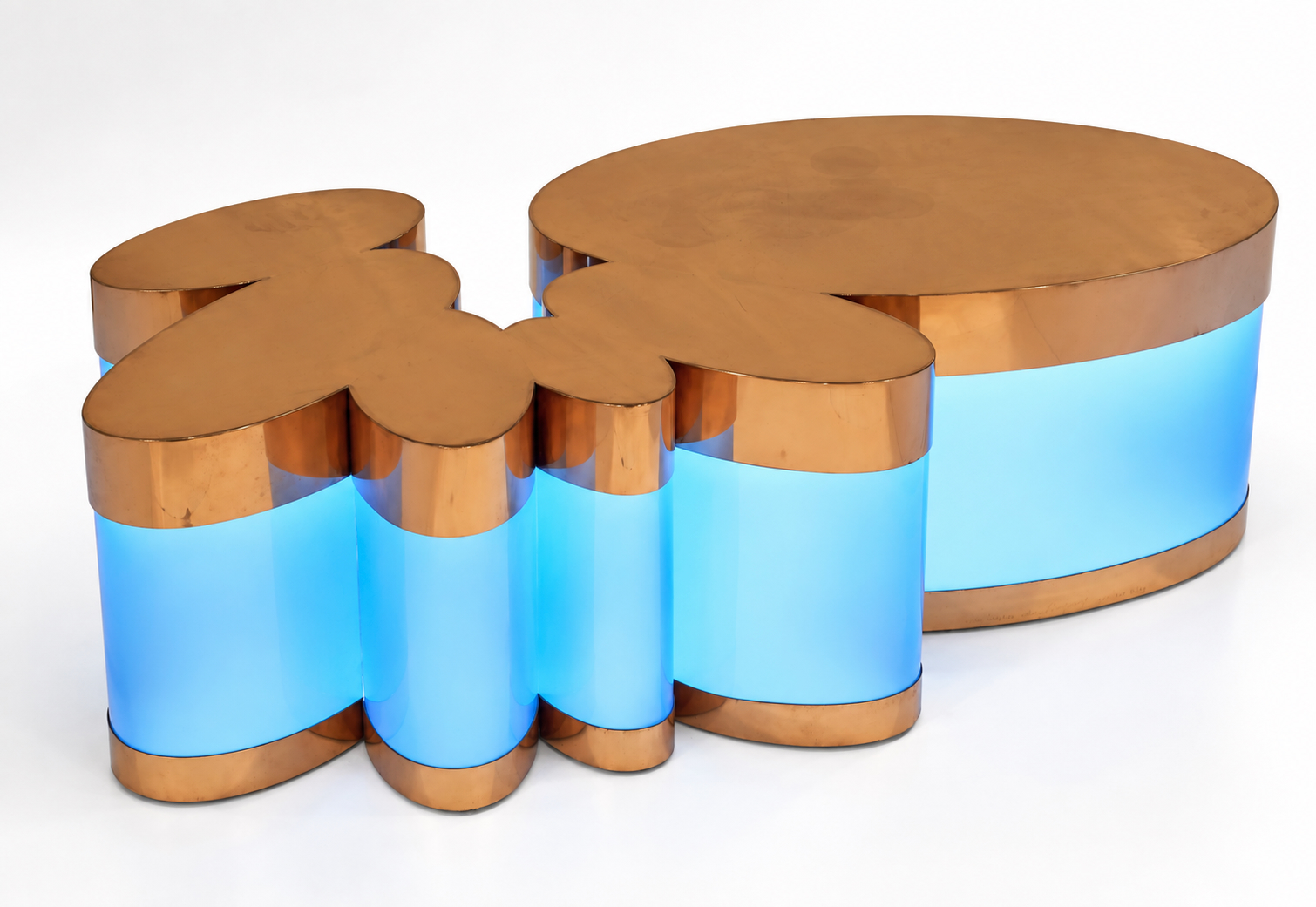
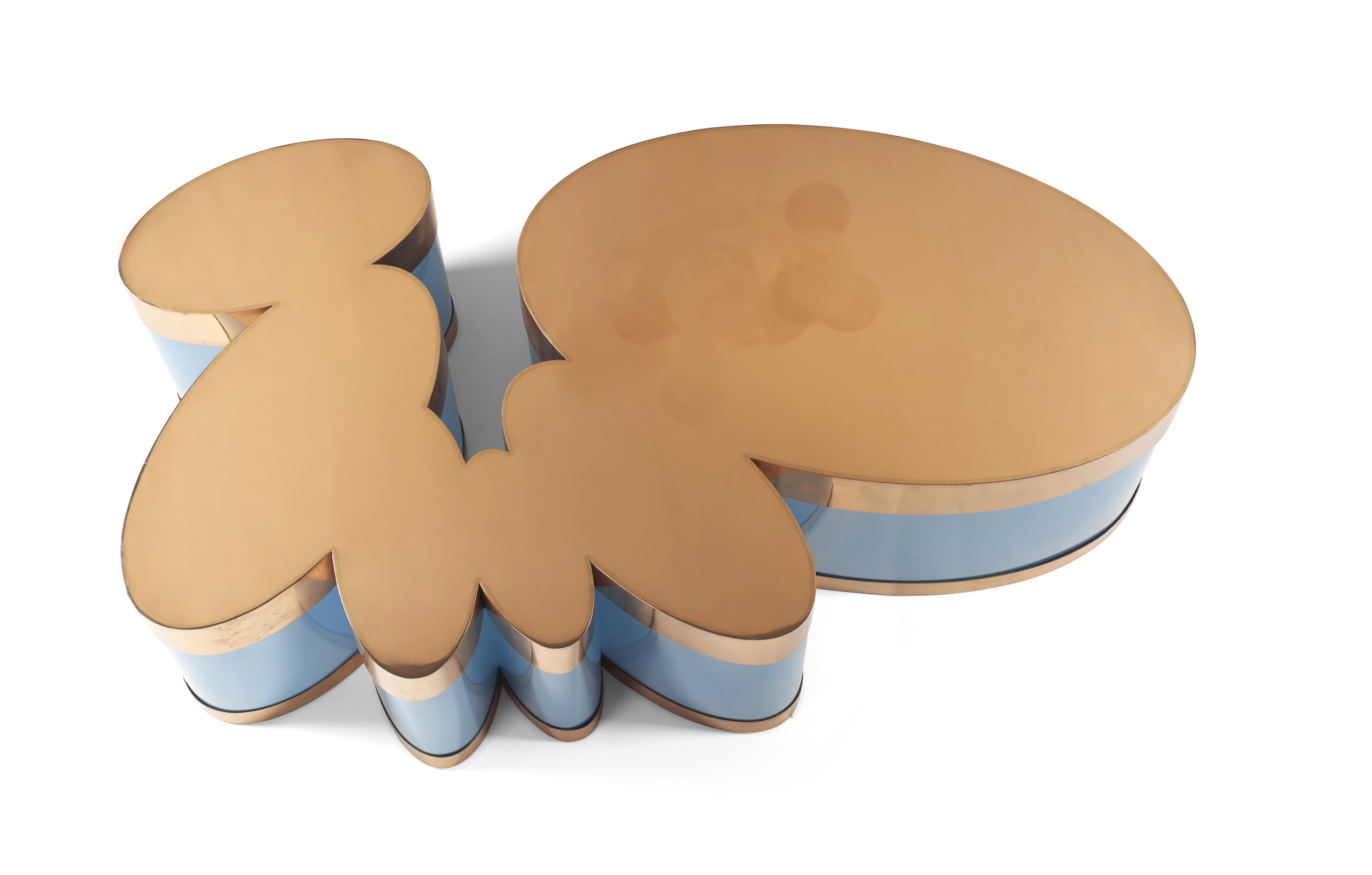
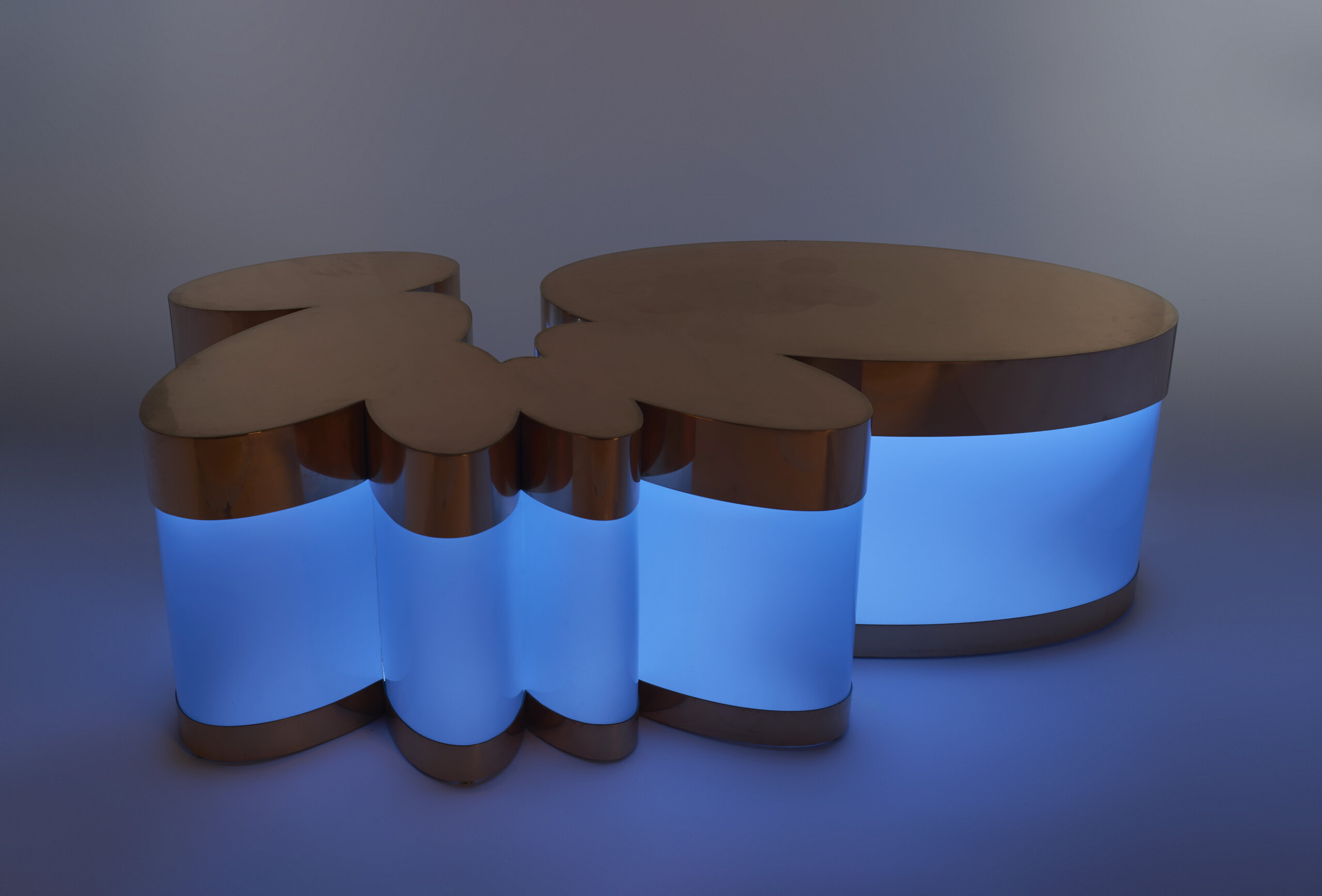
The answer arrived in the early 1970s. Officially titled Ellipse, the table soon became known by the name that suits it best, Nuage. Its outline swells and softens like a cloud drifting across the floor, the polished metal catching reflections from the room while the Plexiglas body seems to glow from within.
Samuel gave the table a place of honour in the grand salon of his own apartment on the rue du Faubourg Saint-Honoré. It was a room of red silk walls and nineteenth-century panelling, which Samuel filled with works by the boldest artists of the day, among them Diego Giacometti, César, Philippe Hiquily and François Arnal. The clash of old and new made the salon one of the most talked-about interiors of its time, and the Nuage became one of its emblems, a defining image of what artist-made furniture could be.
Half a century later, the Nuage remains Rougemont's signature piece and a touchstone of French design from that era. In 2006, working with the Paris gallerist and publisher Pierre Passebon, Rougemont revisited his original 1972 design in a limited edition of eight. The table offered here is number 2 of that edition, signed, dated 1972–2006 and marked "Pierre Passebon éditeur". Seen in its illuminated version, it shows the Nuage at its most theatrical: when lit, the blue body seems to hover beneath its metal crown, turning a functional object into a luminous presence in the room.
Closed Auction
