
287
European School, 19th century
Estimate
45.000 - 65.000
Session 2
15 October 2025
Hammer Price
Register to access this information.Description
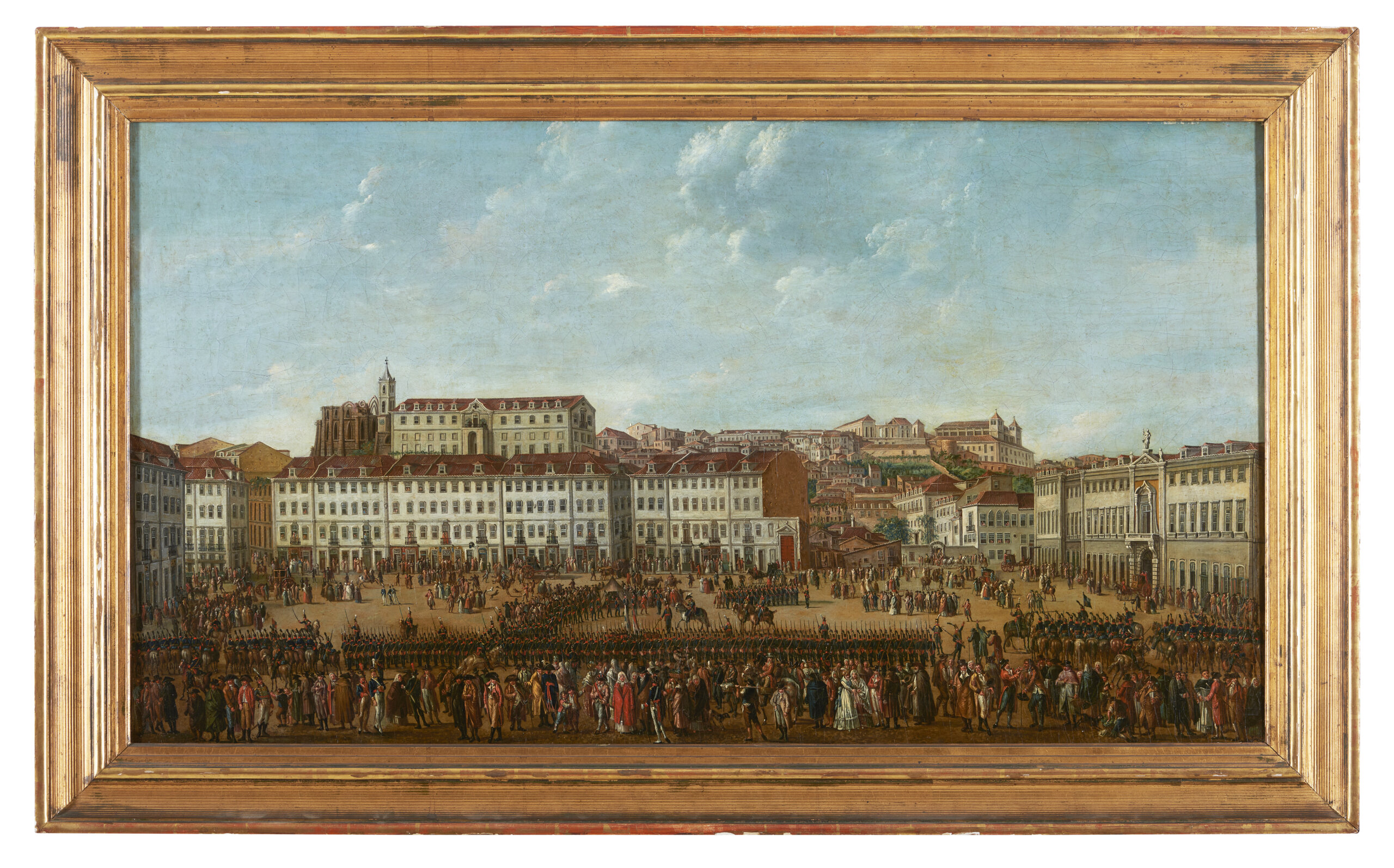
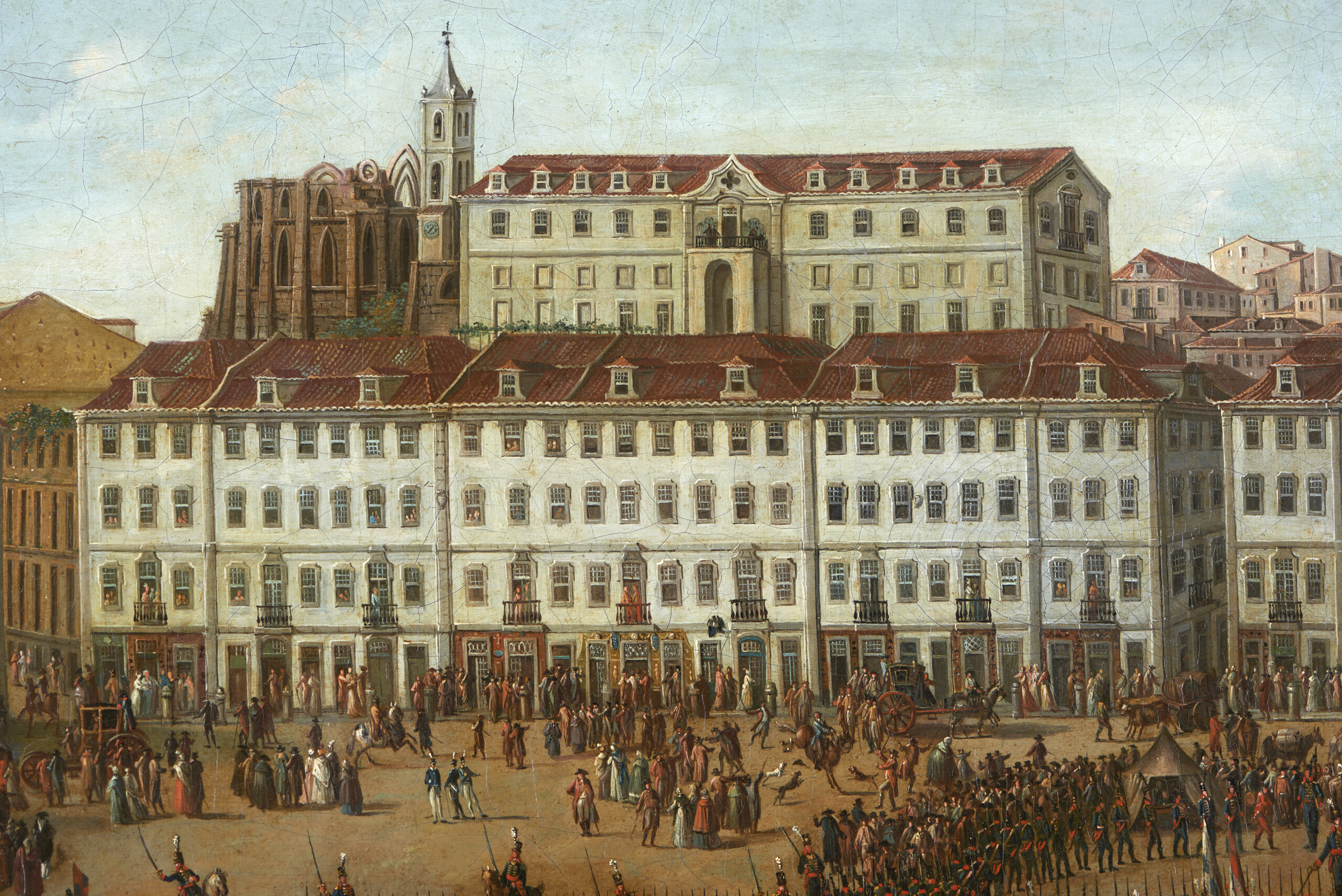
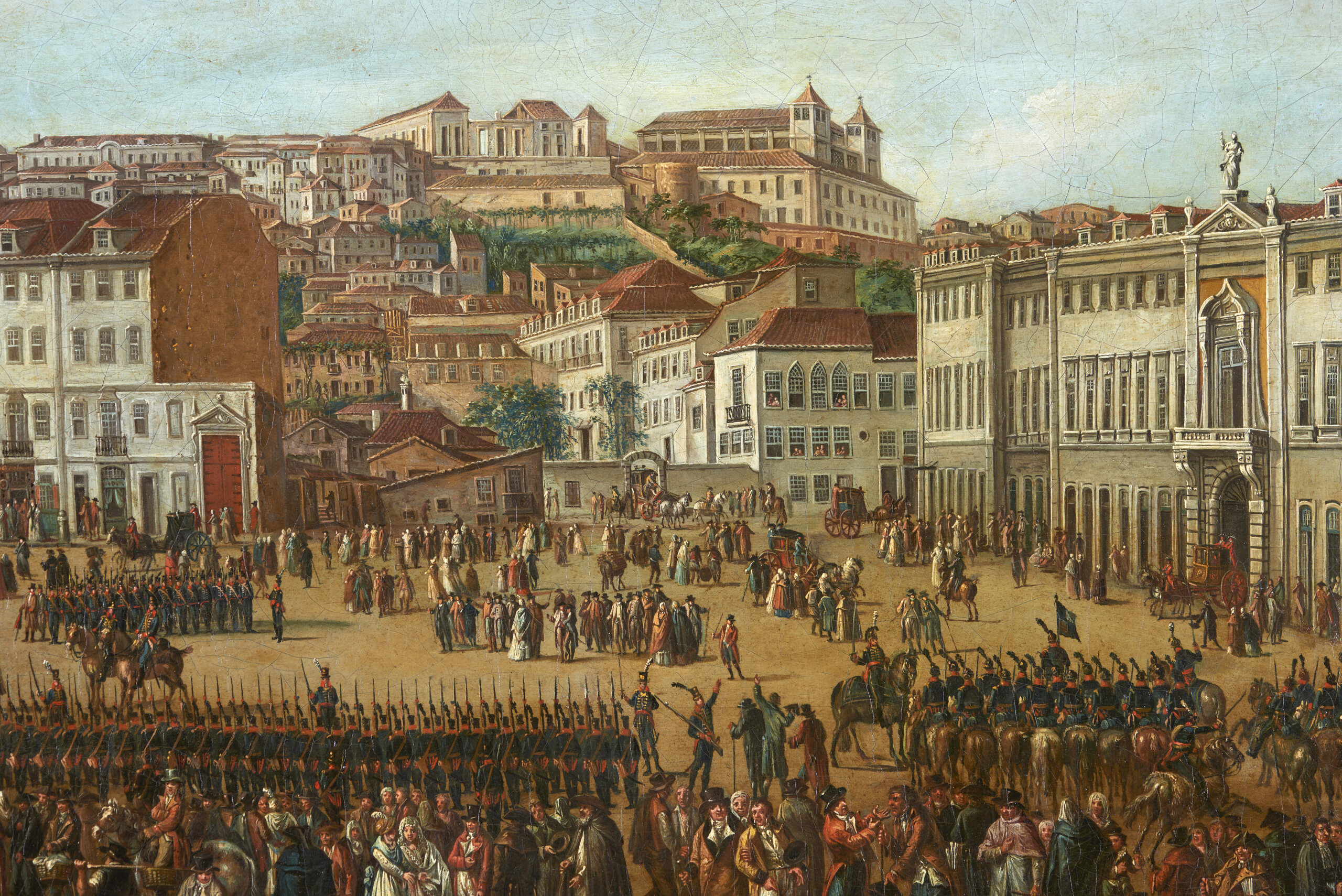
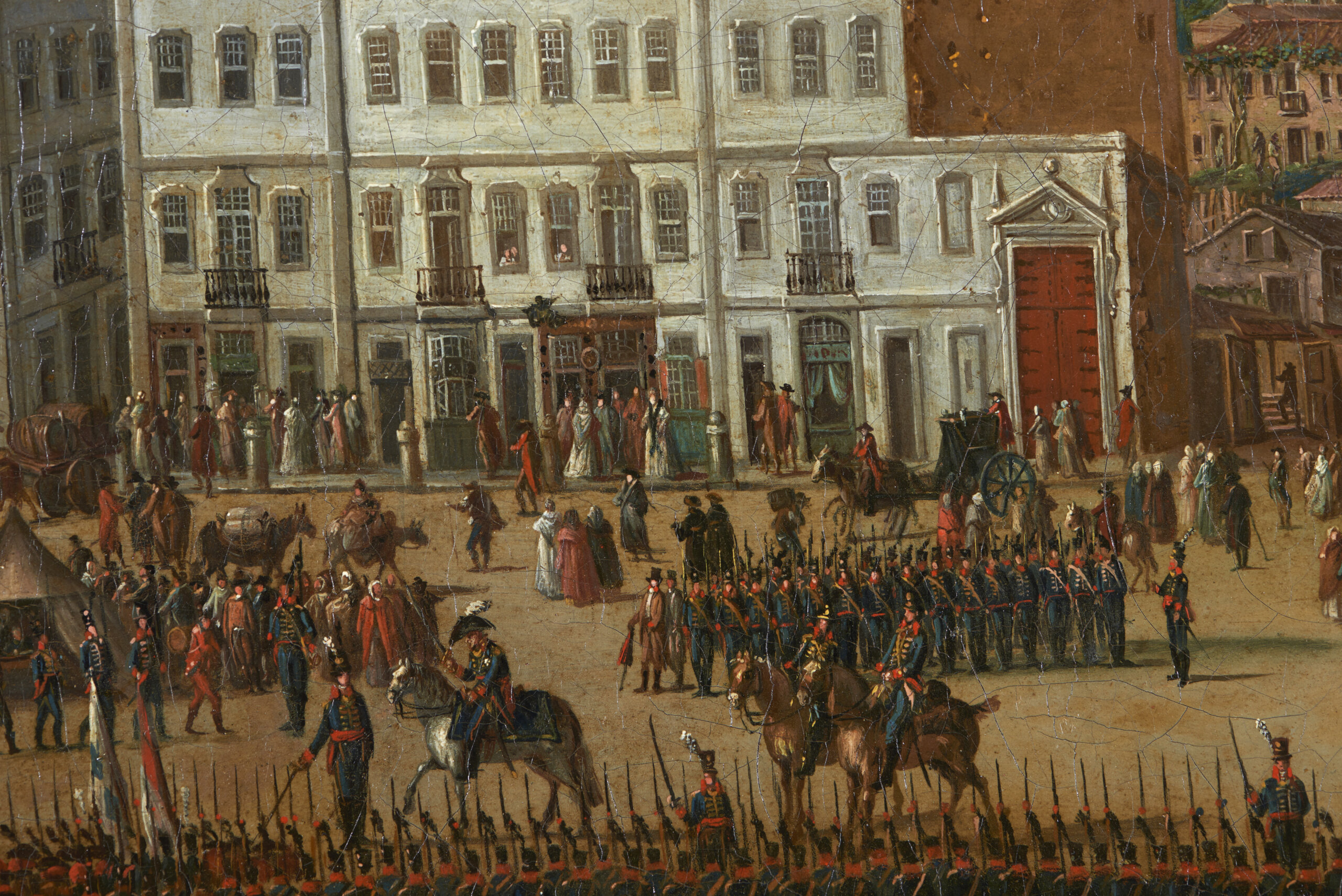
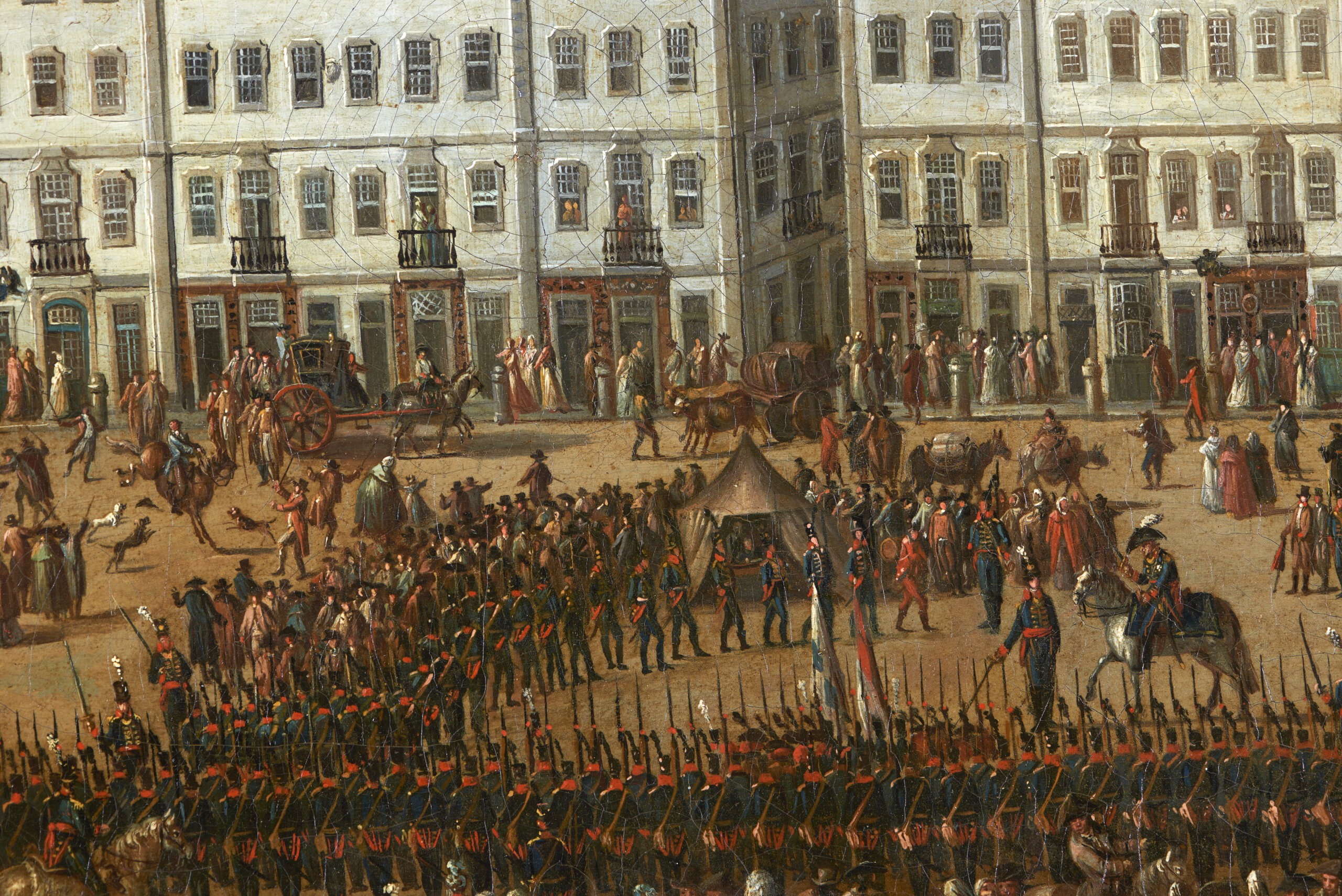
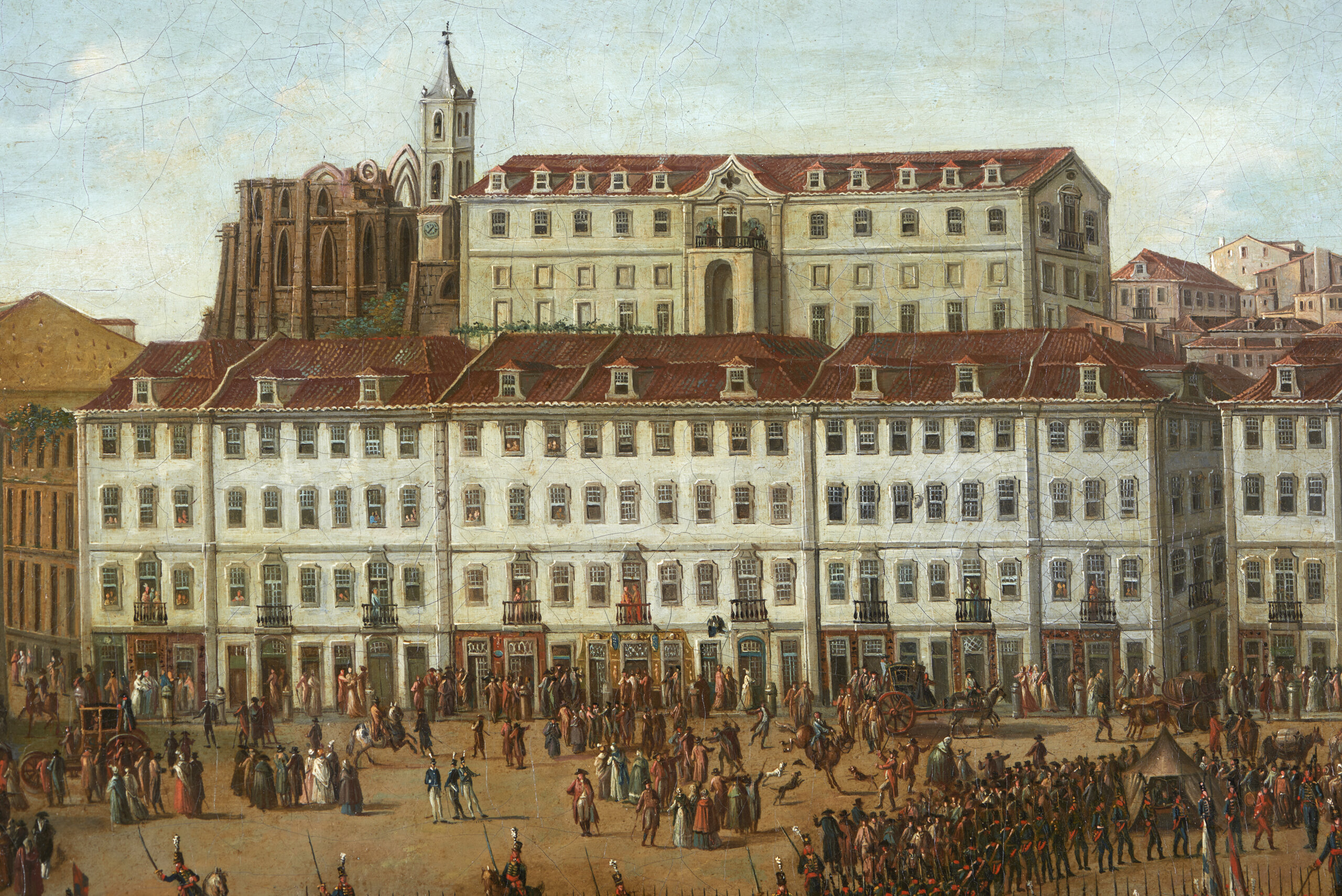
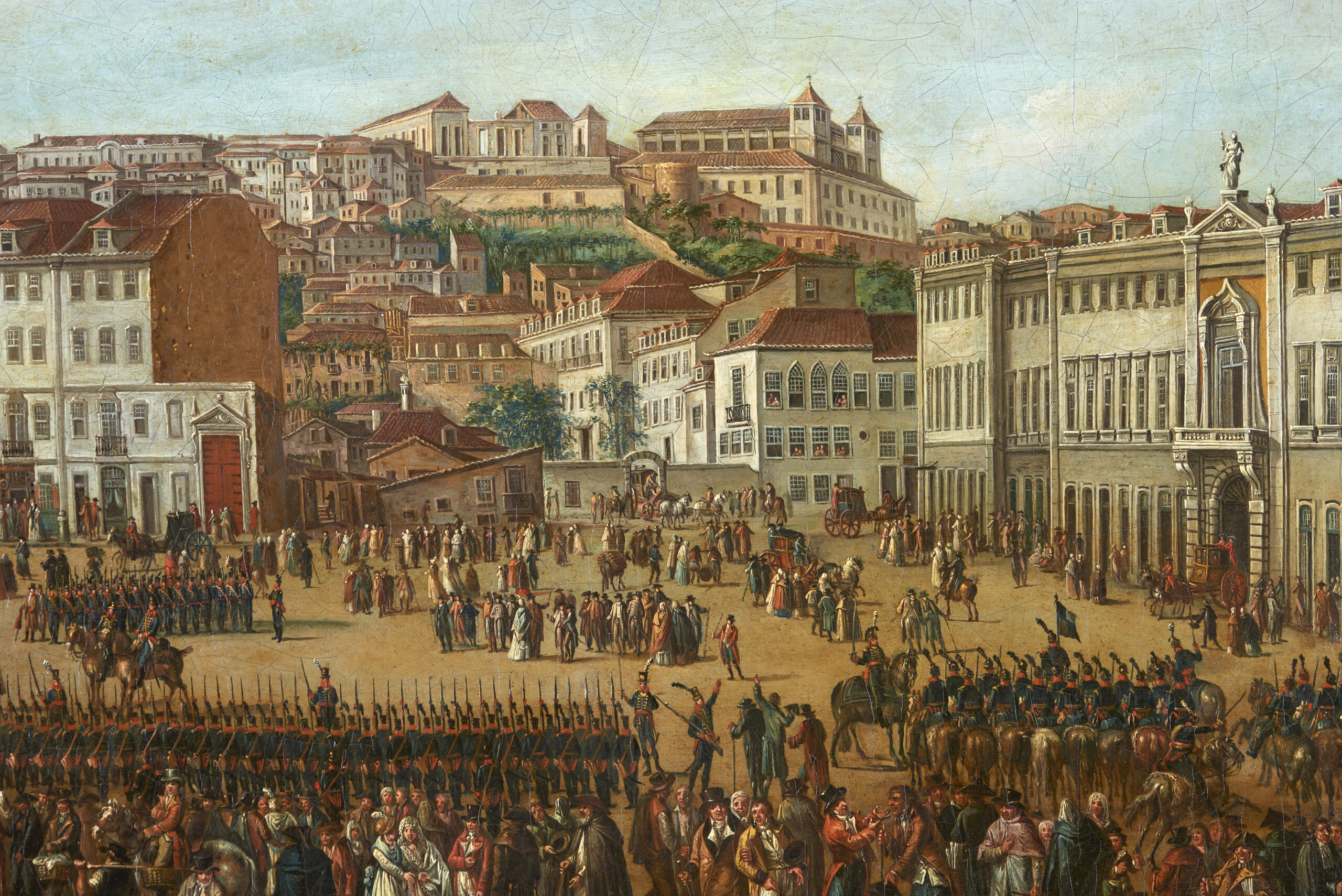
Junot reviewing the troops at Rossio
Oil on canvas
67x120 cm
Category
Paintings
Provenance
Collection of Eduardo Mendia, possibly acquired by inheritance from his grandfather, the collector Alfredo Guimarães (1860–1923).
Exhibitions
Exhibition of Documents and Works of Art relating to the History of Lisbon, Museu Nacional de Arte Antiga, Lisbon, 1947, cat. p. 156.
Bibliographical and Iconographic Exhibition of the Houses of the Lisbon Chamber, Palácio Galveias, Lisbon, 1951; 1972; reproduced in Revista Municipal, Year XXXIII, no. 132/133, p. 25.
A panorama of Rossio in the early 19th century
PEDRO FLOR
Universidade Aberta
Instituto de História da Arte – NOVA/FCSH – IN2PAST
The work reveals the western side of Rossio Square in Lisbon at the beginning of the 19th century. In the background, silhouetted against the sky, we observe the Carmo Convent and its Gothic chancel, somewhat ruined, an indelible testimony to the 1755 Earthquake and evident counterpoint to the rational order of austere, simple and symmetrical character of the Pombaline reconstruction of the buildings that delimit the square below (França, 1977). To the right of the conventual tower, and facing the former conventual garden glimpsed in the treetops, we see an extensive building, pierced at the centre by a door, surmounted by a balcony, where the friars could enjoy the views. The balcony's crowning shows us a counter-curved pediment and on the rear wall, we glimpse blue and white tile panels. In this building with several windows and dormer windows (five on each side and in each register) functioned the refectory on the ground floor and the dormitory on the upper floor. On the north-facing wall, the dormitory ends with a perfect arch balcony window and an oculus.
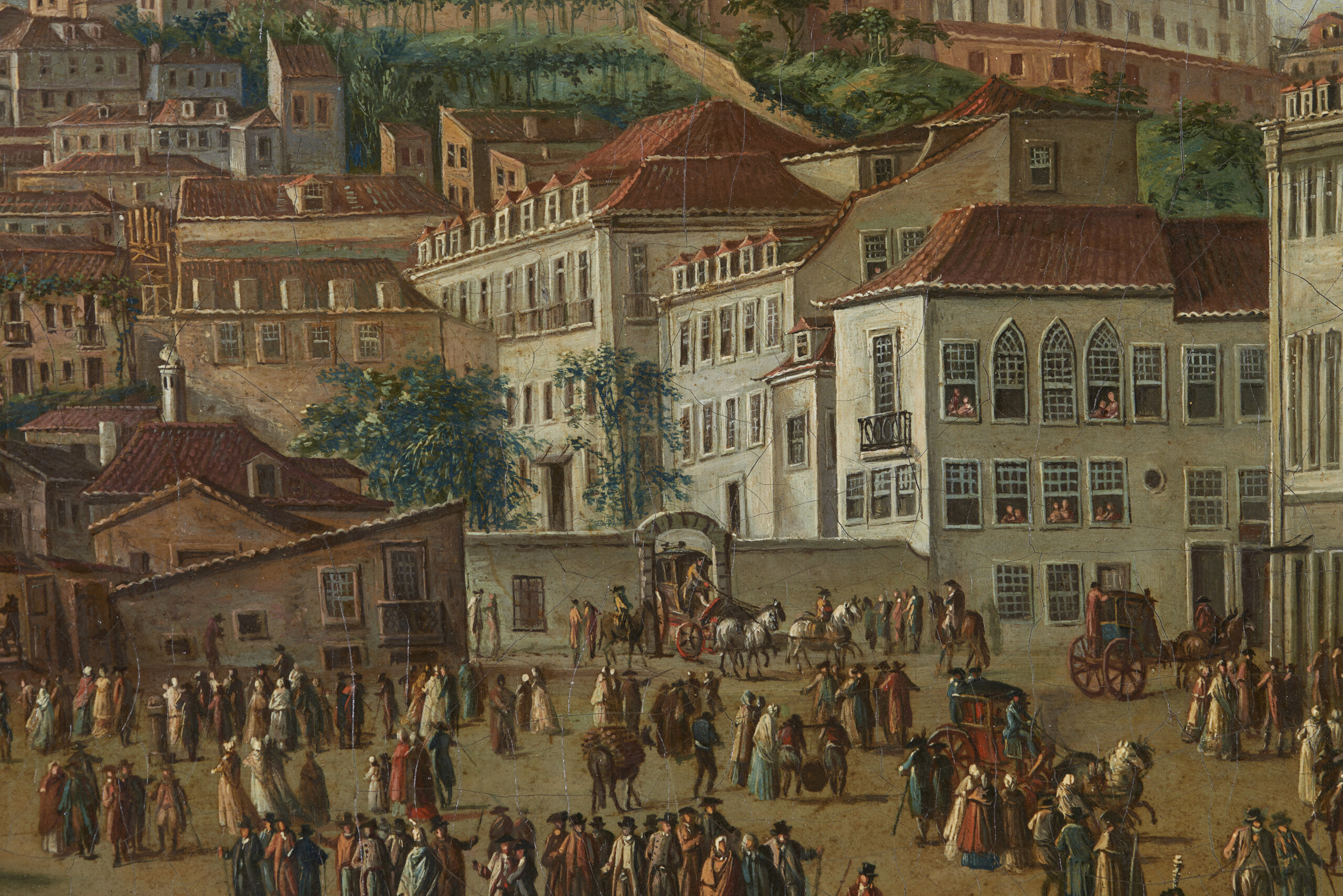
Following the horizon line, various houses are observed, at different heights and positions. To the right, at the extreme of this indistinct housing, three constructions can be identified, namely, i) the former Palace of the Marquesses of Niza or of the Patriarch; ii) the Count's Tower, next to a small wall and; iii) the former Professed House of the Society of Jesus and Church of São Roque.
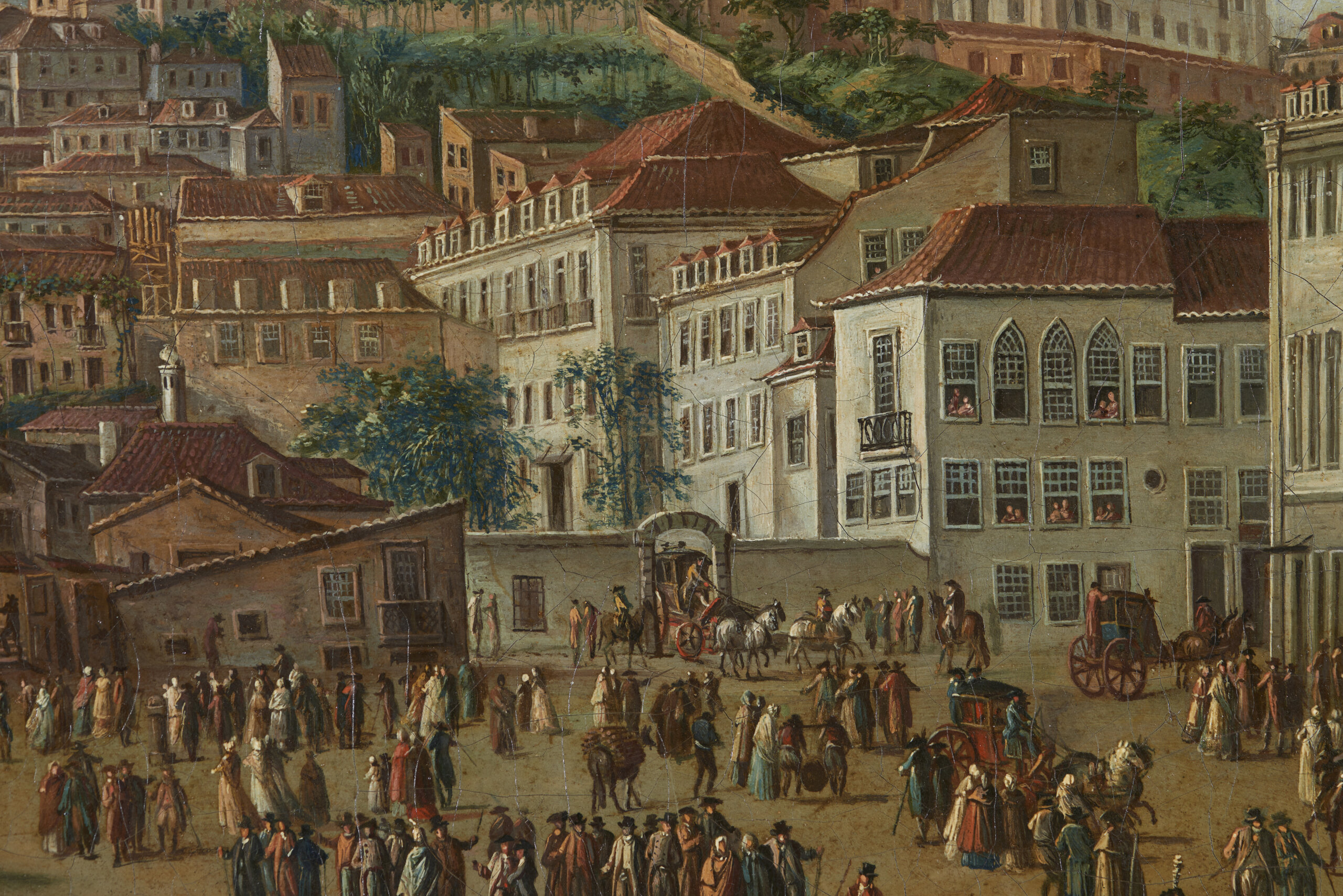
The building that once belonged to the Counts of Vidigueira/Marquesses of Niza, and which we see in the painting somewhat ruined with gabled roofs and slender fenestration, was rented for habitation by the first Patriarchs of Lisbon, D. Tomás de Almeida (1670-1754) and later D. José Manoel da Câmara (1686-1758). At the beginning of the 19th century, the houses were abandoned, requiring works to be inhabited again and recover the splendour of other times, but the Marquesses of Niza showed no interest in this undertaking and ended up selling the ruined property in 1837, having previously been used to house one of the Bairro Alto theatres (that of the Patriarch's Courtyard) (Simões, 2010).
A little lower, a cylindrical volume stands out that corresponds to the Count's Tower (memory of the former possession of contiguous lands of the Count of Ourém, D. Nuno Álvares Pereira) (Silva, 1987). The adjacent wall may well be a piece of the old Fernandine wall, to which the tower belonged, next to the Count's postern (or São Roque or small postern) before the tower of Álvaro Pais, of larger dimensions, but now disappeared and which occupied a significant part of the current Largo Trindade Coelho.
At the far right of the horizon line, we see a building with two towers covered with pyramidal roofs that corresponded to the former Professed House of the Jesuits and the Church of São Roque (whose nave covering is clearly visible). At the beginning of the 19th century, it was in the possession of the Santa Casa da Misericórdia, at least since 1768, after the expulsion of the Society of Jesus from Portugal, years earlier in 1759.
Observing Rossio square more carefully, we verify that visible on its left side (South), is the beginning of Rua do Ouro and Rua do Carmo. Then, two blocks very characteristic of Pombaline architecture, interrupted almost at the centre with a narrow street that established the connection between Rossio and Largo do Carmo: Calçada do Carmo. Connected by thin pilasters that mark the rhythm of the façade, the sequence of buildings displays rectangular stone lintels in the windows and the balcony ones almost always alternate with two chest-high windows. The openings located on the top floor appear close to the cornice, reinforcing the verticality of the façade composition and the emphasis on the upper crowning of the building. The double roof covering integrates dormer windows that not only expand the living space through the creation of a fourth level, but also confer volumetric dynamism to the crowning of the ensemble. The straight lintel portals of the ground floor have fanlights. The entire block thus testifies to Carlos Mardel's (1695-1763) intention to bring together functionality and architectural expression in all façades, substitute that he was for Eugénio dos Santos in conducting the city's reconstruction works and responsible for the design of the Rossio buildings and the project as a whole (França, 1977).
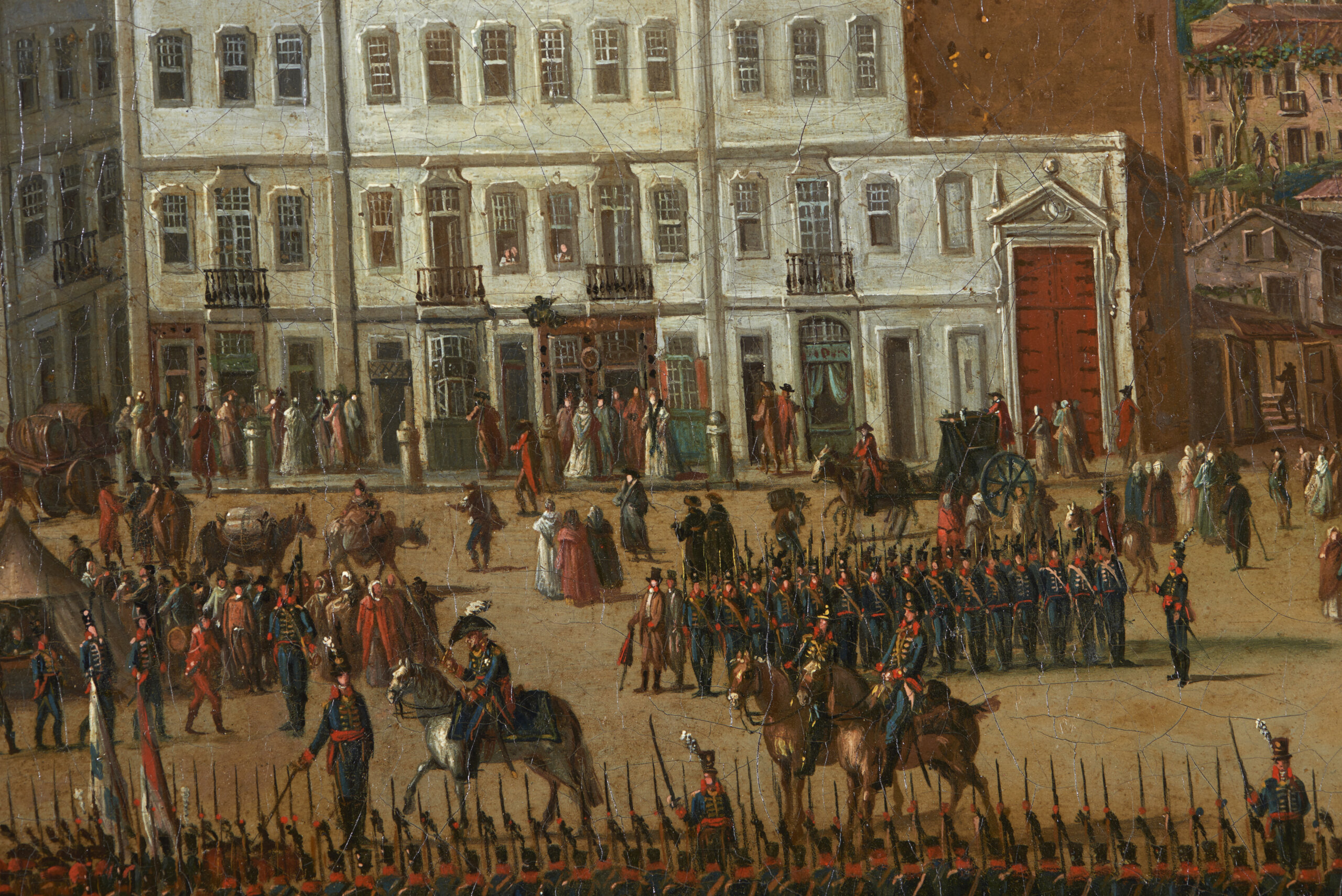
At the end of the second block, we see a triangular pediment portal that gives access to a space of smaller proportions. This is the "Rossio Station", datable to the beginning of the 18th century (1702?), which was rebuilt here in 1782 on land then belonging to the House of the Dukes of Cadaval, after having been dismantled in 1759, probably on the occasion of the Pombaline works. Again demolished, years later (1839) by municipal order, this station was part of the procession of the Lord of the Stations that crossed Rossio square coming from São Roque towards the Graça Monastery and the Chapel of the True Cross and Stations of Christ, dated 1586. Therefore, we are before a very important visual testimony of a memory since lost and which belongs to the history of Rossio and Lisbon (Araújo, 1938).
At the foot of the São Roque hill, somewhat more receded, is a group of houses and hovels that cover the slope. A whitish wall stands out, at the centre of which opens a perfect arch opening, from where we see a coach emerge towards the square. This is the access to the reception courtyard of the Palace of the Dukes of Cadaval. In the place where Rossio Station now stands, this noble building of 17th-century foundation, but profoundly altered in the post-earthquake period, was positioned perpendicular to the square (Sequeira, 1967 and Casimiro et al, 2016). The rhythm imposed on the façade of the seigneurial property follows the Pombaline model and the Mardelian spirit, suggesting these modifications posterior to 1755. In front of the building with the pointed windows of the second floor, facing Rossio, we see a sedan chair heading towards Rua do Príncipe, perhaps towards the Public Promenade (Castilho, 1937).
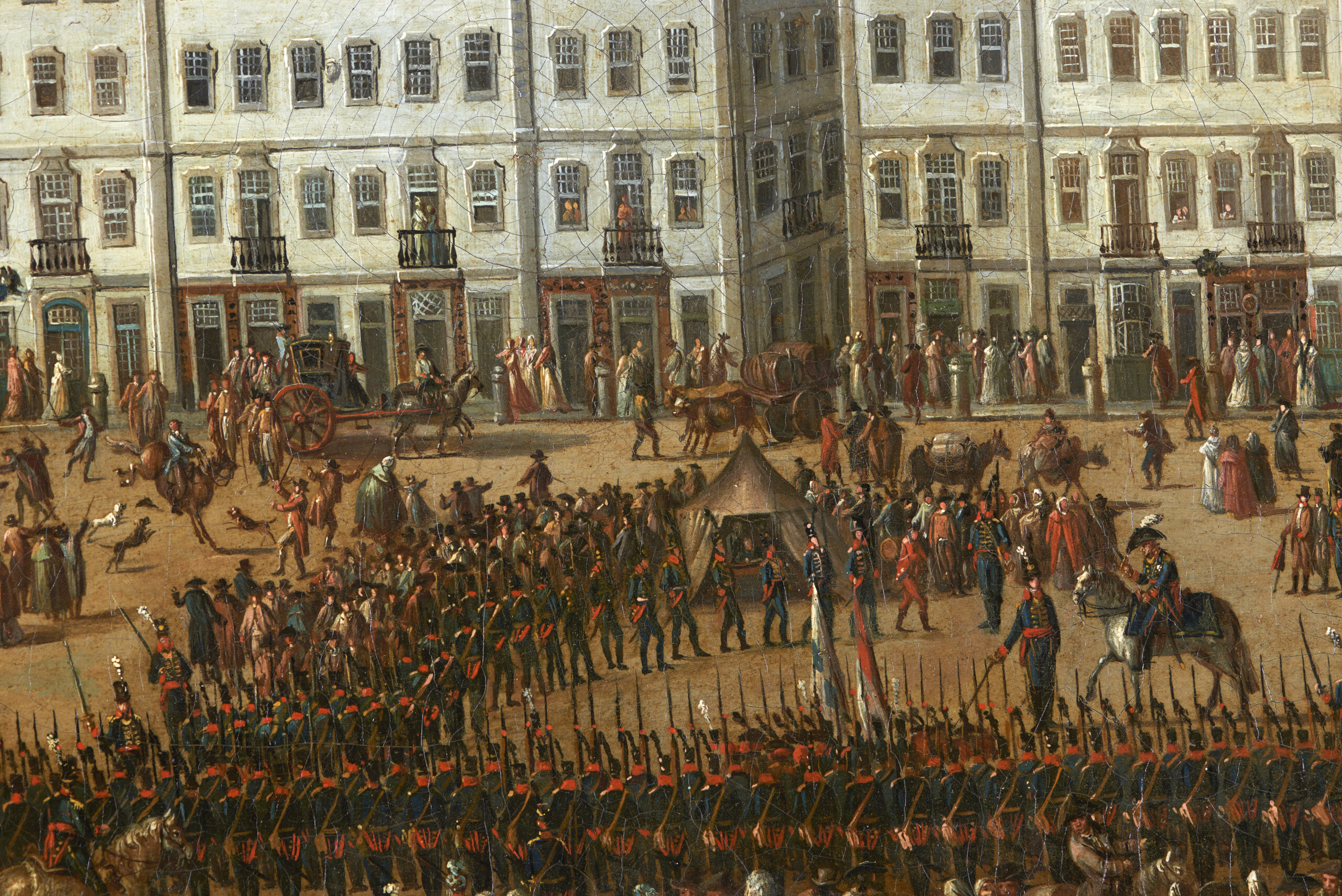
The painter records with rigour in the Pombaline blocks the presence of shops on the ground floors, revealing the intense commercial and social character of Rossio as the vital centre of the city, continuing the relevance it had even before the Earthquake (Moita, 1994). The degree of detail is so refined that it is possible to identify at least two shops, whose access doors, crowded with people, display advertising signs and are painted: the one on the left in brown and the one on the right in olive green tone. These are the oldest representations of two famous Rossio taverns, where political and poetic gatherings met frequently: the Nicola (founded in 1787) and the Botequim das Parras (from 1795) (Dias, 1999).
At the corner of the mentioned Rua do Príncipe, at the northern top of the square, and in front of the Palace of the Dukes of Cadaval, we find a building of great volume that corresponds to the Palace of the Inquisition (where the Government Board of the Regency also functioned), designed by Carlos Mardel, which would suffer a fire in 1836, giving way to the construction of the National Theatre of D. Maria II, with the personal commitment of the Count of Farrobo (Rijo, 2016).
The austerity and simplicity of the façade, with rectangular balcony windows with stone mezzanines cut near the building's crowning, where several dormer windows are still glimpsed, enters into aesthetic and formal harmony with the entire Pombaline architectural ensemble. At the centre, a rusticated portal opens, surmounted by a ceremonial balcony with a counter-curved arch, flanked by two pilasters and triangular pediment. At the top, a statue that we know represents an allegory of Faith (c. 1773), by Joaquim Machado de Castro (1731-1822) (Mendonça, 1948 and Faria, 2025).
In the wide central courtyard of Rossio, with beaten earth and not paved flooring, an urban daily scene unfolds. In the foreground several characters are distinguished, mostly masculine: men in capes and tricorn hats in dialogue; uniformed soldiers in short, blue, buttoned coats, with red bands, collars and cuffs, yellow buttons and several yellow braid houses and white trousers, which we identify as belonging to the Royal Police Guard of Lisbon (functioned as municipal police and was commanded at the beginning of the 19th century by the Count of Novion); itinerant vendors accompanied by baskets; some women of varied social condition judging by their dress and use of headscarves; in the lower right corner, a Dominican friar who alludes to the proximity of the Convent of São Domingos on the other side of the square and, finally, some passers-by, all in habitual attire of the end of the Ancien Régime. Around a small stall at the centre, soldiers and groups of dispersed people and some carriages complete the movement of the space, spreading throughout Rossio. In the middle of the square, we still find a military detachment in formation, soldiers aligned with bayonets on their shoulders, perhaps evoking the tense political and social atmosphere of the years of the French Invasions (1807–1808) (Sá, 1992).
The Infantry troop represented here exercises under the command of a soldier, on horseback, of higher rank, taking into account the hat, plume and sword at the ready. Historiographical tradition has wanted to identify this character with General Junot (1771-1813), appointed in 1808 1st Duke of Abrantes by Napoleon and prominent military figure in the Peninsular War campaigns, particularly in Portugal between November 1807 and September 1808. This is how the canvas is described in the Catalogue of the Exhibition of Documents and Works of Art relating to the History of Lisbon, published in June 1947 by the National Museum of Ancient Art, on the occasion of the Commemorations of the VIII Centenary of the taking of Lisbon: "Junot reviewing troops in Rossio" (p. 156). On the occasion of this event, the painting was dated to the beginning of the 19th century and given as belonging to His Excellency Eduardo Mendia (Eduardo Alfredo Guimarães de Mendia), grandson of the collector Alfredo Guimarães (1860-1923) and nephew on his father's side of the 2nd Count of Mendia, Eduardo Pereira Caldas de Mendia (1875-1946). The information is repeated in the Catalogue of the Bibliographical and Iconographical Exhibition of the Houses of the Lisbon Chamber, an exhibition held at Palácio Galveias in 1951 and in 1972 and the image reproduced in the Municipal Magazine (Year XXXIII), no. 132/133, in a text by the olisipographer Irisalva Moita (p. 25). If the soldiers represented allude rather to the Royal Police Guard, then we admit the hypothesis that the image of the Count of Novion on horseback is painted or, if the canvas is later, Colonel Filipe de Sousa Canavarro who succeeded him, after 1808.
We do not know with precision the exact provenance of the painting, but we can consider the hypothesis that it was acquired by Alfredo Guimarães and subsequently inherited by his grandson, considering that, in 1956, he was given together with his sister D. Júlia Maria Guimarães de Mendia de Noronha as heir of D. Berta Guimarães de Mendia, daughter of the said collector. Alfredo Guimarães had gathered in his residence on Rua da Cruz dos Poiais, at the corner of Travessa da Arrochela, a notable collection of works of art (painting, goldsmithery, engraving, furniture, ceramics...), with part of this collection having been sold at auction in 1961 by Soares & Mendonça, where the painting is not even mentioned in the respective catalogue (Lourenço, 2022). The relevance of Alfredo Guimarães' collection is known and we also know of the proximity he had with another great 20th-century collector, Ricardo Espírito Santo Silva (1900-1955), to whom later D. Júlia Guimarães came to sell artistic objects, all nurturing enormous taste for genre painting of Lisbonese themes, as we shall see.
The name of the painter of this magnificent 19th-century canvas is currently unknown, although we can attempt an authorial approximation, taking into account other similar works both at the thematic and chromatic level. The costumes of the characters and the way the buildings were conceived and painted remind us very much of the manner of Nicolas-Louis-Albert Delerive (1755-1818) who visited Lisbon for two seasons, namely, between 1792 and 1797 and, later, between 1800 and 1818. The miniature character of his works and the capacity to capture daily moments approach well the models represented in the painting of Rossio Square. However, it seems to us that Delerive confers greater scale and ease to the characters and compositions, thus bringing the observer closer to the narrative in focus, characteristics that are not present in the canvas under study. In this sense, we prefer to bring to the question of authorial attribution the name of the painter Joaquim Marques (1755-1822), also mentioned as Joaquim António Marques.
According to Cyrillo, this painter developed his studies in the Royal Drawing Class, having also worked in the Box Factory, under the orders of the Neapolitan José Francisco del Cuoco. From 1784, he approached Jean-Baptiste Pillement (1728-1808), whom he sought to imitate in genre and stylemes, without ever reaching the mastery of the Frenchman. His pictorial activity in the branch of genre painting had enormous success at the time, having carried out various works on ceilings, walls, canvases, carriages and even ephemeral scenography on the occasion of the celebration of the happy marriage of Prince D. Pedro with D. Leopoldina, Archduchess of Austria in 1817. The formal entry of Joaquim Marques into the Brotherhood of São Lucas in Lisbon dates from 1793, being given as a widower, resident at Salitre (parish of São José) (Flor et al., 2016). However, the name is detectable in the Brotherhood since 1788 at the Brothers' Table, in the company of names as relevant as those of Pedro Alexandrino de Carvalho, Cyrillo Volkmar Machado, José António Narciso, Domingos da Rosa or Gaspar Fróis Machado, revealing this fact how inserted in Lisbon's artistic and pictorial life Joaquim Marques was.
The canvases existing in the collection of the Ricardo Espírito Santo Silva Foundation (two canvases showing fairs in the outskirts of Lisbon) or in the National Museum of Ancient Art (the Thieves' Market), attributable to Joaquim Marques, and dated to the first decade of the 19th century, share the same pictorial sensibility present in the Rossio panorama, both in the scenographic composition of the architecture, and of the characters who, on a smaller scale, submit to the greater importance of both the constructions and the surrounding natural landscape. The same happens with the "View of the Douro" or with the "View of the Quay and Largo do Corpo Santo", both in private collections and the latter having belonged to the collection of the Dukes of Portland (Wallbeck Abbey), works datable still to the end of the 18th century (Madaíl, 1950 and Teixeira, 1993).
In a chromatic palette dominated by ochres, browns and whites, with small citations of red, and softened by a grey-blue sky of sparse clouds, Rossio appears to us with diffuse light that ensures the clarity of volumetric reading, of the composition's perspective and of all the military bustle and daily life of the square. To underline the enormous realism and exactitude with which the artist describes the urban landscape, sprinkled with people who circulate there, frequent the booksellers, the taverns and the shops of Rossio and admire the military exercises in the square facing the majestic Palace of the Inquisition.
The architectural proportions, the topographical insertion of the buildings and the details of daily life reveal a documentary intention proper to genre painting of the transition from the 18th to the 19th century that confers on the work a singular historical-artistic value. The painting emerges not only as aesthetic expression, but also as authentic visual testimony of the Lisbon of Pombaline taste, on the eve of the political and urban transformations of the 19th century brought with the triumph of the liberal Monarchy.
ACKNOWLEDGEMENTS
Alexandra Markl, Luís Montalvão, Susana Varela Flor
Literature:
ARAÚJO, Norberto de, Peregrinações em Lisboa, vol. VIII, Lisboa, Parceria A.M.Pereira, 1938.
CASIMIRO, Tânia Manuel; ALMEIDA, Mariana; BARBOSA, Teresa, “Largo Duque de Cadaval – evidências de uma catástrofe”, in Arqueologia & História - Revista da Associação dos Arqueológos Portugueses, vol. 68, 2016, pp. 111-126.
CASTILHO, Júlio de, Lisboa Antiga – Bairros Orientais, vol. X, 2.ª ed., Lisboa, CML, 1937.
DIAS, Marina Tavares, Os Cafés de Lisboa, Lisboa, Quimera, 1999.
FARIA, Miguel Figueira de, "Pombal, a Fé e a Constituição: três casos de estudo sobre a iconoclastia das Luzes à Revolução", 2025 (no prelo).
FLOR, Susana Varela e FLOR, Pedro, Pintores de Lisboa (séculos XVII-XVIII) – A Irmandade de S. Lucas, Lisboa, Scribe, 2016.
FRANÇA, José-Augusto, Lisboa Pombalina e o Iluminismo, 2.ª ed., Lisboa, Livraria Bertrand, 1977.
LOURENÇO, Inês Colaço Santos, Os Catálogos de Leilões na Biblioteca do Museu Nacional de Arte Antiga, 2 vols., Relatório de Projecto para obtenção do grau de Mestre em História da Arte e Património, Faculdade de Letras da Universidade de Lisboa, 2022.
MADAÍL, A. G. Rocha, “Documentação artística do pintor lisbonense Joaquim Marques (1755-1822)”, in Revista Municipal, n.º 46, 3.º trim., Lisboa, CML, 1950, pp. 5-11.
MAGALHÃES, Francisco José, John Cam Hobhouse – Diário de Viagem, Lisboa, Livros Horizonte, 1993.
MENDONÇA, Maria José, "Uma estátua desaparecida de Joaquim Machado de Castro", Boletim do Museu Nacional de Arte Antiga, vol. I, n.º 3, 1948, pp. 152-155.
MESQUITA, Alfredo, Lisboa Pittoresca e Illustrada, Lisboa, 1903.
MOITA, Irisalva (coord.), O Livro de Lisboa, Lisboa, Livros Horizonte, 1994.
RIJO, Delminda, "Palácio dos Estaus de Hospedaria Real a Palácio da Inquisição e Tribunal do Santo Ofício", Cadernos do Arquivo Municipal, 2.ª série, n.º 5, 2016, pp. 19-49.
SÁ, Victor de, Lisboa no Liberalismo, Lisboa, Livros Horizonte, 1992.
SALDANHA, Nuno, Tesouro das Imagens, Lisboa, FRESS, 1996.
SANTANA, Francisco e SUCENA, Eduardo (dir.), Dicionário da História de Lisboa, Lisboa, Carlos Quintas & Associados, 1994.
SEQUEIRA, Gustavo Matos, Depois do Terramoto – Subsídios para a História dos Bairros Ocidentais de Lisboa, vols. III e IV, 2.ª ed., Lisboa, Academia das Ciências de Lisboa, 1967.
SILVA, A. Vieira da, A Cerca Fernandina de Lisboa, vol. I, 2.ª ed., Lisboa, CML, 1987.
SIMÕES, João Miguel, “O complexo de São Roque, a colina secreta de Lisboa”, in Património Arquitectónico – Santa Casa da Misericórdia de Lisboa, tomo II, Lisboa, SCML / Museu de S. Roque, 2010, pp. 12-43.
TEIXEIRA, José Monterroso (coord.), Triunfo do Barroco – Catálogo da Exposição, Lisboa, 1993.
Closed Auction
