
31
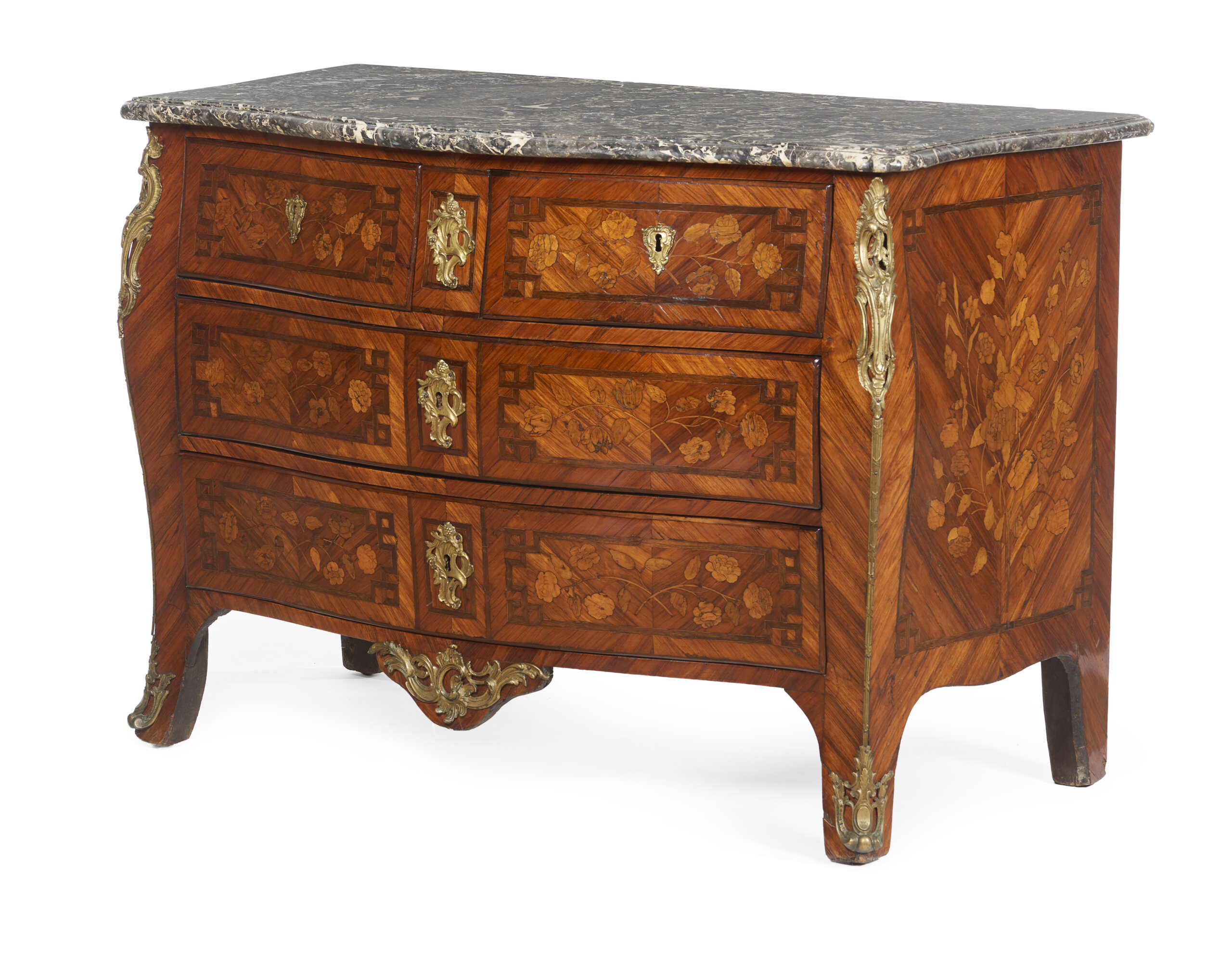
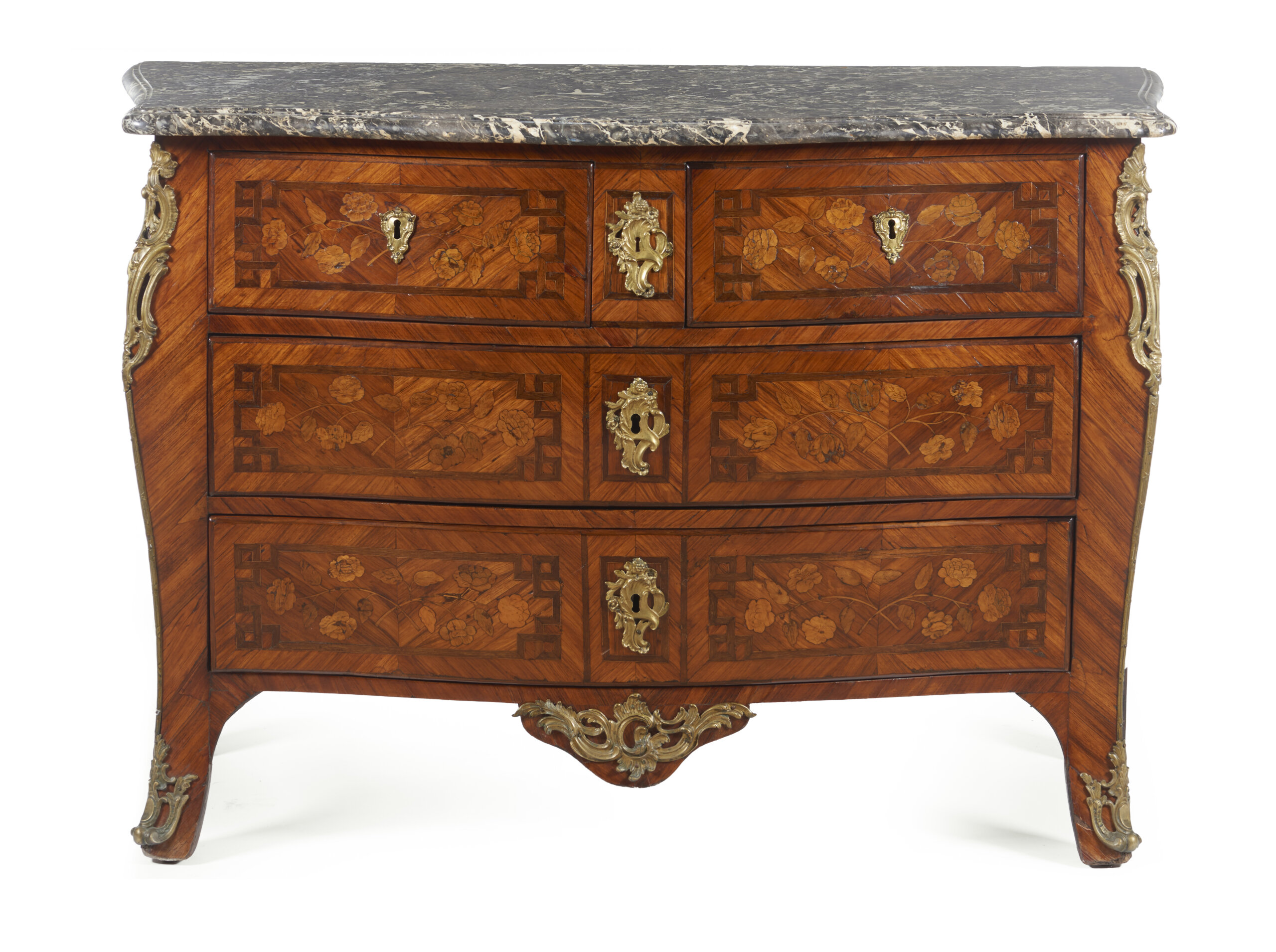
An important Louis XV kingwood and tulipwood commode by Jacques Bircklé (18th century)
Estimate
8.000 - 12.000
Session 1
2 June 2026
Hammer Price
Register to access this information.Description
Kingwood, tulipwood, and other woods
Boxwood marquetry depicting flowers
Yellow metal mounts and marble top
Two drawers and two long drawers
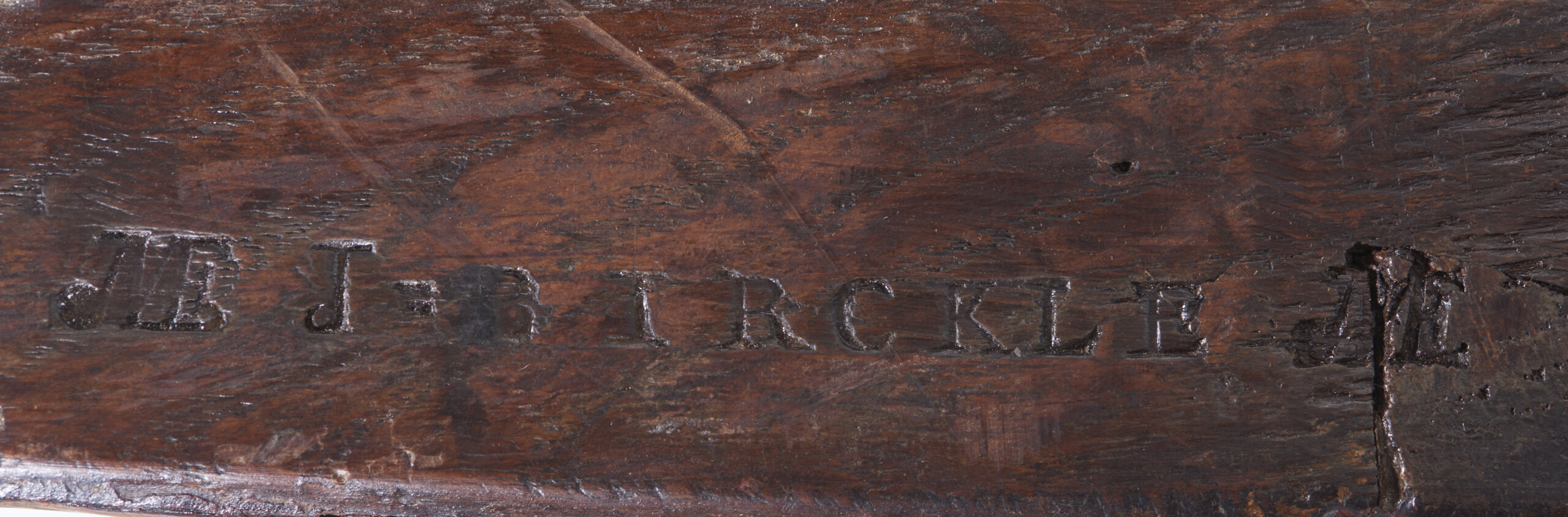
Stamped "J. Birckle" for Jacques Bircklé (Master on 30 July 1764) and JME punch (Jurande des Maîtres Ébénistes)
France, 18th century
(signs of wear, traces of woodworm)
89x58x126 cm
Additional Information
In the 18th century, France was the capital of European fashion, and French taste prevailed beyond its borders, with several courts, such as those of the Romanovs and the Braganças, commissioning works from the finest Parisian workshops.
The work of the designer, craftsman, ebanist, and bronzier, combined with materials, techniques, and tools, formed an essential combination to achieve a level of excellence in the creation of furniture pieces.
The commode presented here bears the stamp of the ebanist Jacques Bircklé (1734-1803), Master from 30 July 1764, and the JME punch (Jurande des Maîtres Ébénistes).
His work is characterised by the elegant lines of the Louis XV style combined with decorative elements of Neoclassical inspiration. This makes him an example of the so-called Transition style, which is expressed through superficial alterations of a decorative nature, rather than structural ones, preceding the Louis XVI style.
Most of the furniture he produced is dominated by work featuring simple geometric designs in marquetry, in light and contrasting tones. The decorative themes follow the taste of the period, with depictions of vases with flowers, urns, and musical trophies, framed by classical motifs such as Greek key patterns.
It was his work of simple taste, when compared to that of other ebanists of his time, such as the famous Jean-Henri Riesener (1734-1806), that placed him in the final years of the French Ancien Régime (1785-1789) as a supplier to the Crown's Garde-meuble.
Works by his hand appear in collections such as the V&A, the Musée Lambinet, the Musée Henri Barré, and the Musée Cognacq-Jay.
Provenance:
Exhibitions:
Literature:
Pierre Kjellberg, "Le mobilier français du XVIIIème Siècle", Les Editions de l'Amateur, 2008, p. 7478
Closed Auction
