
144
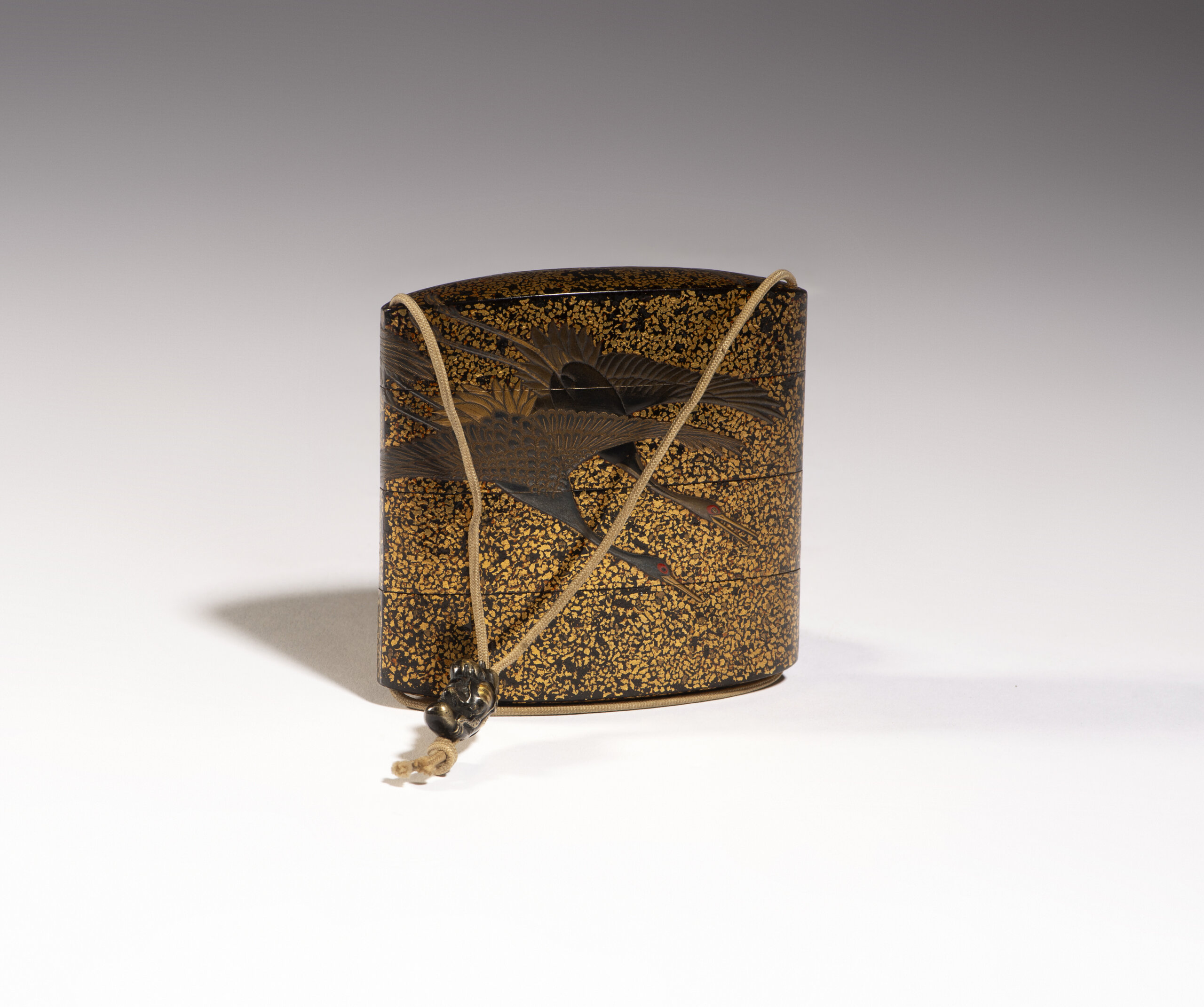
An exceptional three-case gyōbu-nashiji lacquer inrō, by Uki Zaimitsu (浮気在密)
Estimate
6.000 - 8.000
Session
8 May 2026
Description
Japan, Edo period, late 18th century
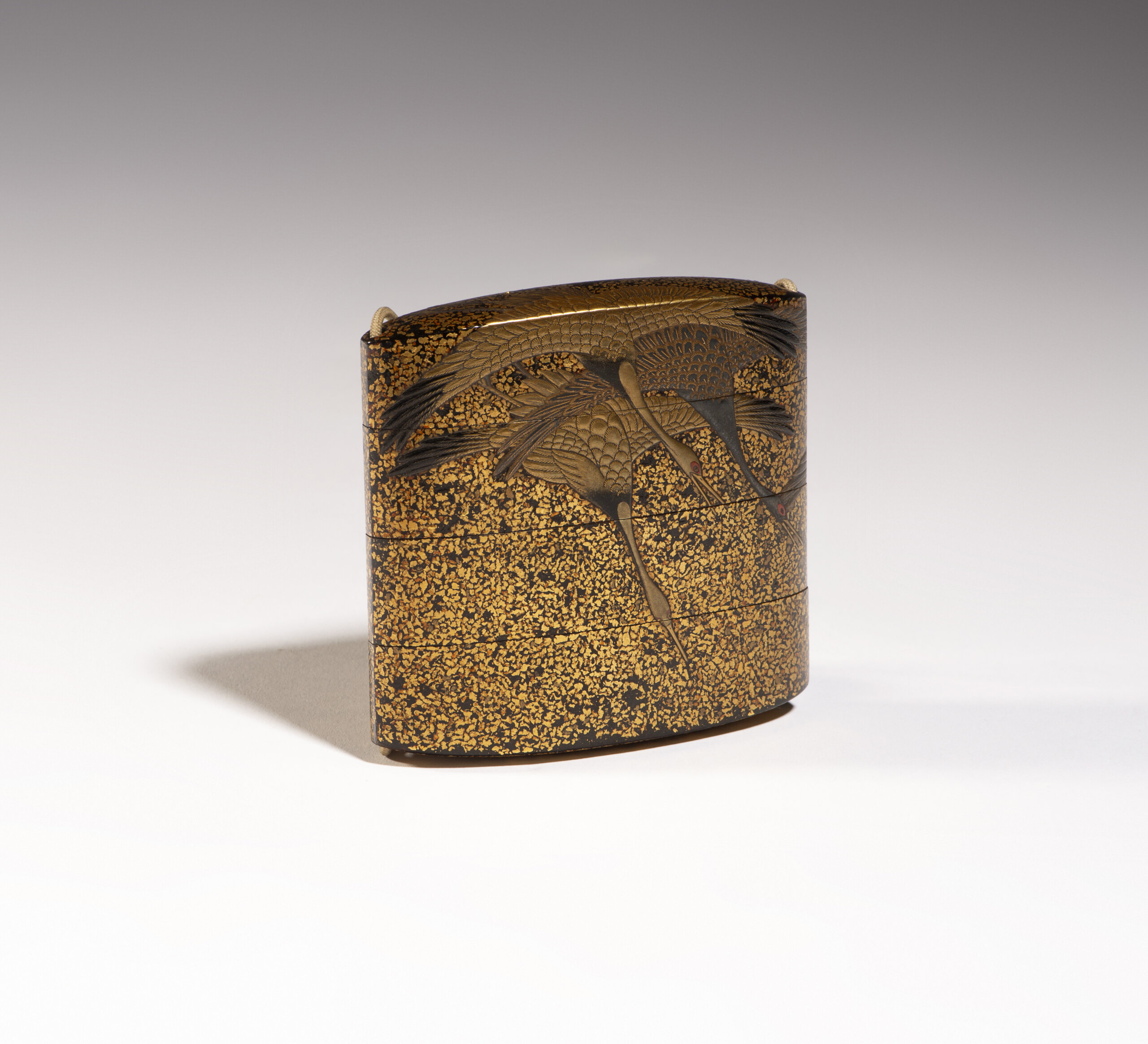
Of gently arched form and oval section
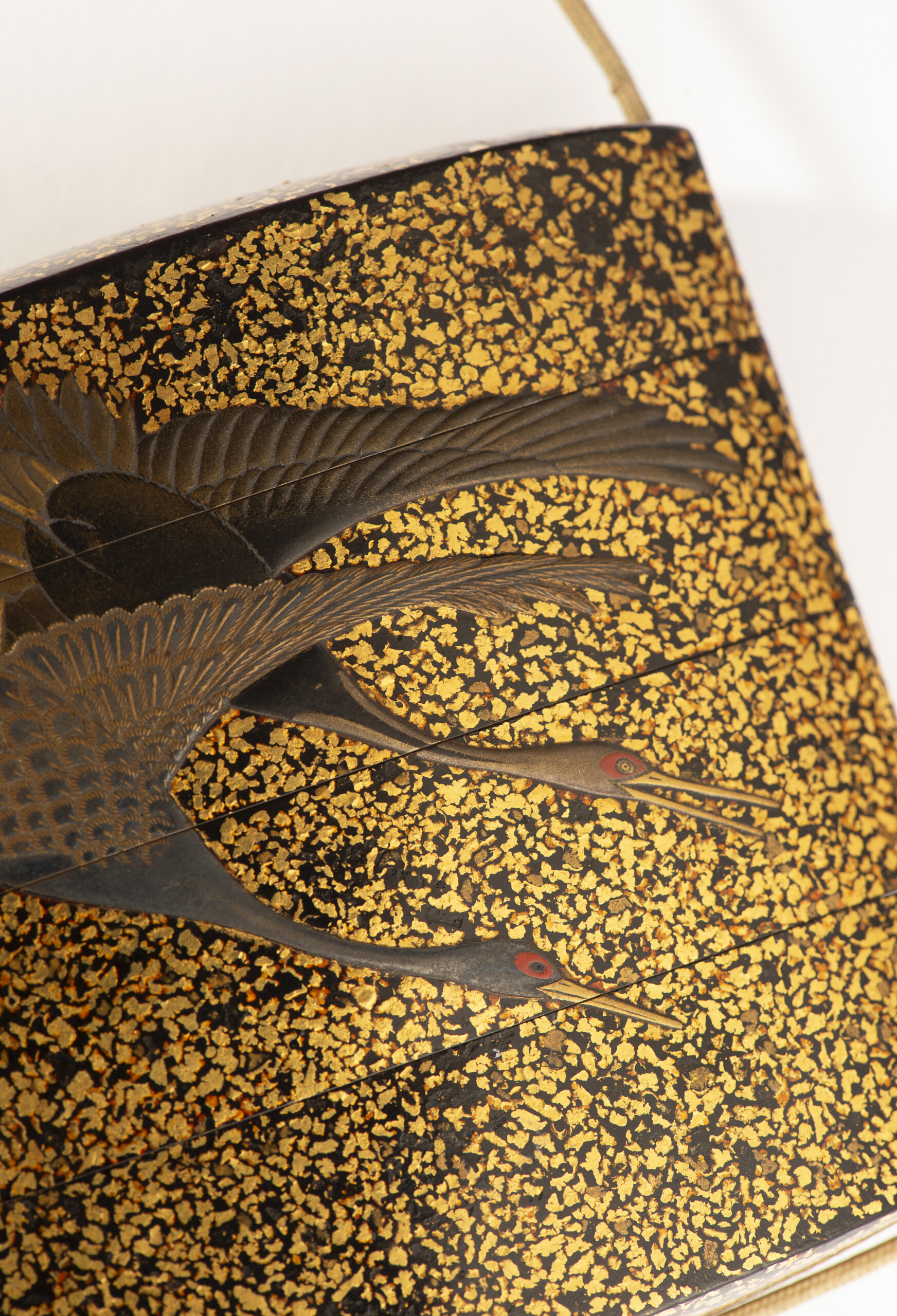
Decorated in iroe-hiramaki-e and takamaki-e on a ground densely covered with irregularly sized gold flakes (gyōbu-nashiji), with five cranes in flight, three on one face and two on the other
Interiors and rims in gold fundame
The base bearing the signature 浮気在密 (Uki Zaimitsu) in gold, concealed within the gyōbu-nashiji ground
With a mixed-metal ojime depicting a kappa on a cucumber
The ojime signed 一政 (Kazumasa) within a cartouche
日本江户时代晚期,十八世纪末,浮气在密款金虫食地莳绘群鹤纹三段印笼,附一政款混金属河童踏黄瓜绪缔
7,5x8x1,9 cm (inrō)
Height: 2,1 cm (ojime)
Additional Information
Note:
The name Uki Zaimitsu (浮気在密) refers to a lacquer master of the Edo period. The technical excellence of this work and the character of the nashiji ground suggest a strong affinity with the Kajikawa school. The 2017 catalogue of the Seikadō Bunko Art Museum lists him as the maker of inrō no. 55, depicting the scene "Benkei at the Bridge" (橋弁慶蒔絵印籠). The catalogue records the signature 浮気在密作, translated as "made by Uki Zaimitsu", and notes that the artist's dates of birth and death are unknown (生没年不詳).
Provenance:
Murakami Collection, acquired 1929
Christie's London, The Japanese Aesthetic, 15 May 2013, lot 396
Literature:
Seikadō Bunko Art Museum, Chō Nihontō Nyūmon: Meitō de wakaru, meitō de shiru, exhibition checklist, Tokyo, 2017, no. 55
Closed Auction
