
29
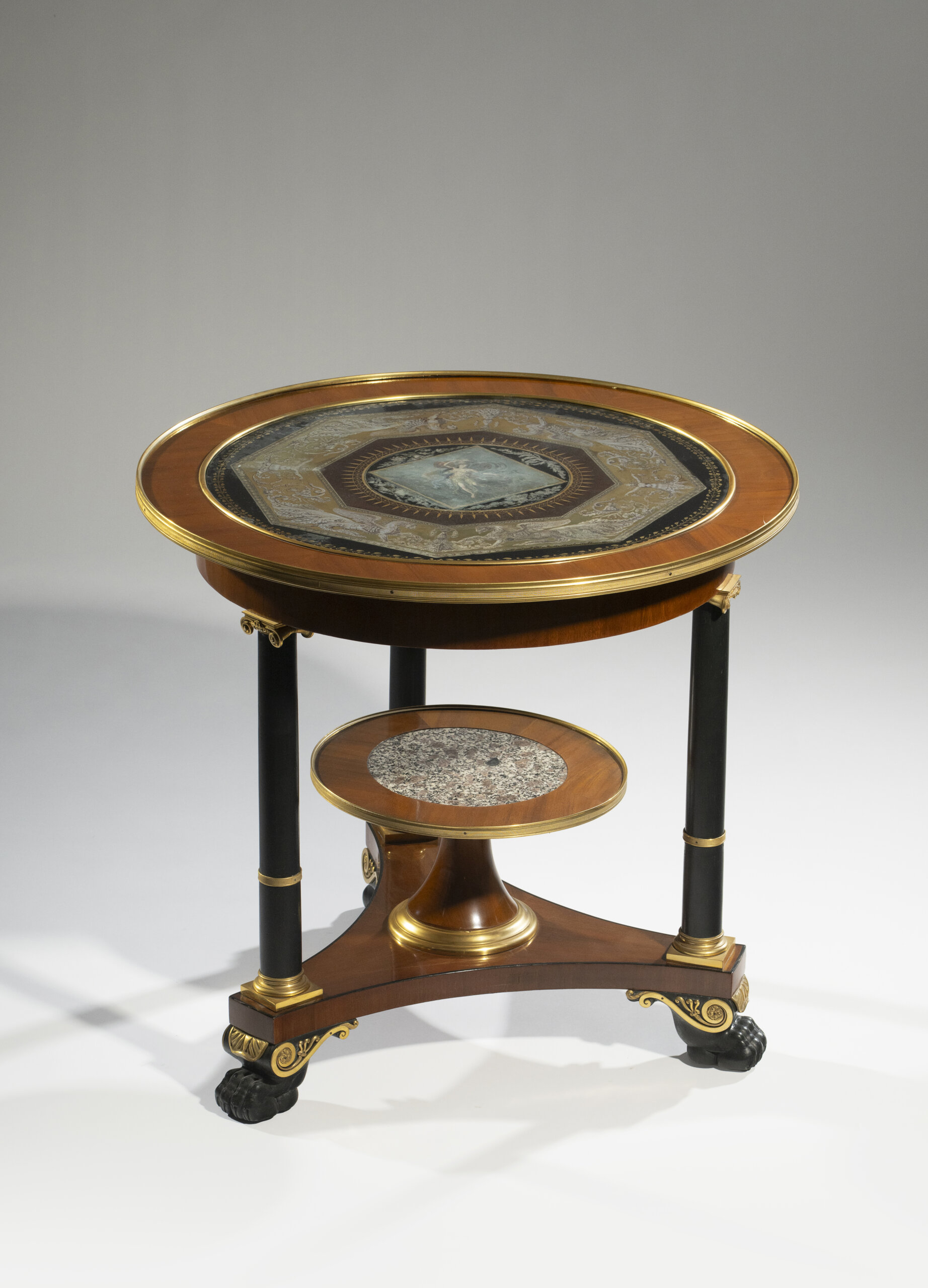
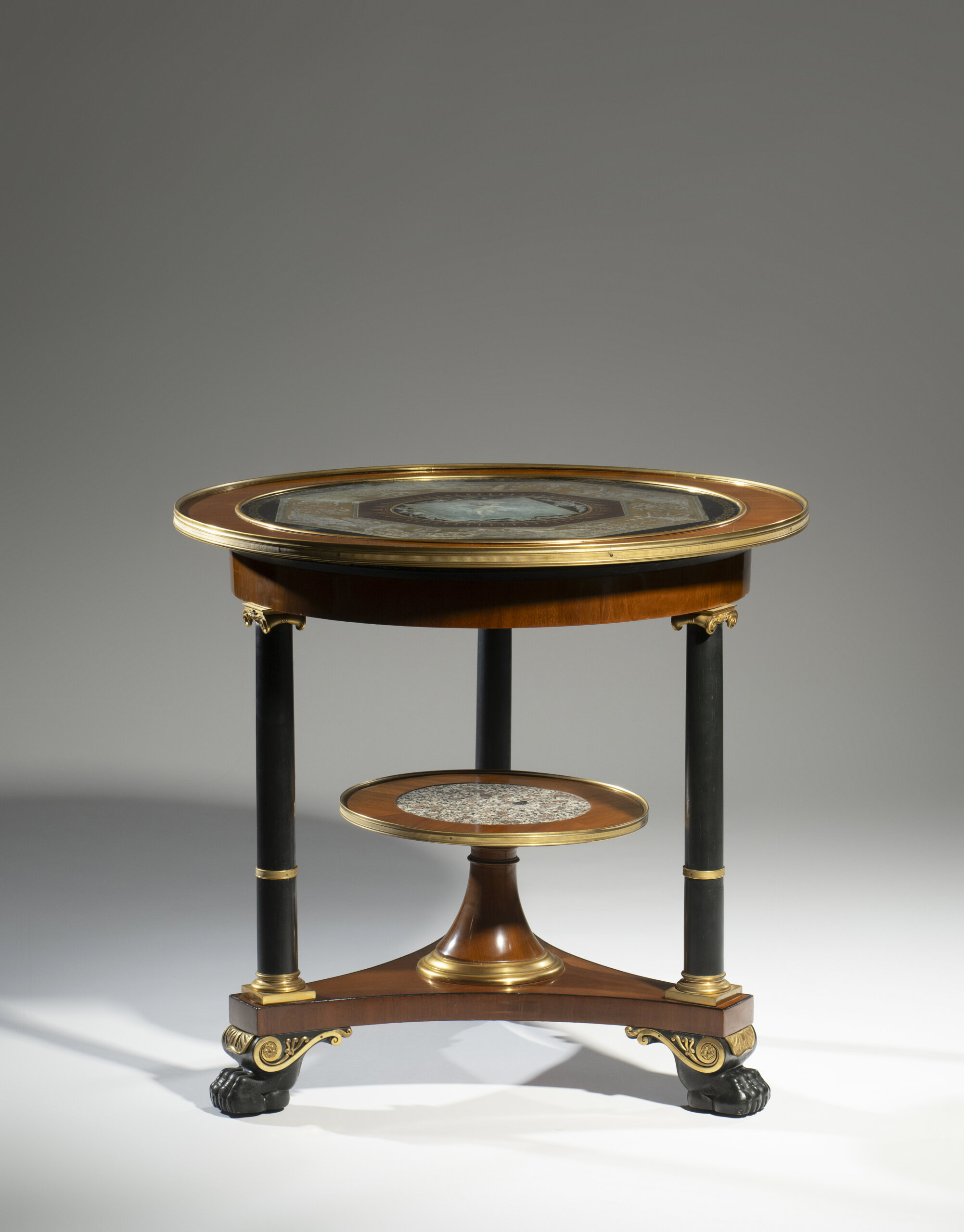
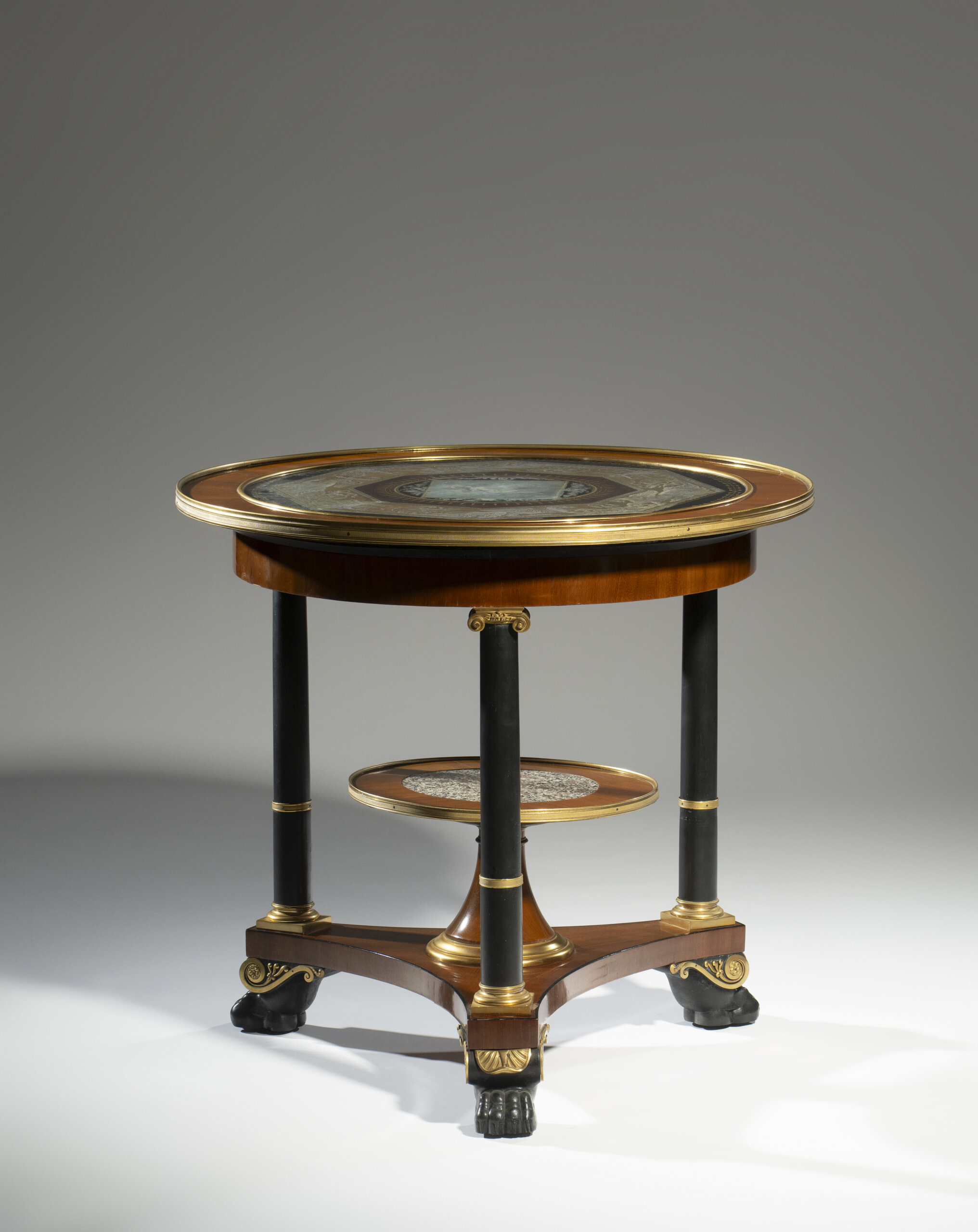
An exceptional Empire gilt bronze-mounted mahogany and verre églomisé guéridon
Estimate
50.000 - 80.000
Session 1
20 July 2026
Hammer Price
Register to access this information.Description
Mahogany and mahogany veneer, ebonised wood, verre églomisé, reverse-painted glass, gilt bronze and pink granite
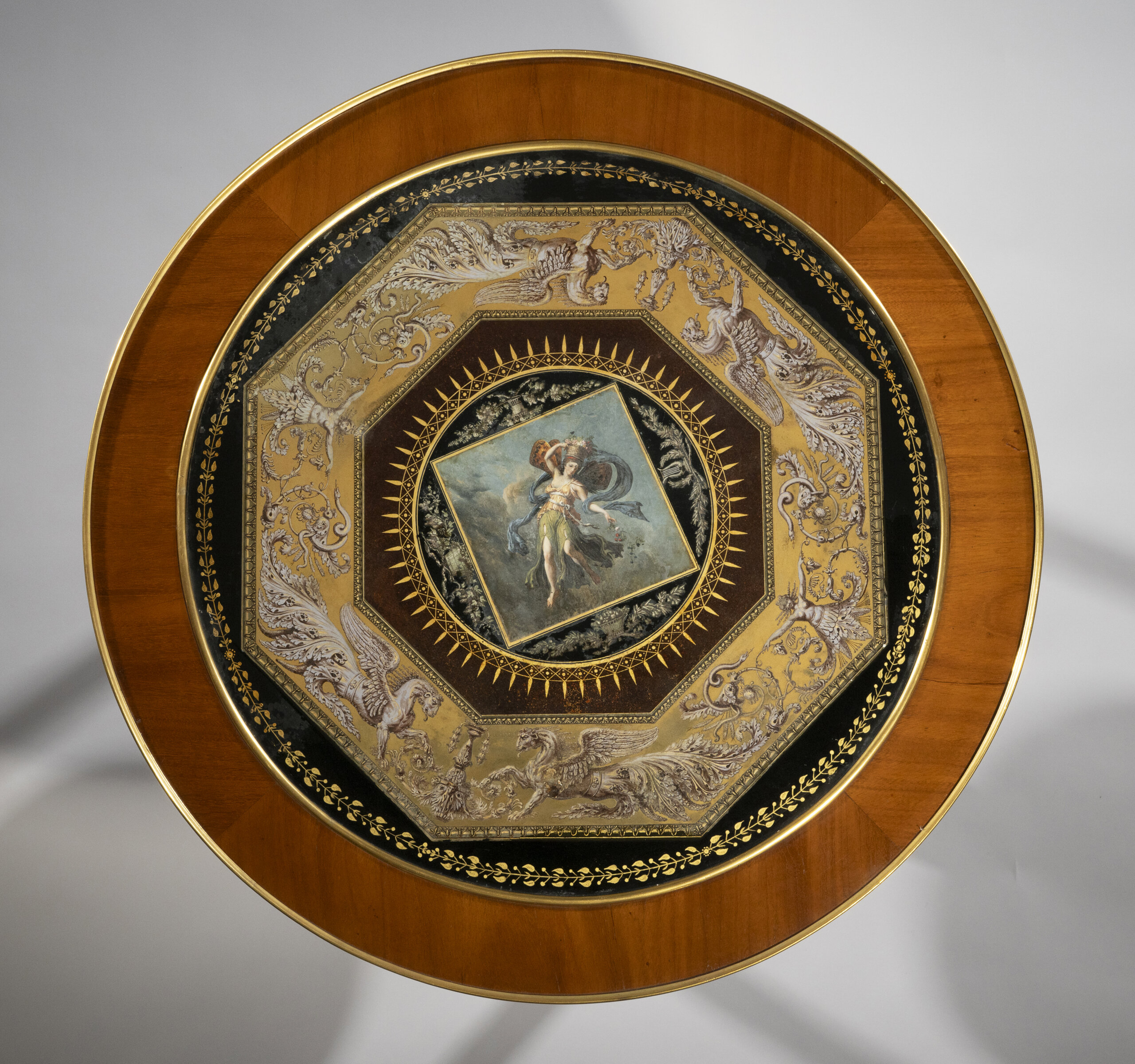
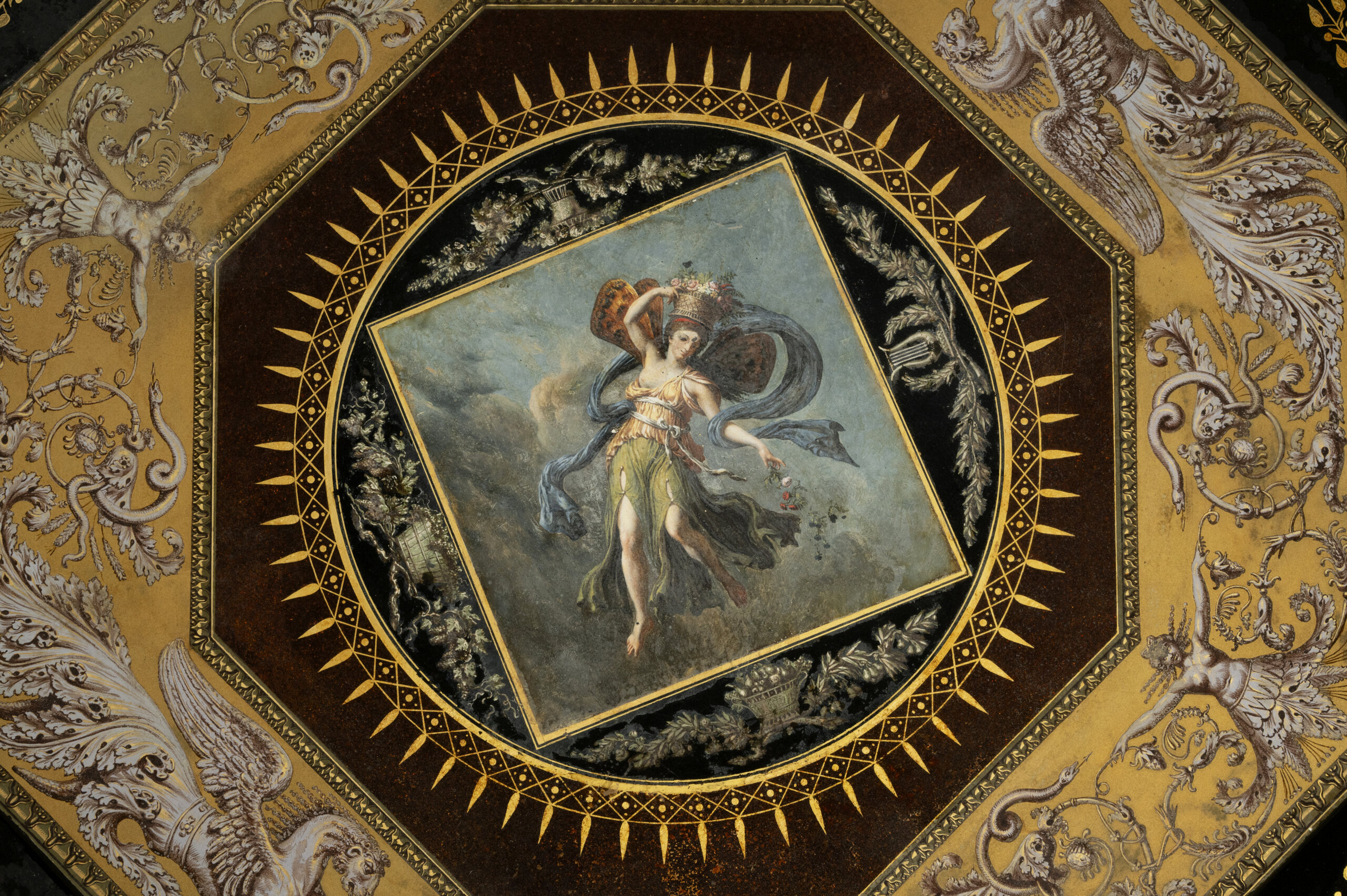
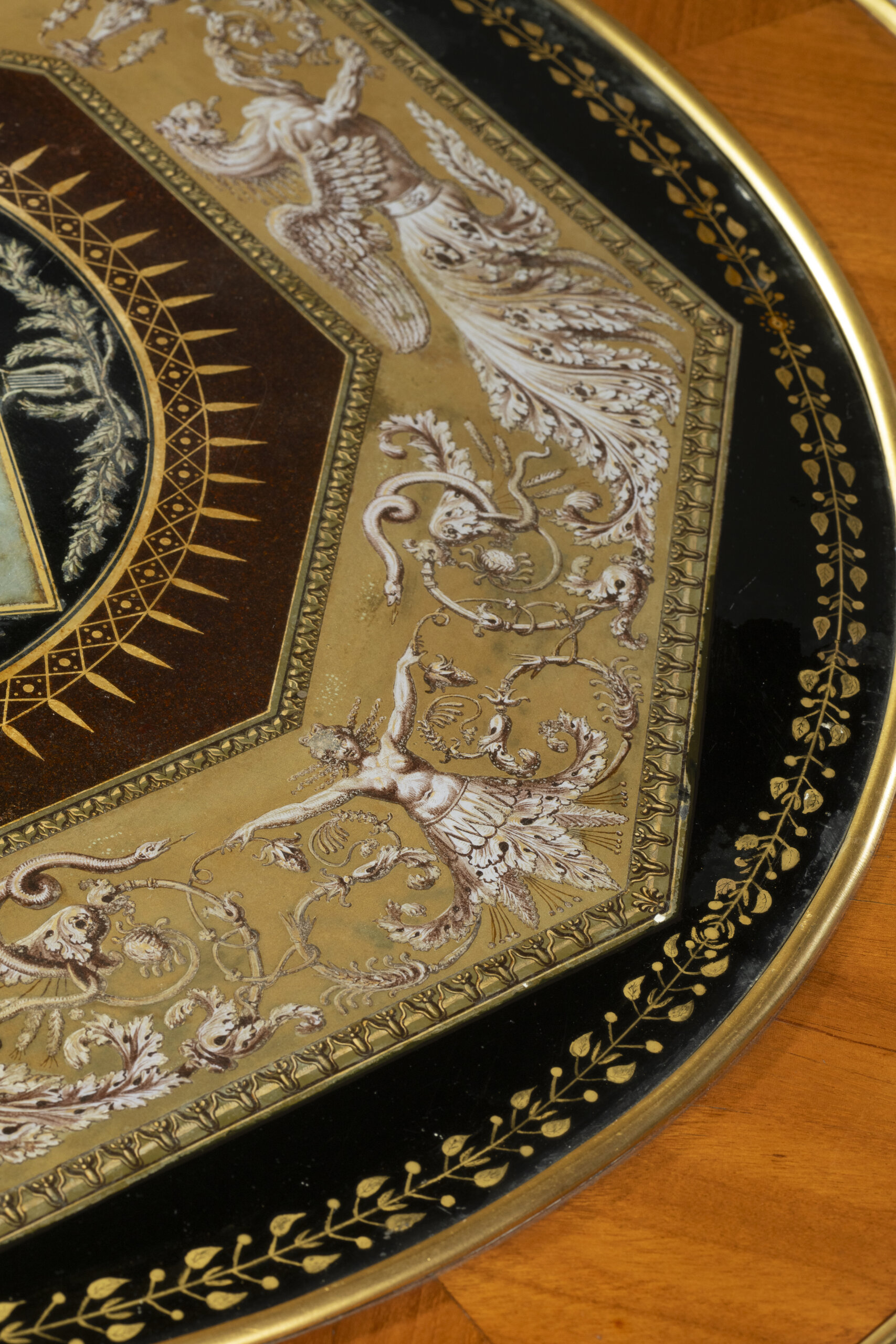
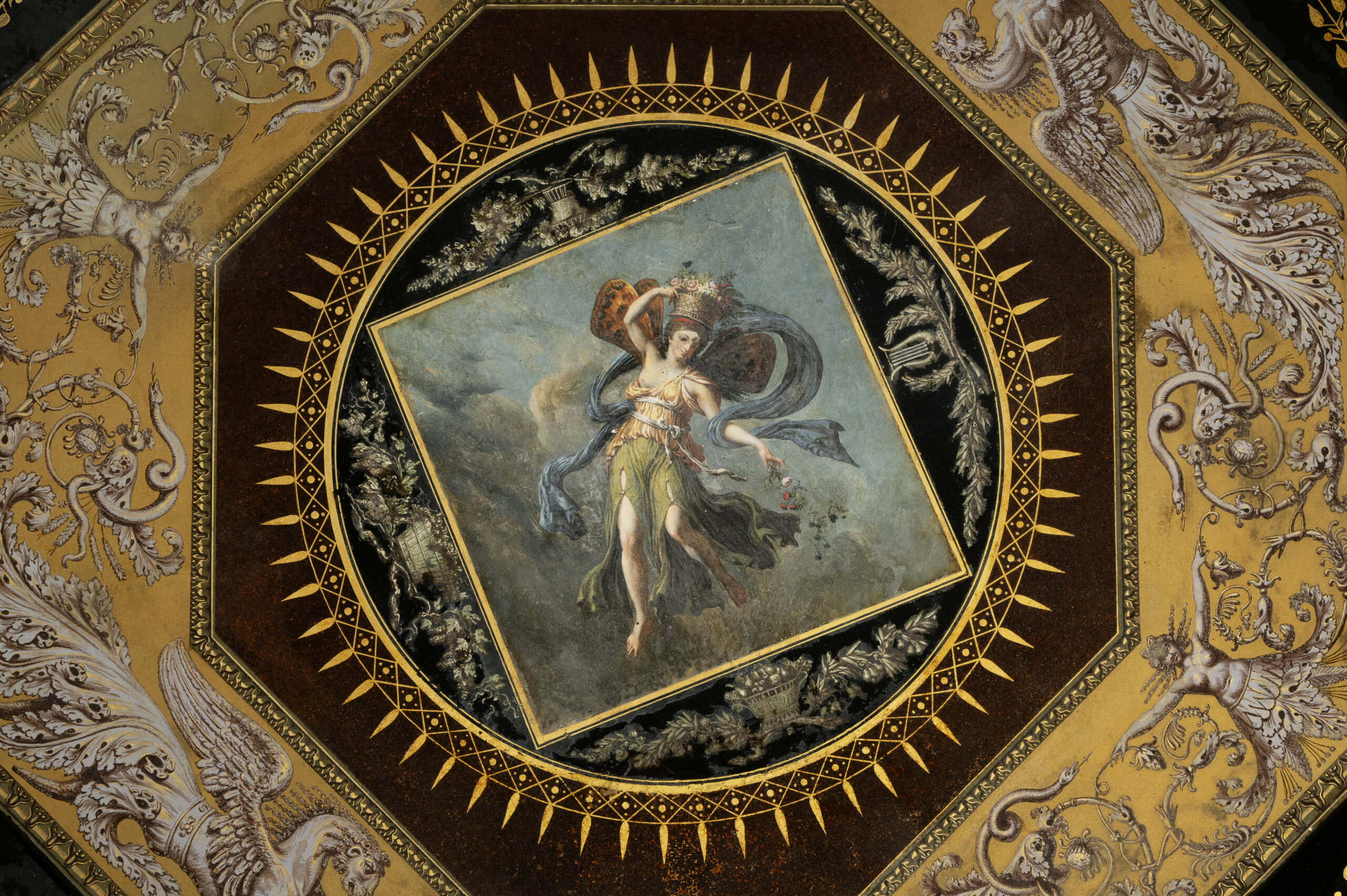
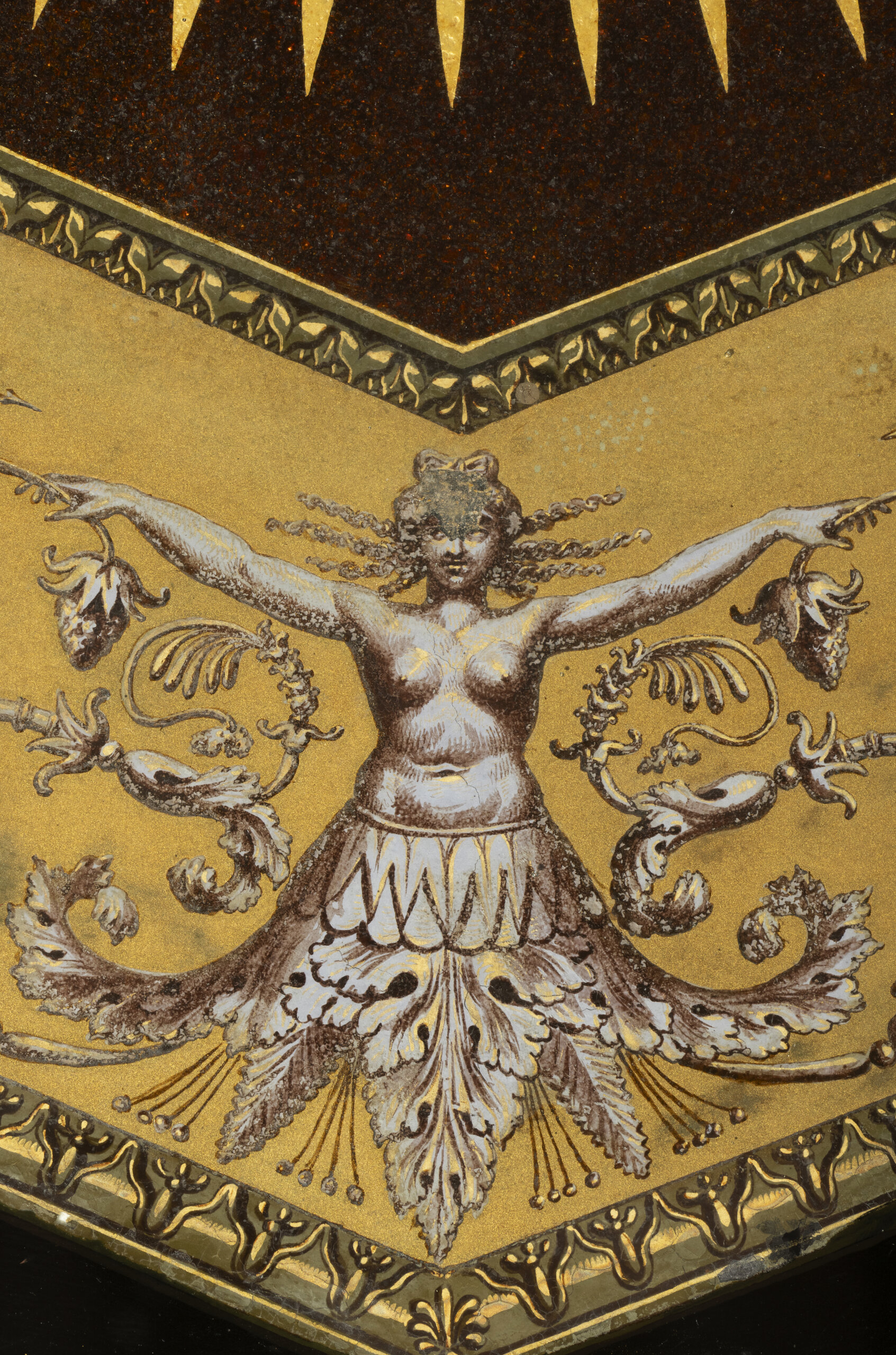
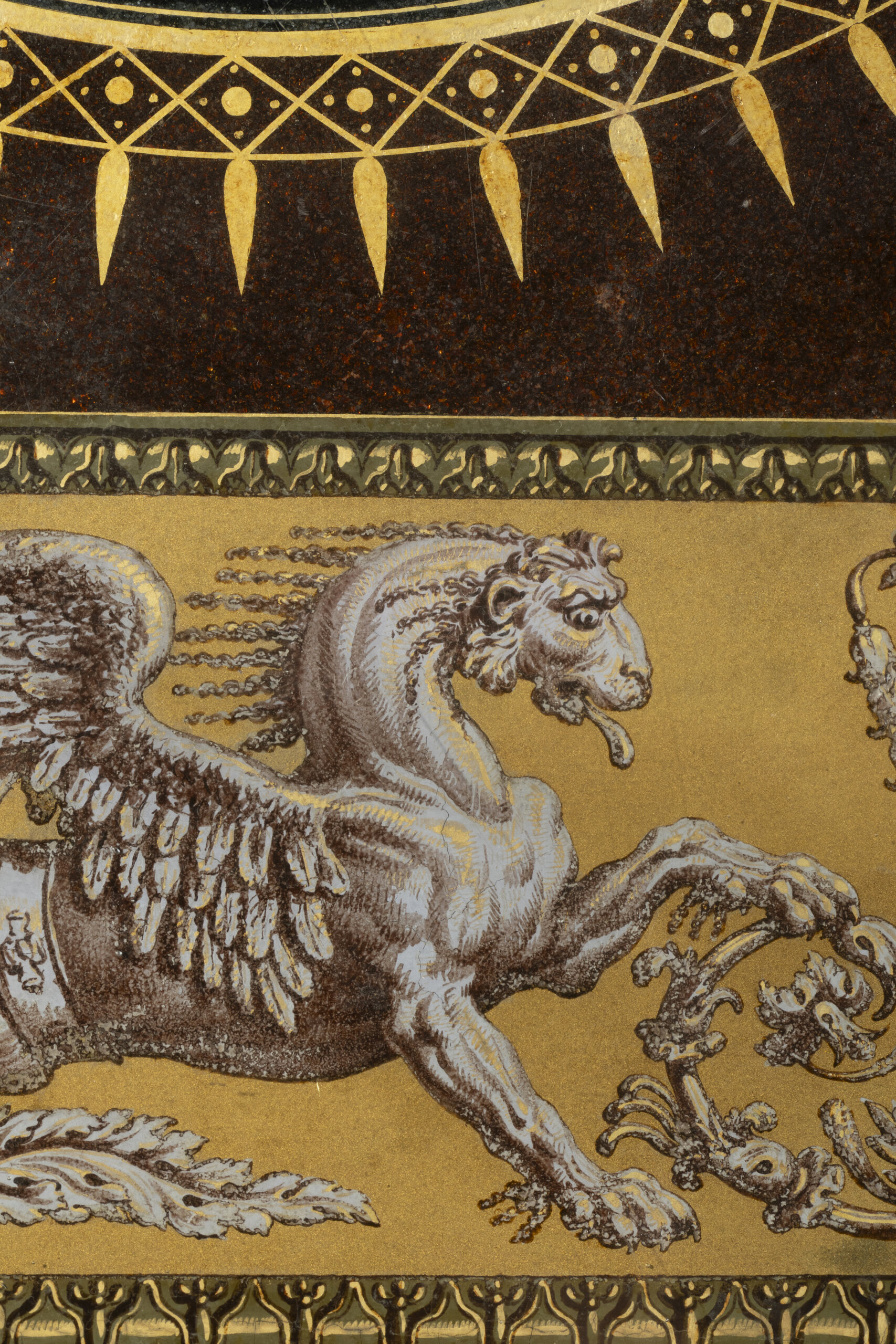
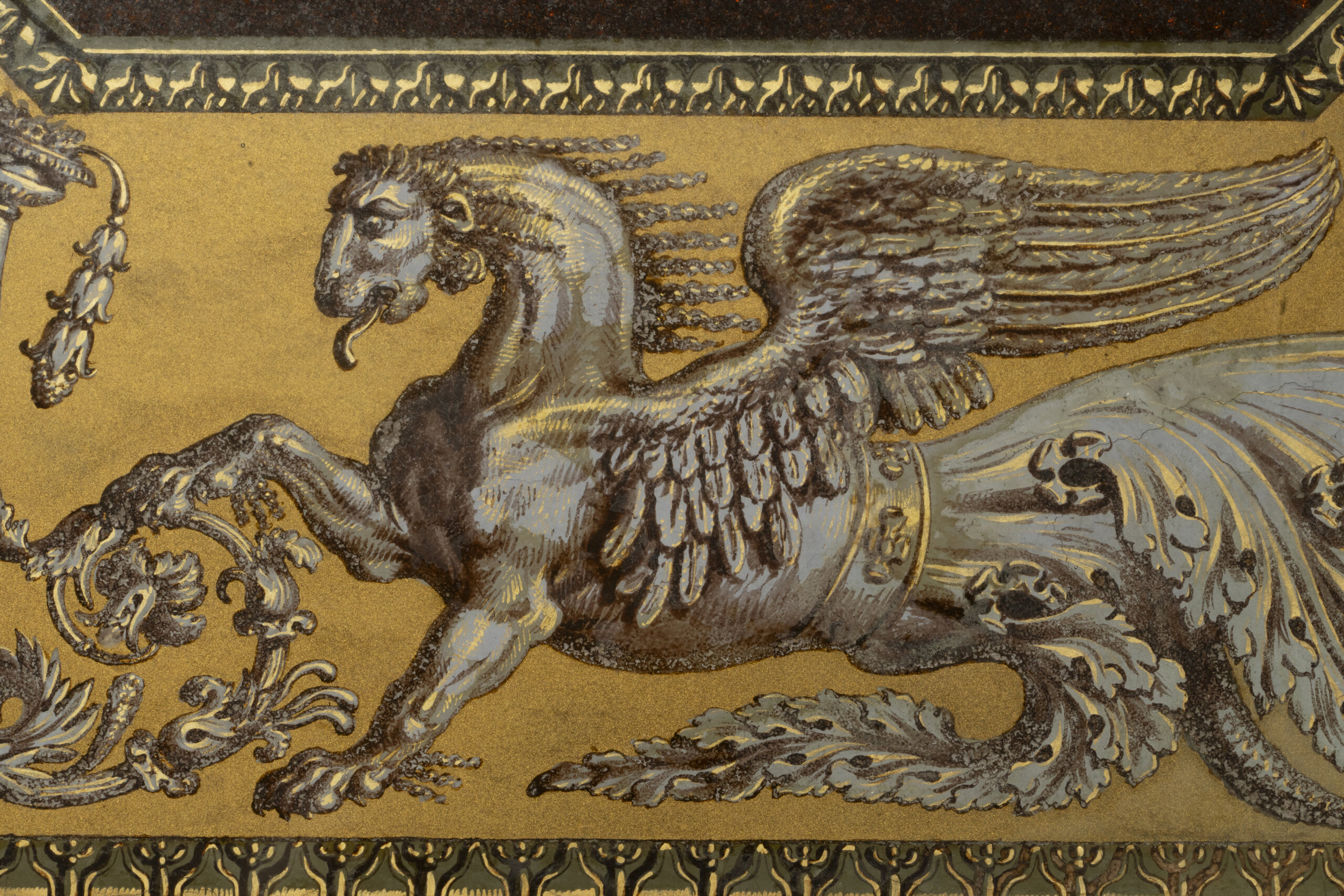
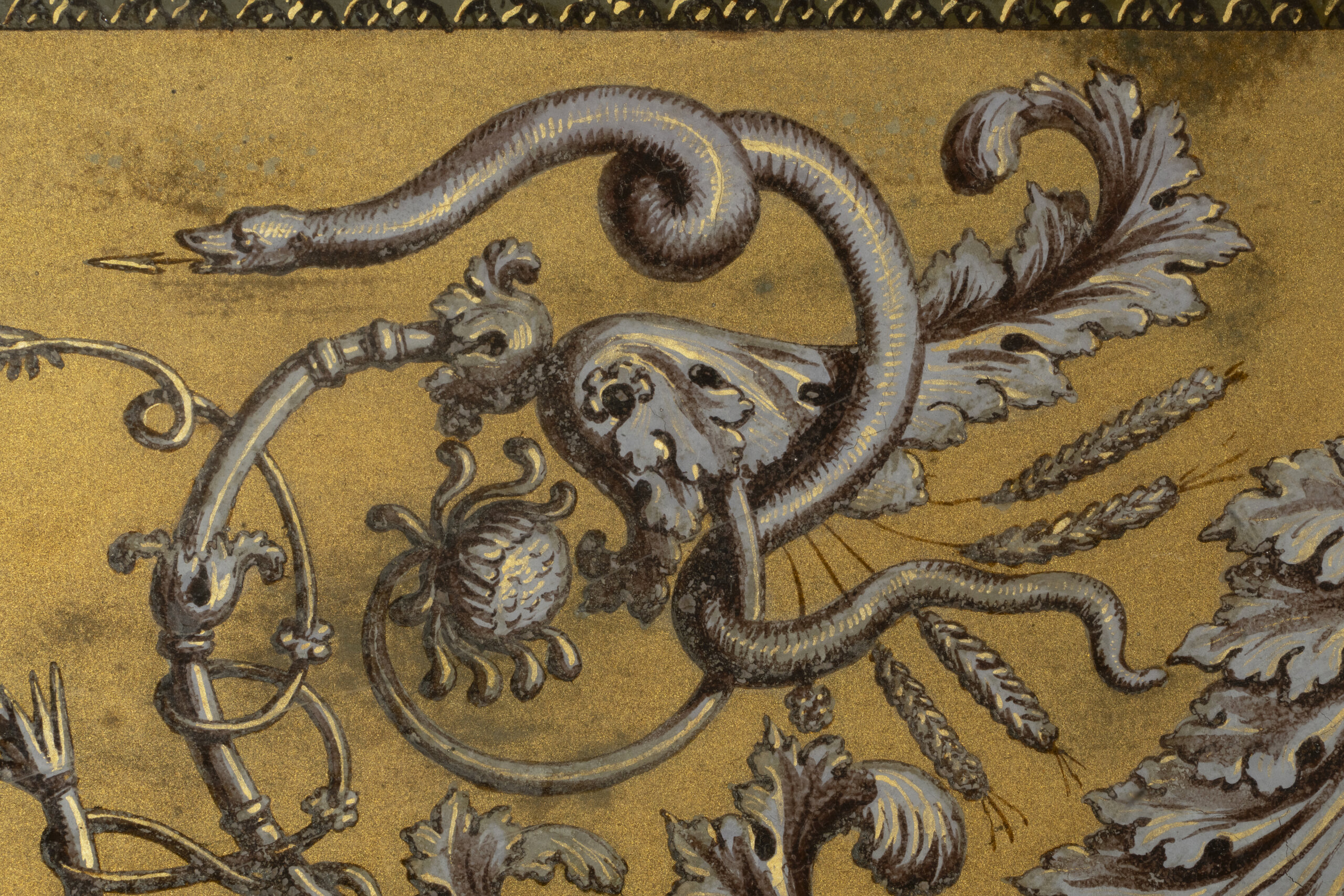
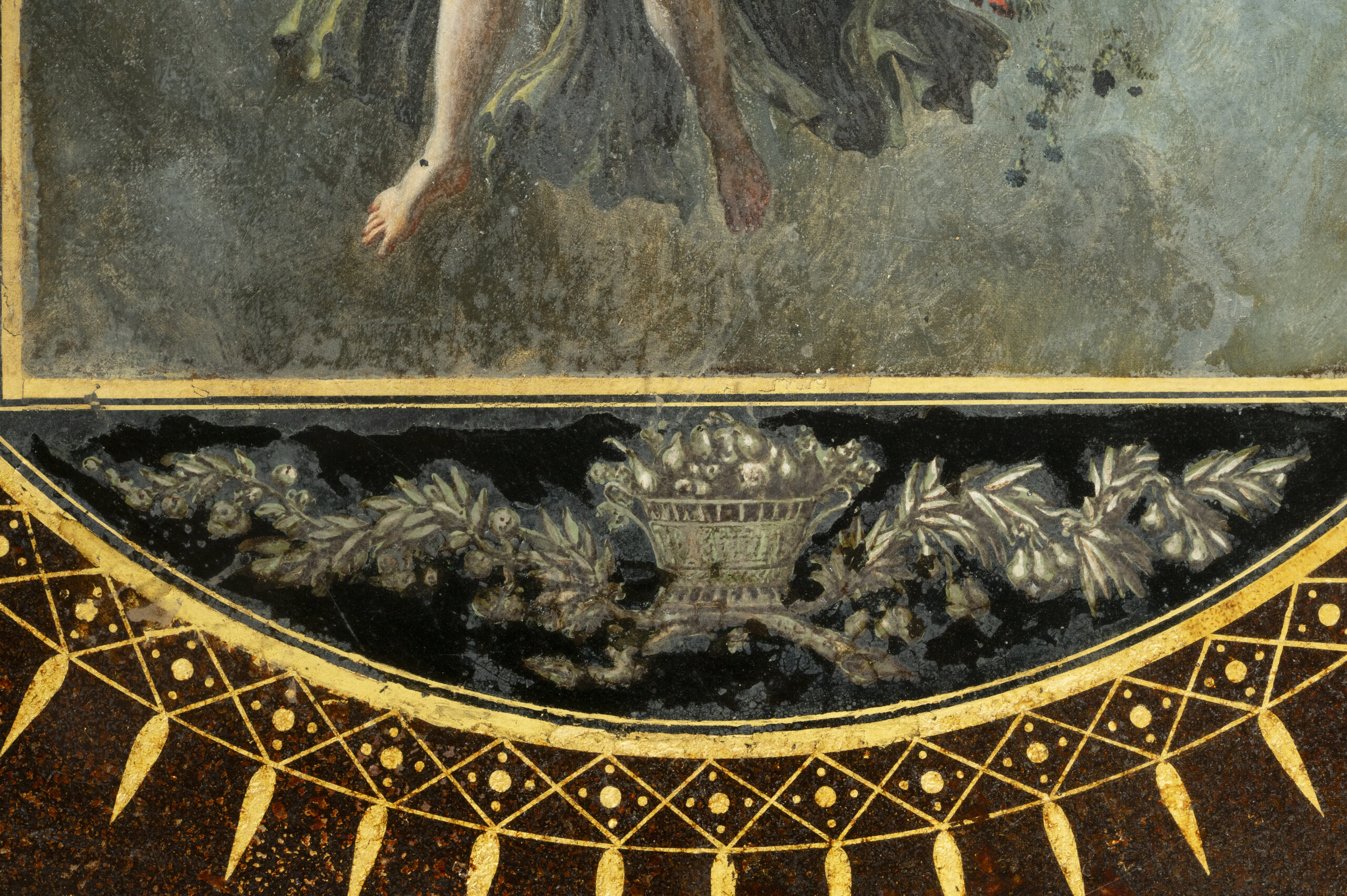
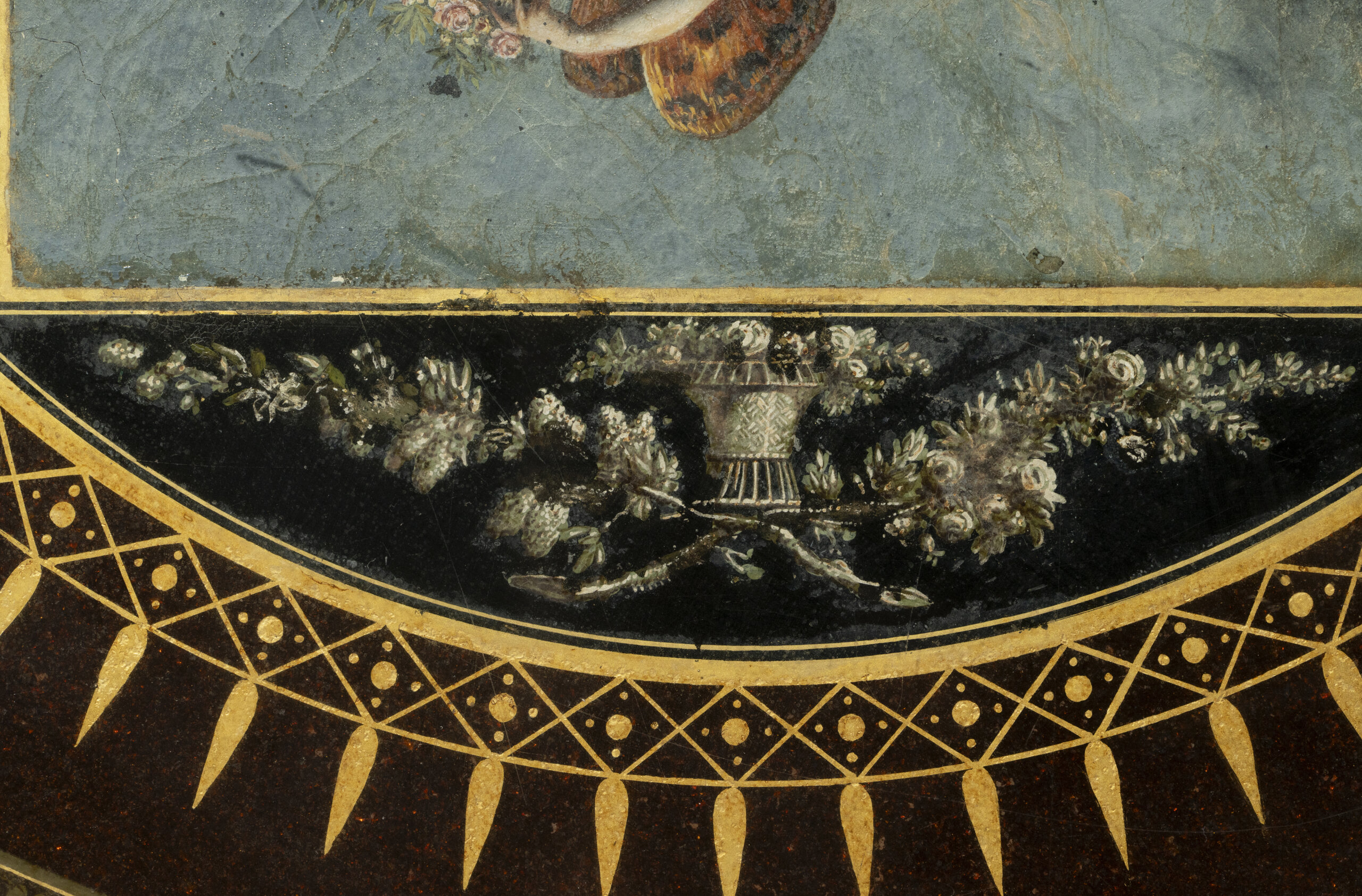
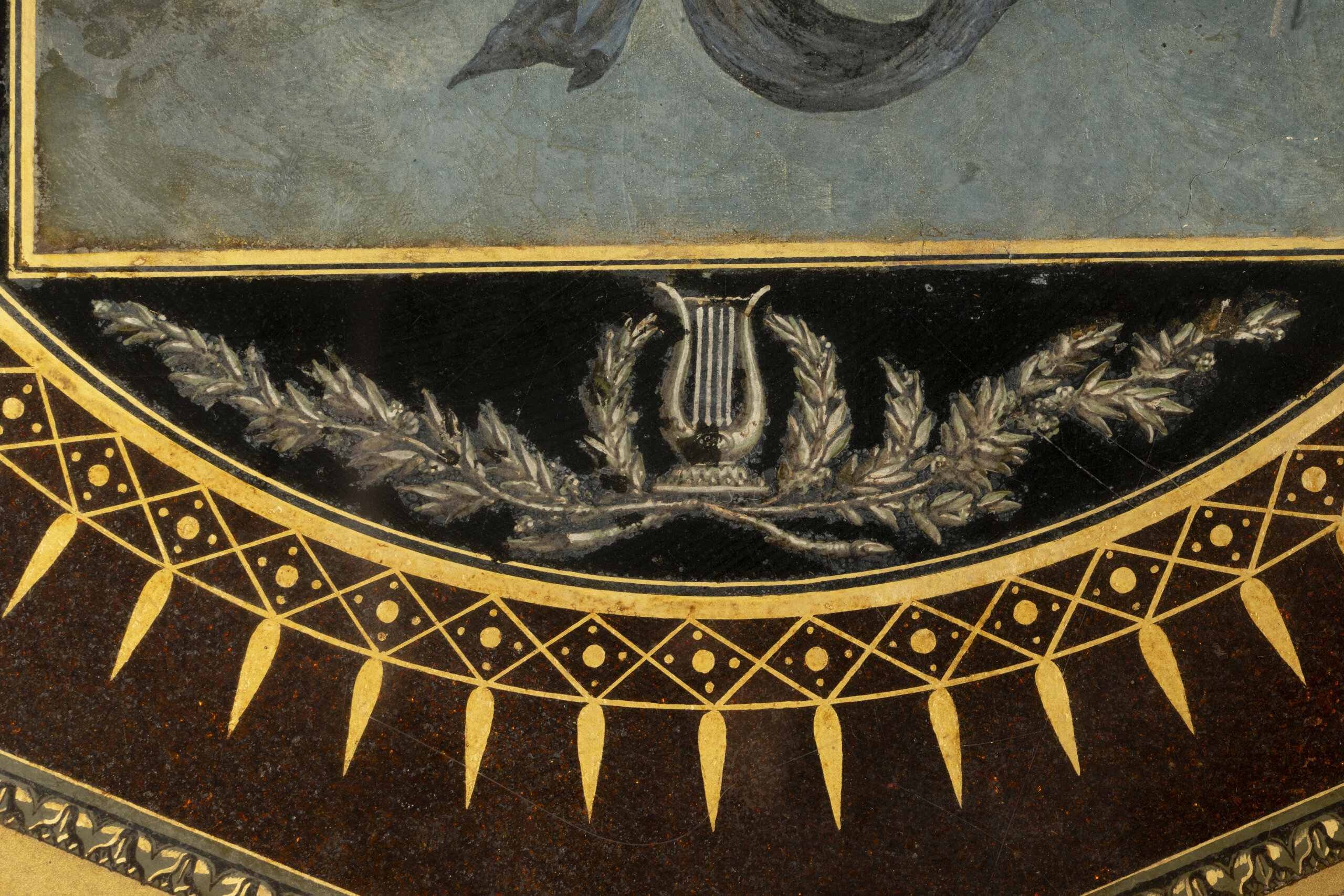
The circular top with moulded gilt bronze rim and outer mahogany-veneered band, centred by a large panel in verre églomisé and reverse-painted glass depicting an allegorical female figure, possibly Flora, within a square reserve set lozenge-wise, on a black ground with silvered festoons, surrounded by a circular frame with gilt ray-work on a brown ground flecked with gold particles, and an octagonal border with winged griffins, chimeras, anthropomorphic figures, serpents and scrolling acanthus in gold and silver, within an outer black circular band with gilt foliate garland
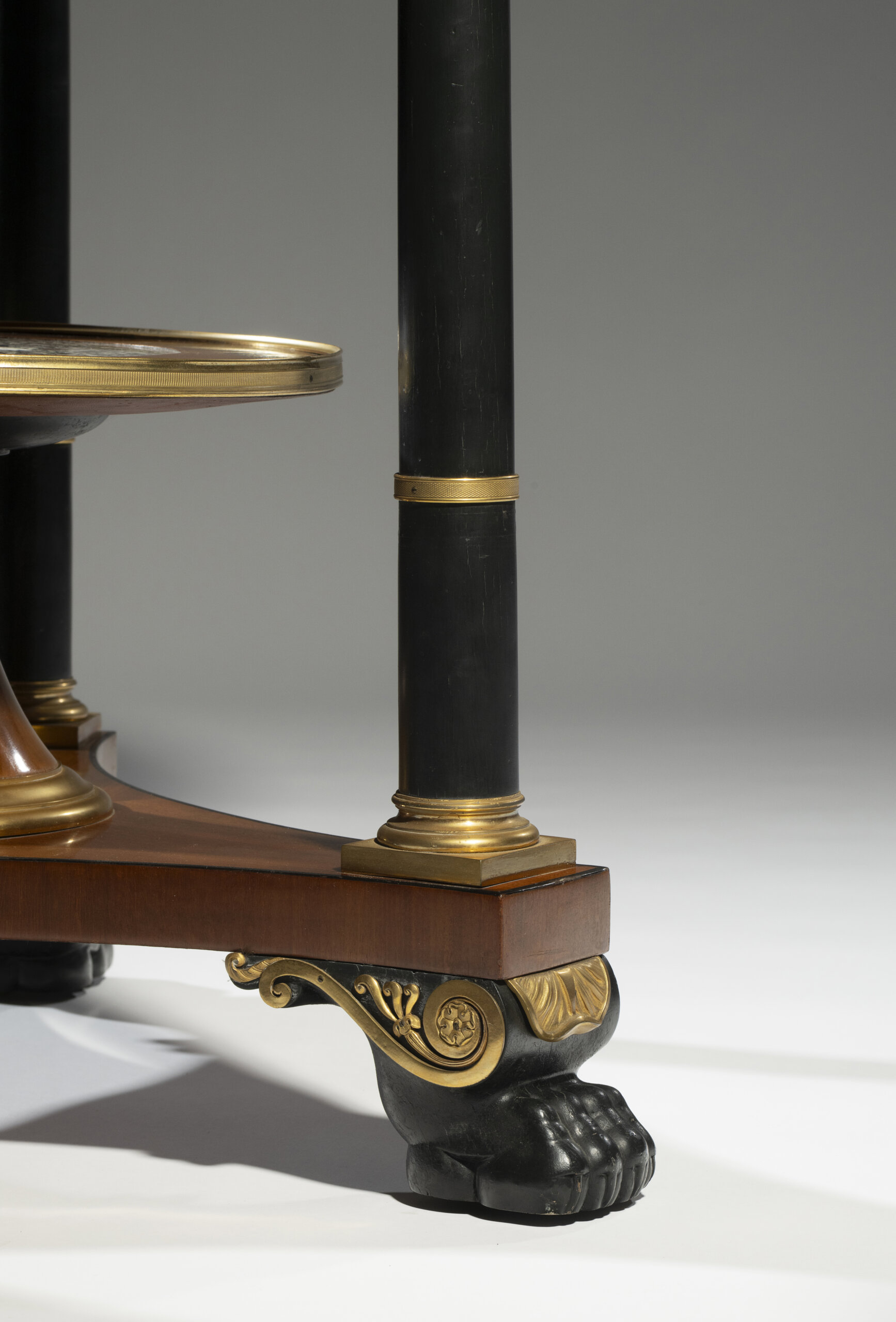
Raised on three ebonised cylindrical columns with Ionic capitals, gilt bronze rings and bases, on square plinths
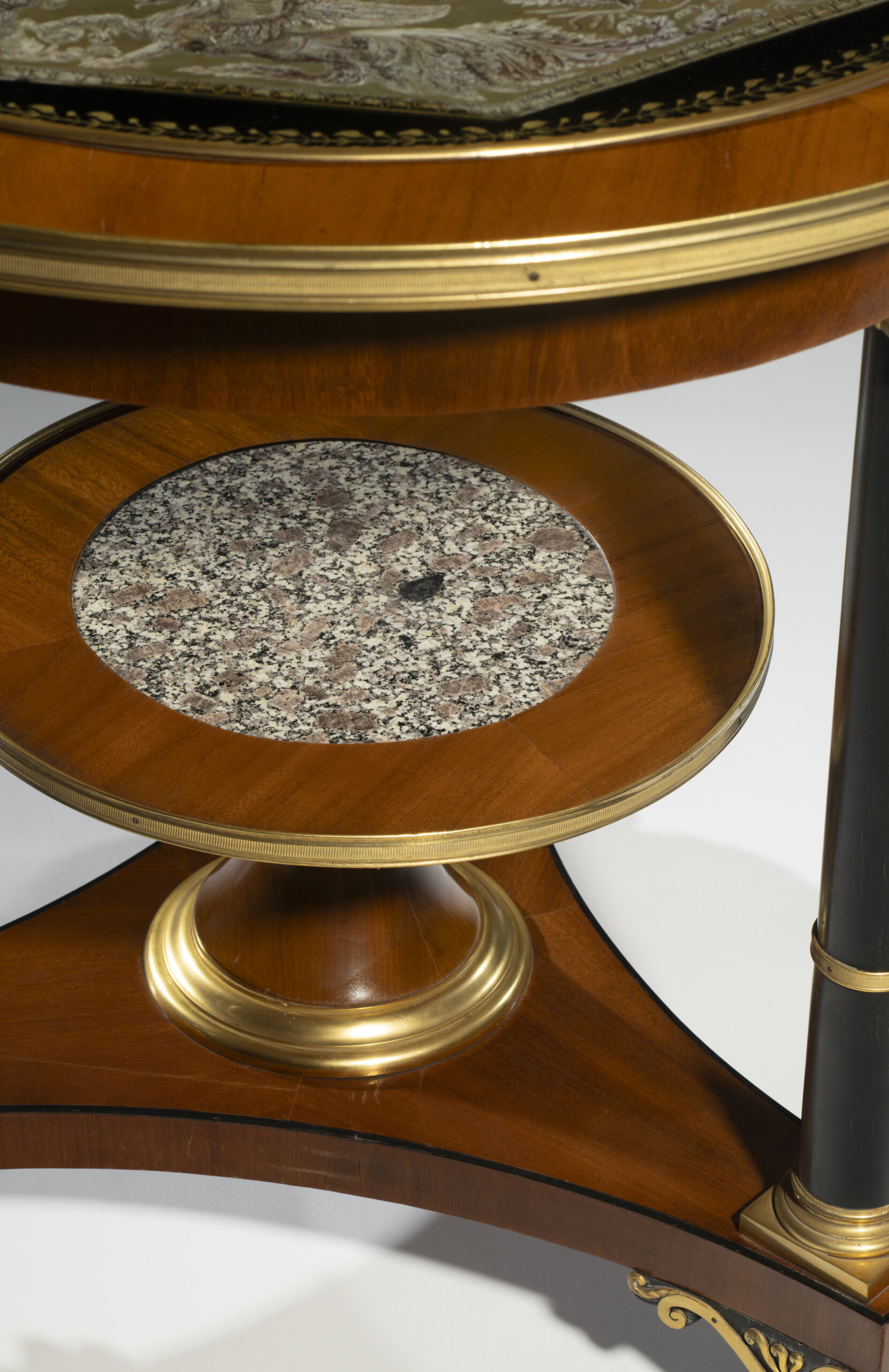
The circular undertier inset with a pink granite panel within a gilt bronze rim, on a turned support
The tripartite concave base terminating in patinated bronze lion-paw feet with gilt bronze mounts
France, 19th century (1st quarter)
(minor faults and signs of wear)
77,5x82,5x82,5 cm
Additional Information
Note:
The present guéridon relates to the production of Bernard Molitor (1755-1833), the Luxembourg-born ébéniste established in Paris, received master in 1787, whose workshop remained active from the Ancien Régime to the Restauration. Compare closely related tables attributed to Molitor, with tripartite bases, ebonised columns and patinated bronze lion-paw feet with gilt mounts identical to those of the present piece. The incorporation of verre églomisé panels in luxury furniture is documented in Molitor's œuvre, notably in a Louis XVI secrétaire with panels signed by Jean-Marie Degault ("DEGAULT PINXIT", Paris, c. 1790). Cf. Ulrich Leben, "Molitor: Ébéniste from the Ancien Régime to the Bourbon Restoration", London, 1992. The makers of the large verre églomisé panels of the early 19th century remain largely anonymous, these being commissioned by ébénistes and marchands for incorporation into furniture; among the few identified glass engravers is Antoine Rascalon (1742-1830), who supplied panels for Erard pianofortes (cf. M. Robin, "Antoine Rascalon", L'Objet d'Art, February 2003, pp. 78-82).
Provenance:
Christie's, London, 13 December 2001, lot 480.
Closed Auction
