
291
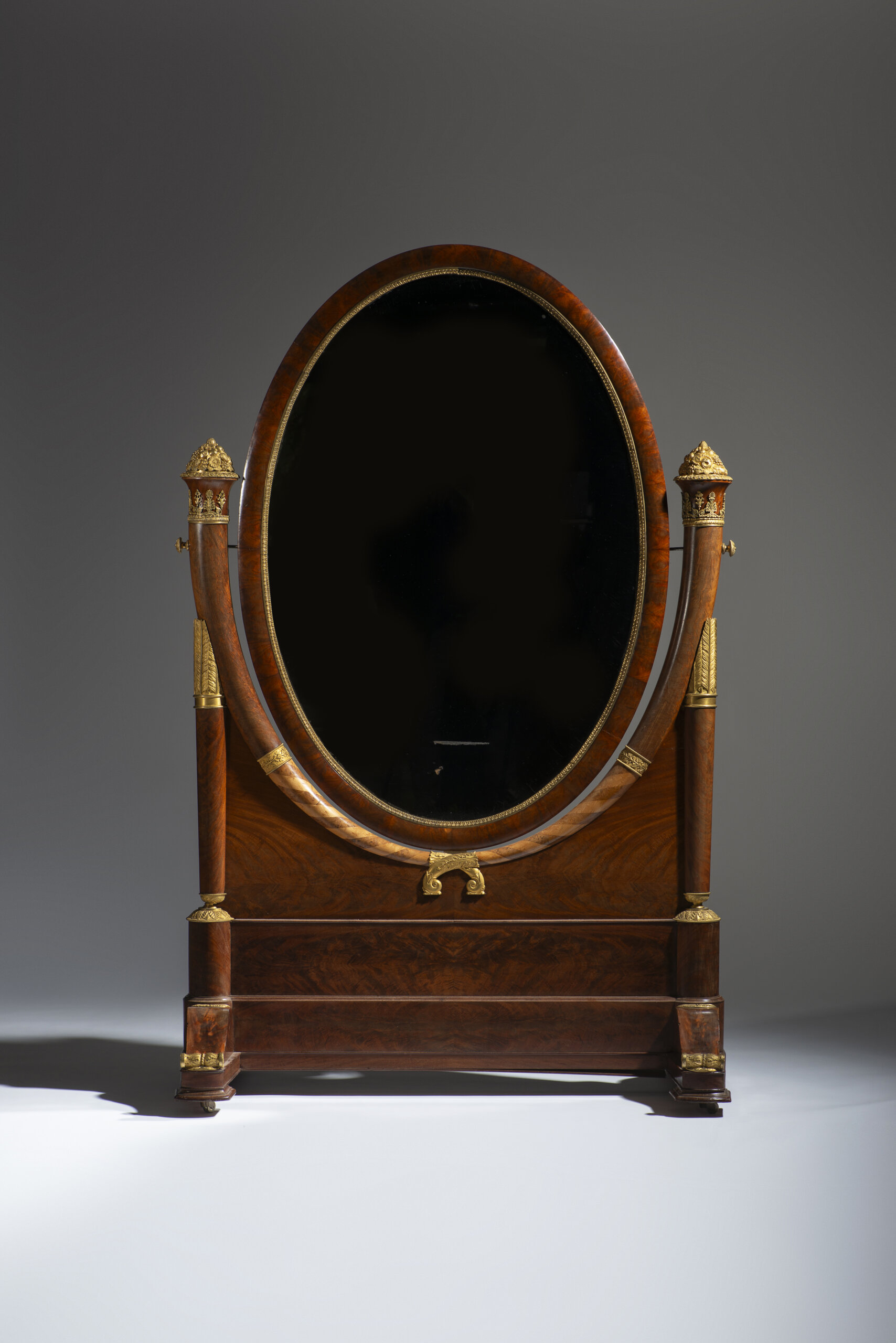
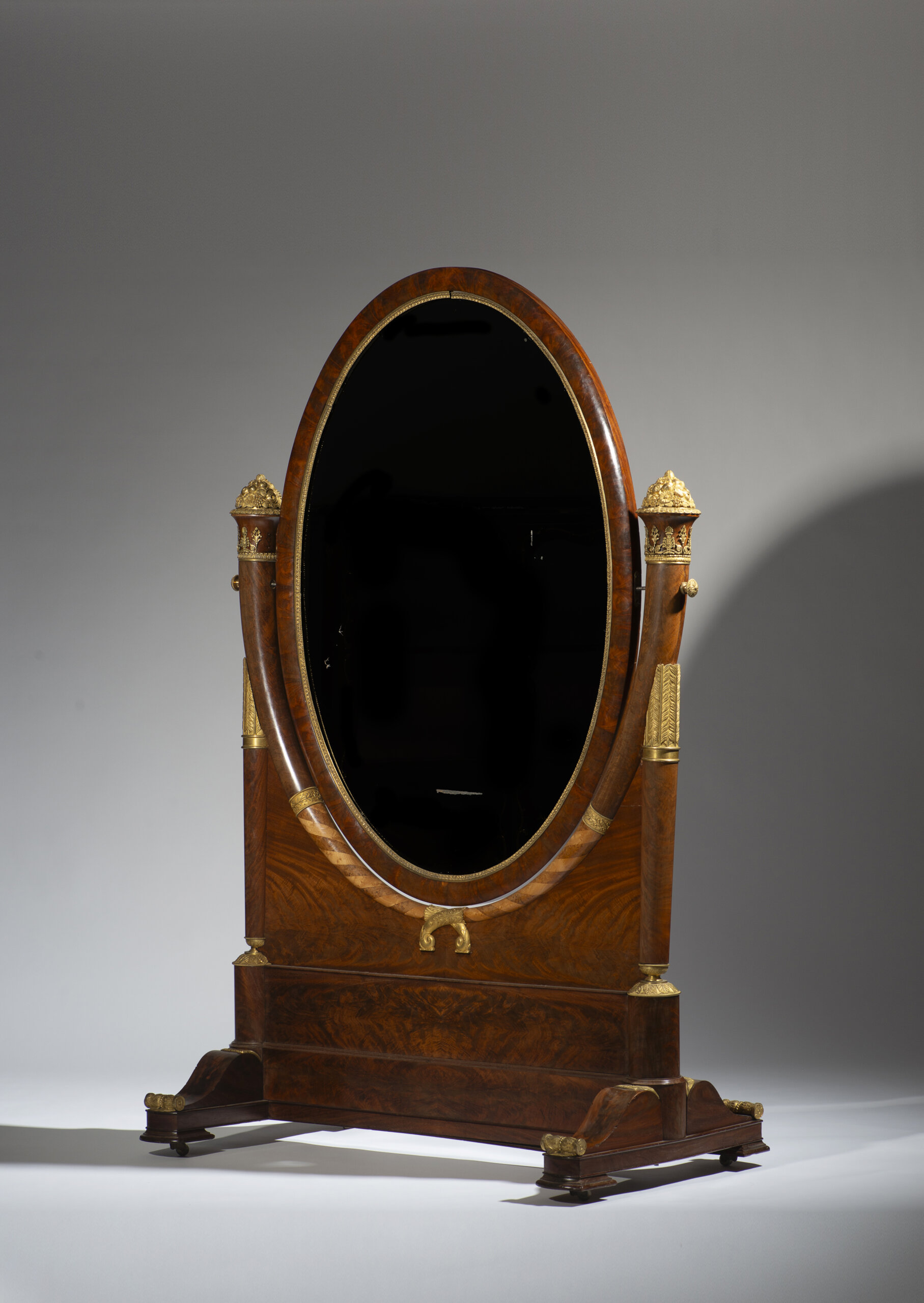
An Empire ormolu-mounted mahogany cheval mirror, attributable to Jacob Frères
Estimate
15.000 - 20.000
Session 2
15 October 2025
Hammer Price
Register to access this information.Description
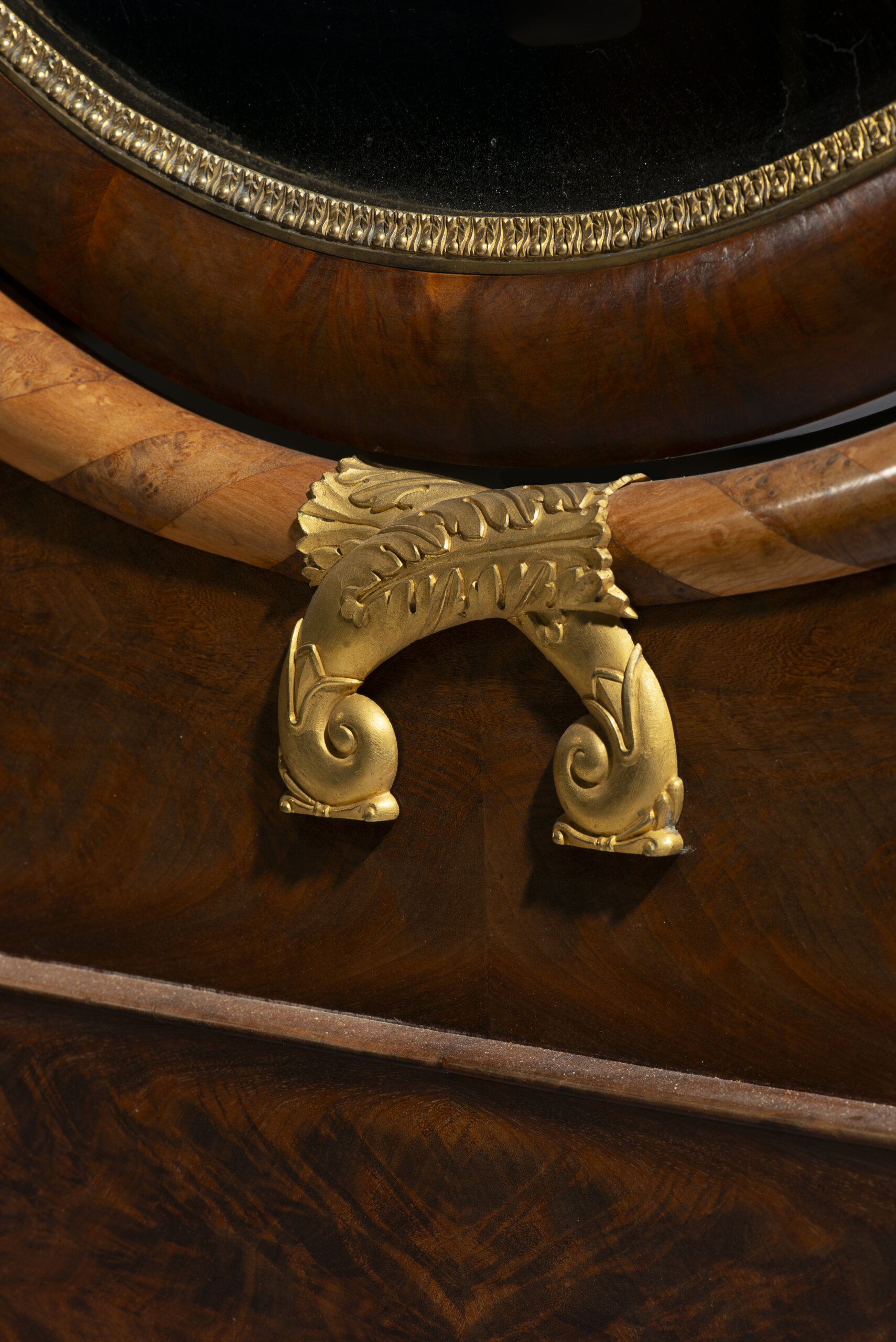
Veneered in flame mahogany, with ormolu mounts and elements veneered in burr thuya and maple
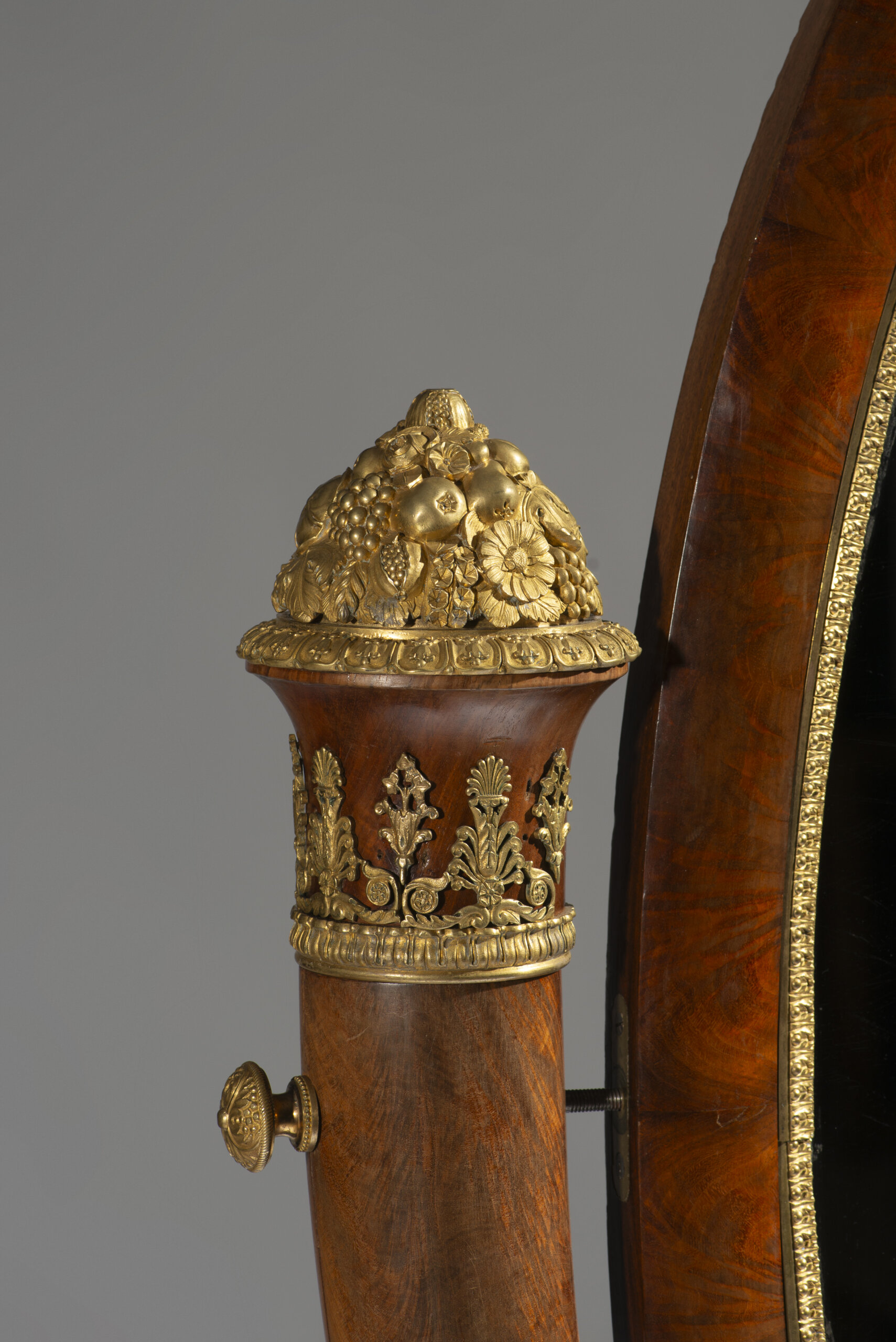
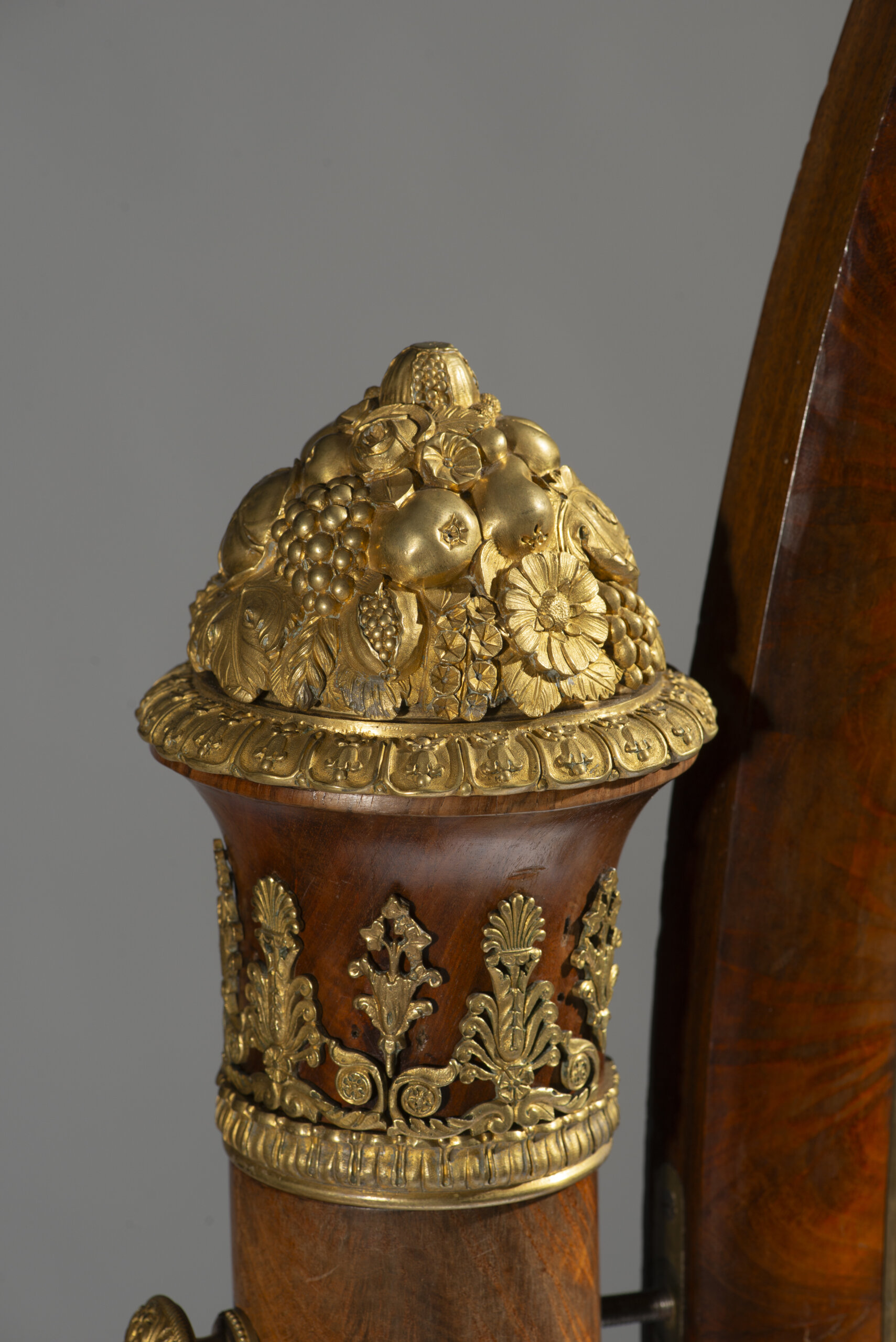
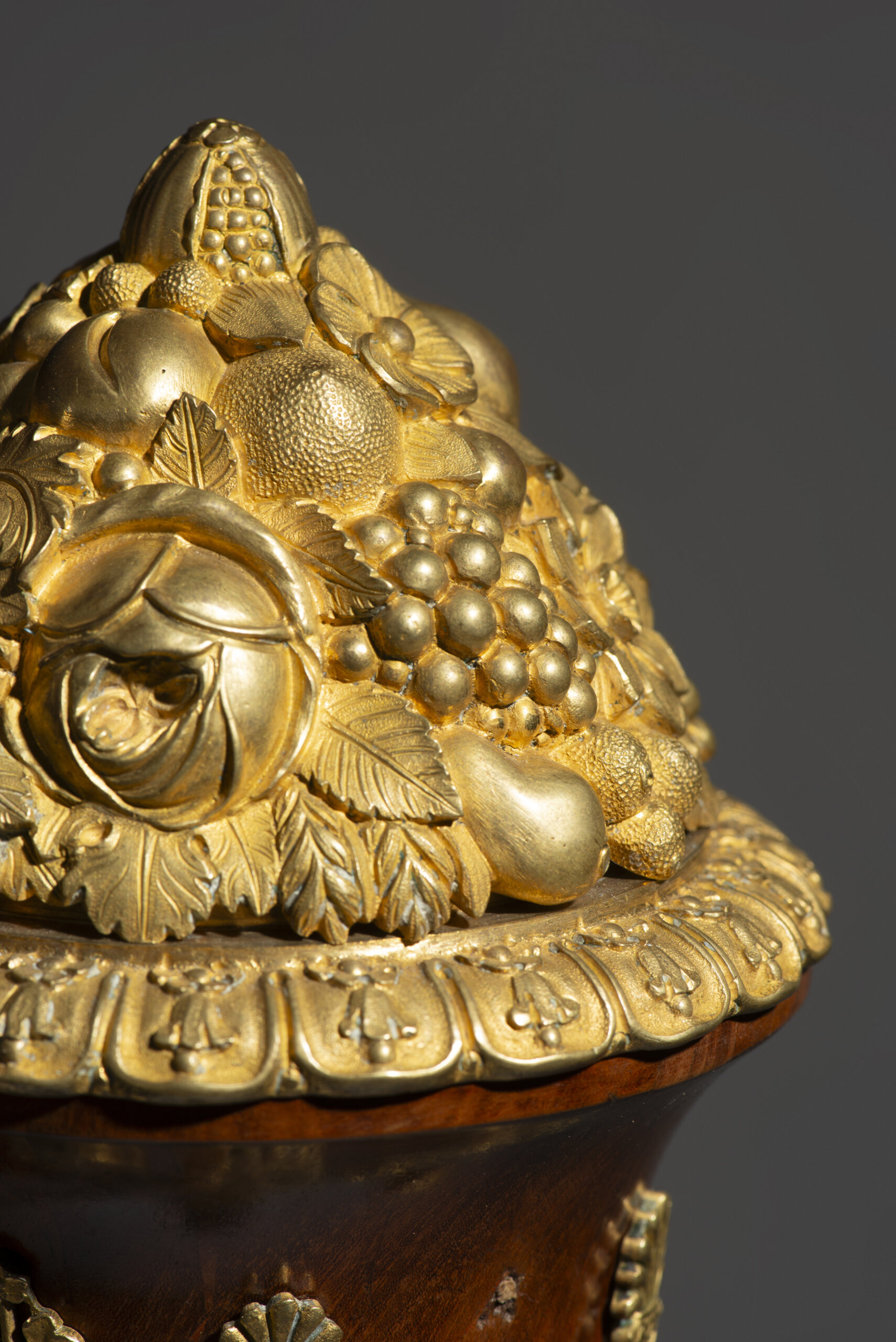
Adjustable oval mirror frame supported by a pair of cornucopiae, the shafts with helical twist veneered in burr thuya and maple, united at the centre by an ormolu bow-tie clasp, terminating in acanthus leaves and surmounted by ormolu finials modelled as baskets of fruit and flowers
Side supports in the form of quivers, surmounted by sheaves of arrows in ormolu
Rectangular tiered base raised on four console feet with casters, terminating in ormolu acanthus scrolls
France, circa 1800
(minor losses and signs of use; localised restorations to veneer)
175x113x62 cm
Additional Information
JACOB FRÈRES
Paris, active 1796–1803
The firm established by the brothers Georges II Jacob (1768–1803) and François-Honoré-Georges Jacob (1770–1841), sons of the celebrated ébéniste Georges Jacob (1739–1814), a central figure of French Neoclassicism during the reign of Louis XVI and the Directoire, produced pieces in a rigorous Neoclassical idiom, characterised by architectonic forms of refined design, surfaces of exceptional regularity, and execution of the highest quality.
The refinement of execution in pieces produced by Jacob Frères is equally evident in the ormolu mounts - in many cases commissioned from prestigious bronziers such as Thomire -, distinguished by finely chased detail and crisp profiles, with a decorative repertoire of palmettes, acanthus, rosettes, swags, and pearl friezes.
Among the most characteristic motifs are cornucopiae, quivers with bundles of arrows, fruit finials, lyres, swans, classical trophies, and scrolls.
The quality of the cabinetwork, with rigorously matched mahogany veneers, clean joinery, and a high polish, is in itself a decisive indicator in attributions to this workshop of reference.
Closed Auction
