
146
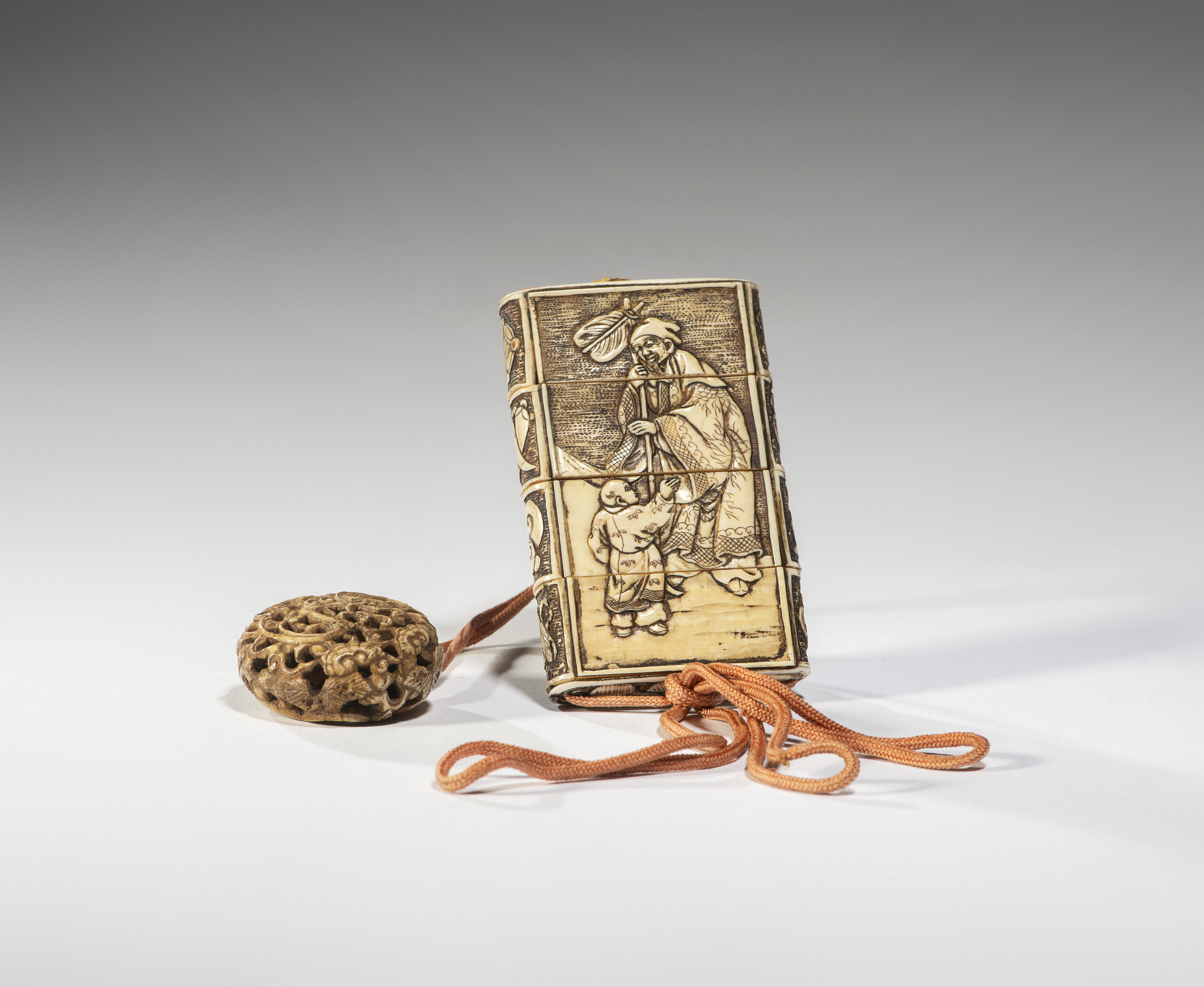
A three-case carved ivory inrō
Estimate
300 - 500
Session
8 May 2026
Description
Japan, Meiji period, 19th century
Of rectangular form, in carved ivory with black-stained details
One side carved in low relief with an Immortal or Sage and a child
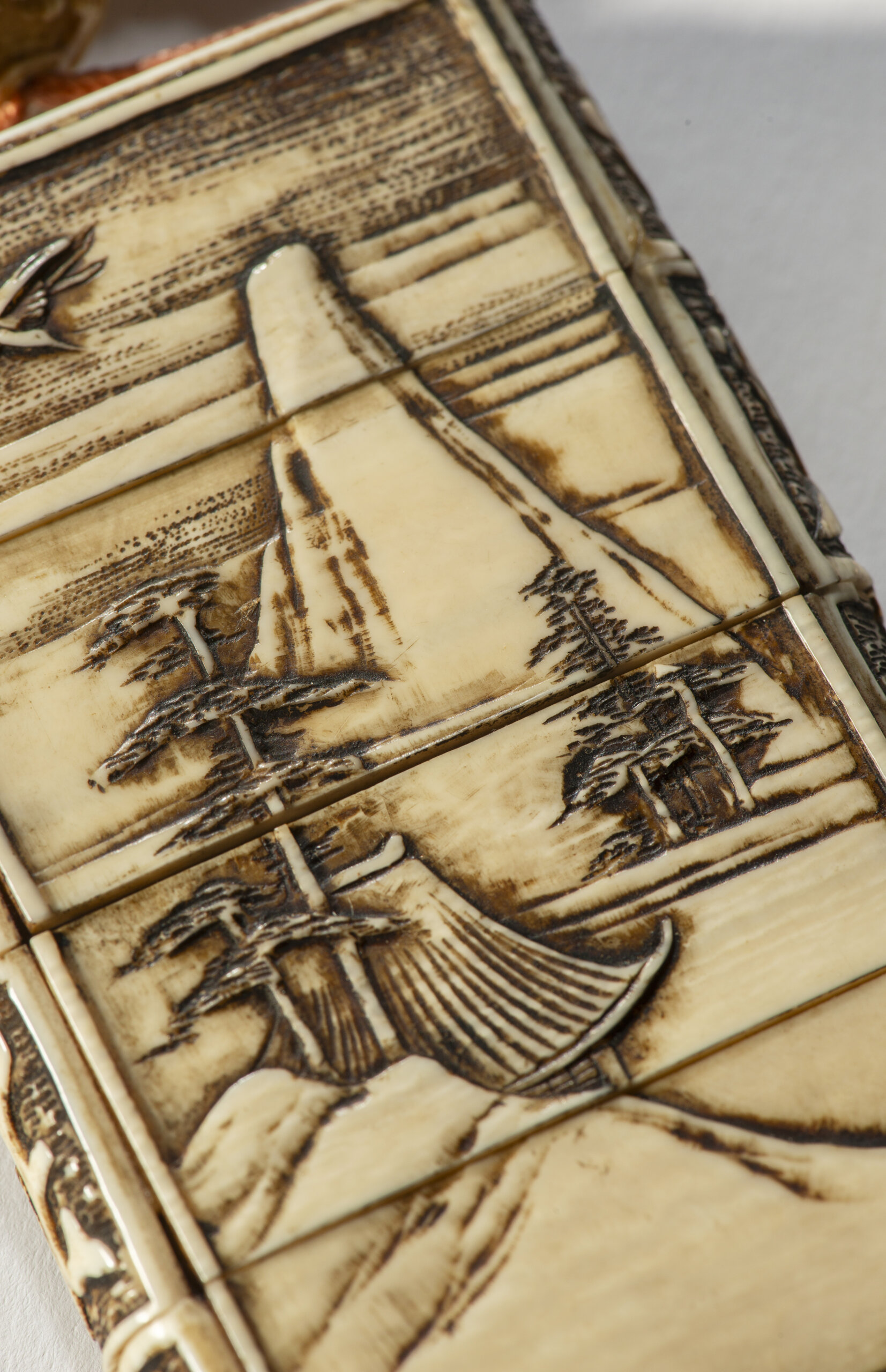
The reverse with a stylised landscape depicting Mount Fuji, pine trees, a pavilion and a bird in flight
The himotoshi channels divided into eight panels with the Eight Auspicious Treasures (Babao / Takaramono)
The top and base carved in low relief with radishes and other vegetables
Signed to the lower left corner (probable reading 孝親工 / Takachika kō)
Together with a spherical ivory ojime carved with a figure amidst draperies and pine branches, and a manju-type bone netsuke with openwork decoration (sukashibori) depicting an archaistic dragon among clouds, lingzhi fungi and foliage
(Accompanied by CITES certificate no. 25PTLX04544C)
日本明治时期,十九世纪。象牙雕三段式印笼,浅浮雕饰仙人携童子及富士山松林楼阁图,侧面分八格雕八宝纹,署款(疑为「孝親工」)。附象牙绪締及透雕骨制馒头根付,雕螭龙灵芝纹。附CITES证书。
9x5,5x1,6 cm
79 g
Additional Information
Note:
A comparable inrō is held in the collection of The Náprstek Museum of Asian, African, and American Cultures, International Research Center for Japanese Studies (Nichibun), ref. G1305445.
Provenance:
Acquired by the current owner's grandfather in France, between 1950 and 1970.
Closed Auction
