
49
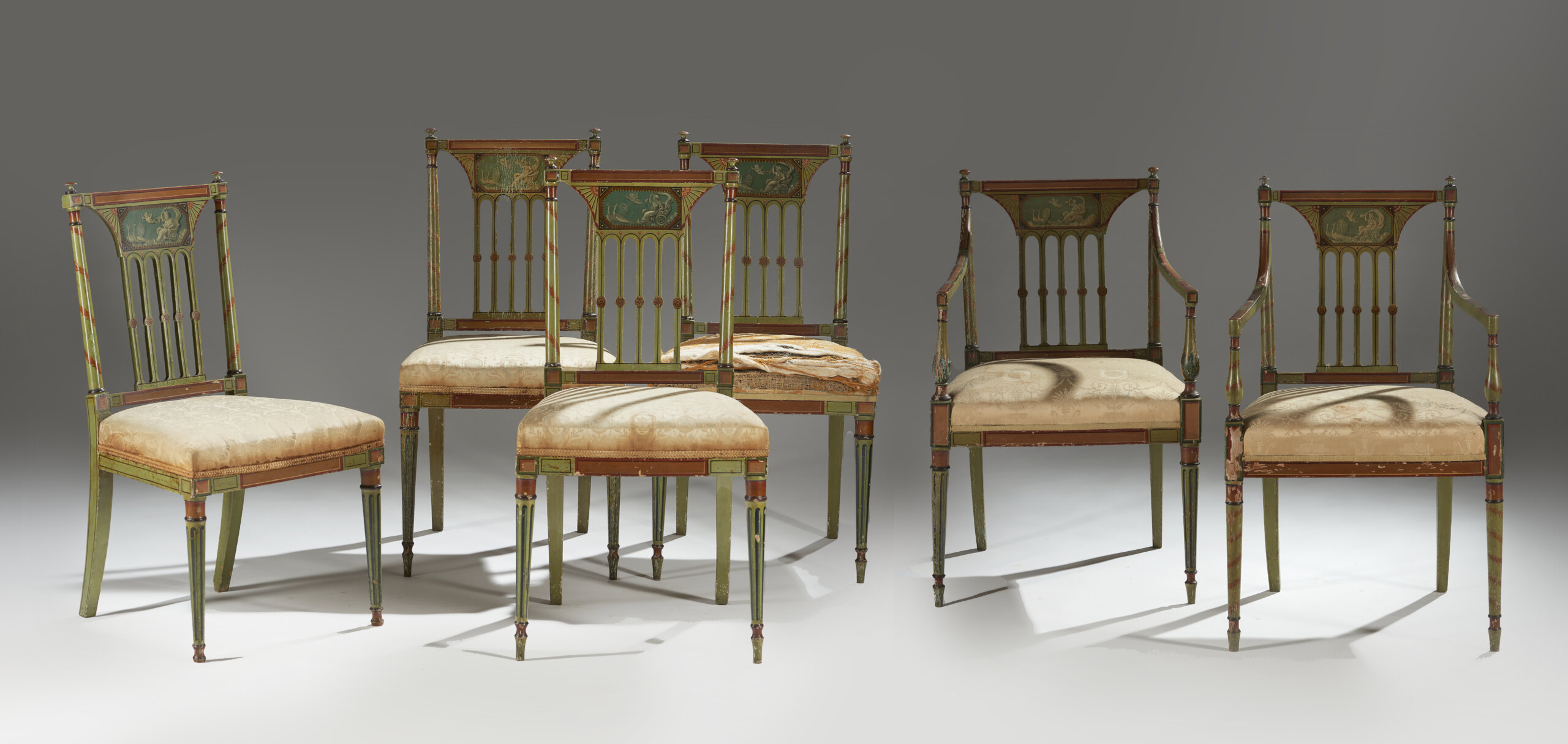
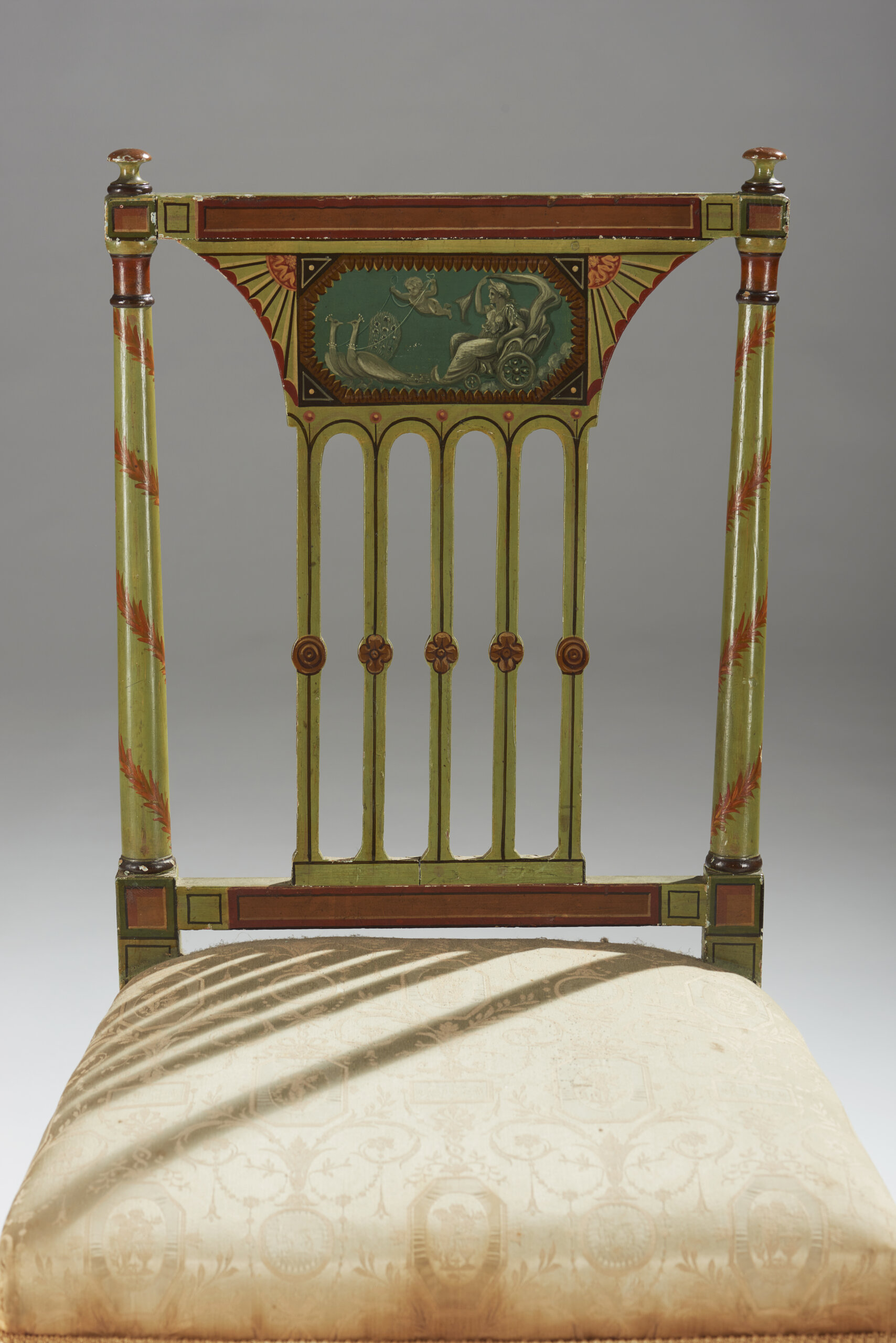
A set of six George III chairs, attributable to the Gillows workshop
Estimate
8.000 - 12.000
Session 1
4 June 2025
Hammer Price
Register to access this information.Description
Polychrome-painted wood, with seats upholstered in light-toned damask silk
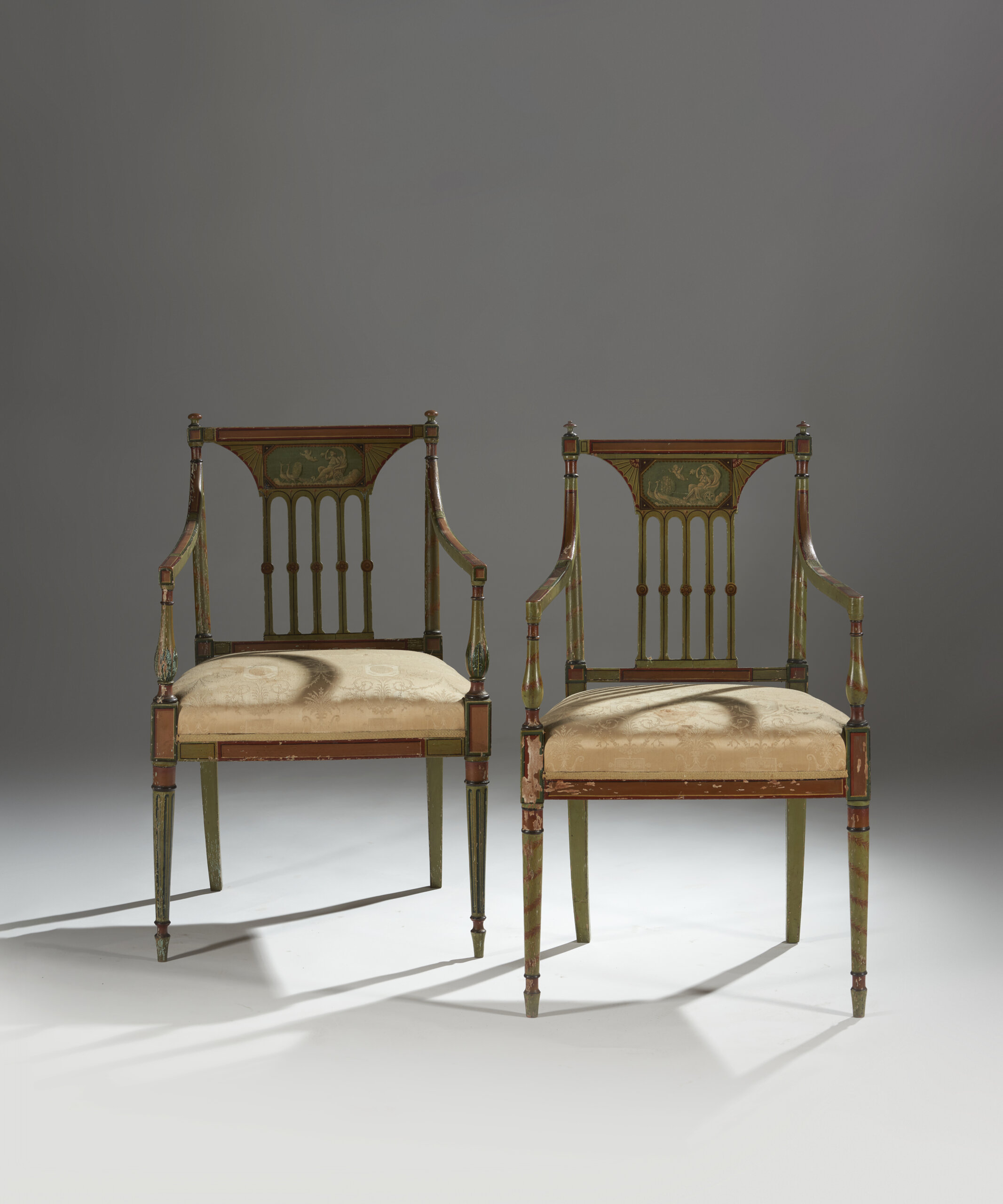
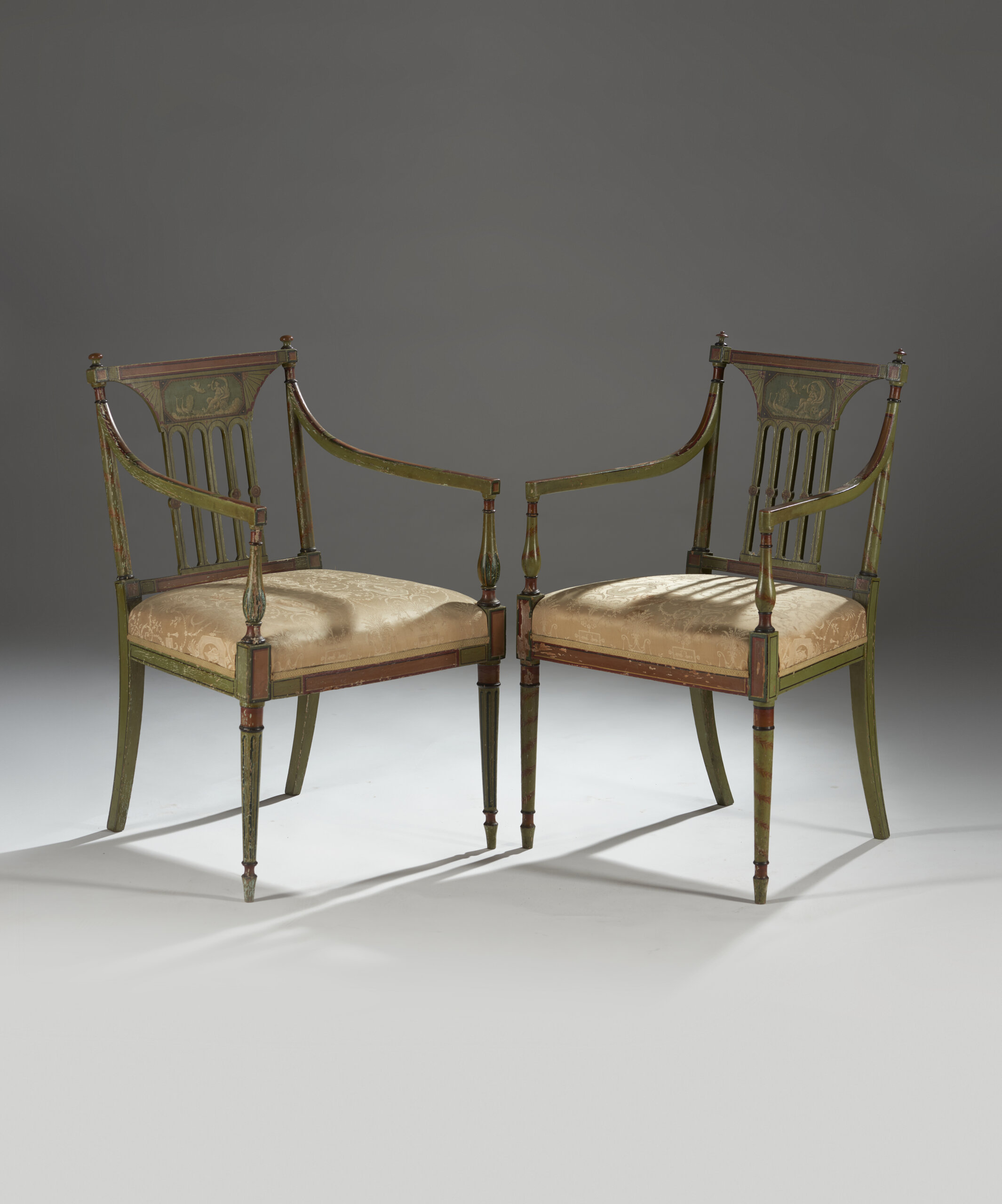
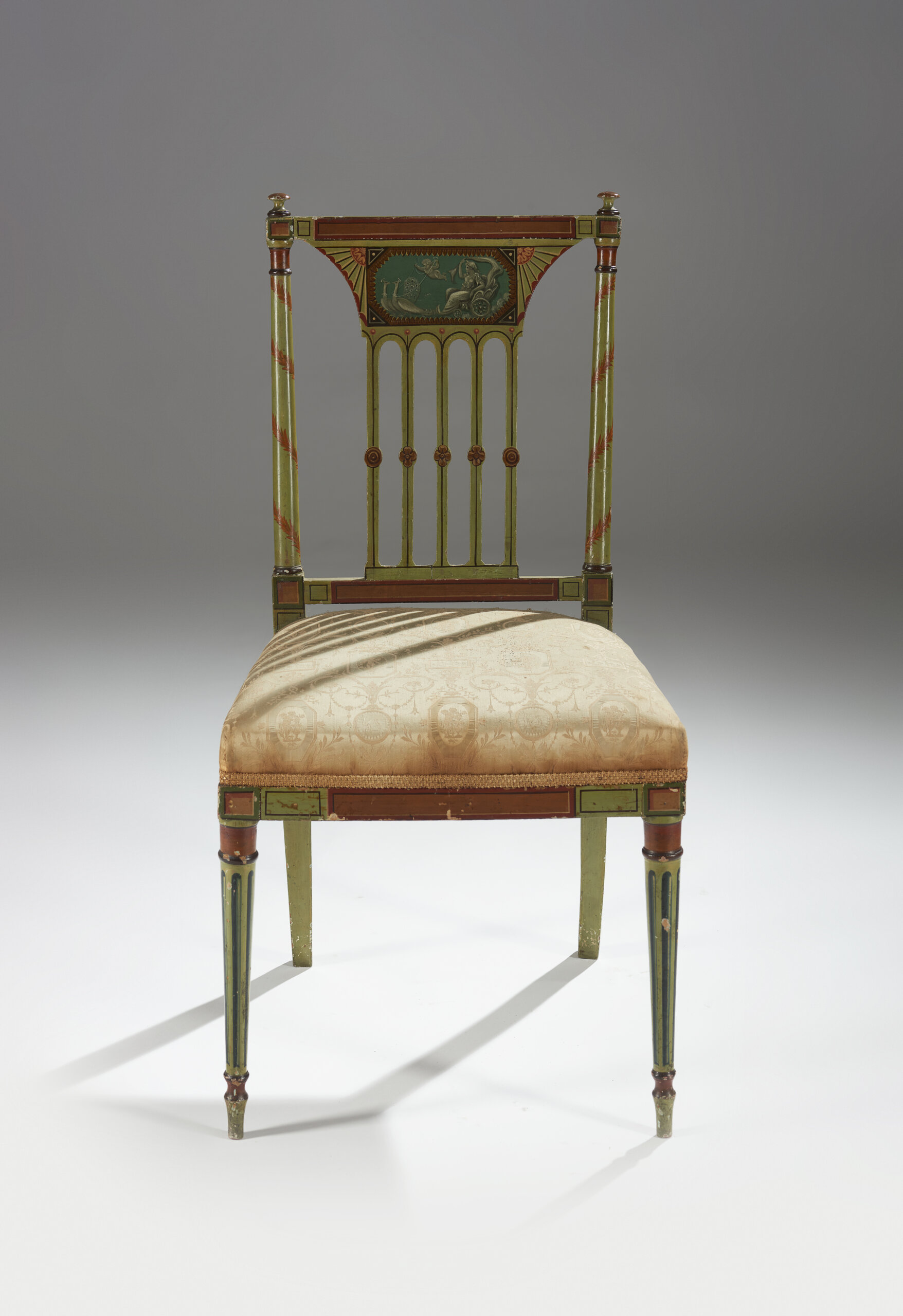
Comprising four side chairs and two armchairs, each with a backrest surmounted by small finials and decorated with fan-shaped arched splats joined by rosettes, topped with painted rectangular panels.
The front legs are fluted and the back legs are of sabre form.
Painted in the neoclassical taste in shades of green, red and ochre, with trompe-l'œil garlands and geometric borders.
The panels to the top rail painted with classical mythological scenes in the manner of bas-reliefs, depicting the goddess Juno in a chariot drawn by peacocks and accompanied by Cupid.
England, circa 1810
(Signs of use, wear to the painted surface, minor losses and defects to the polychromy; one chair with torn upholstery)
94x54x46 cm
Additional Information
Founded in Lancaster in the 1730s, the Gillows of Lancaster and London workshop became a reference in British furniture-making of the 18th and early 19th centuries, renowned for its high-quality materials, refined design, and solid craftsmanship. From 1769 onwards, it also established itself in London, supplying furniture to a wide clientele among the British nobility and upper classes.
The attribution of this set to the workshop is supported by its strong resemblance to the Clifton pattern model, created by Gillows in 1796, evident in the arched splat design, the polychrome palette in green, ochre and red tones, and the neoclassical painted decoration. The association with John Leicester, 1st Baron de Tabley - a documented client of the firm - further reinforces its likely origin from the workshop.
Provenance:
These chairs were originally commissioned by John Leicester, 1st Baron de Tabley (1762–1827) for his London residence in Hill Street, Berkeley Square, or for Tabley House, Cheshire. The set was photographed in situ in the former Entrance Hall of Tabley House and published in Country Life magazine on 28 July 1923. The same image was later reproduced by Christopher Hussey in English Country Houses, Mid-Georgian 1760–1800, ACC, vol. II, 1988, fig. 97.
Exhibitions:
Literature:
C. Hussey, English Country Houses: Mid-Georgian 1760–1800, vol. II, Antique Collectors’ Club, Woodbridge, 1988.
S. Stuart, Gillows of Lancaster and London 1730–1840, Antique Collectors’ Club, Woodbridge, 2008.
Closed Auction
