
232
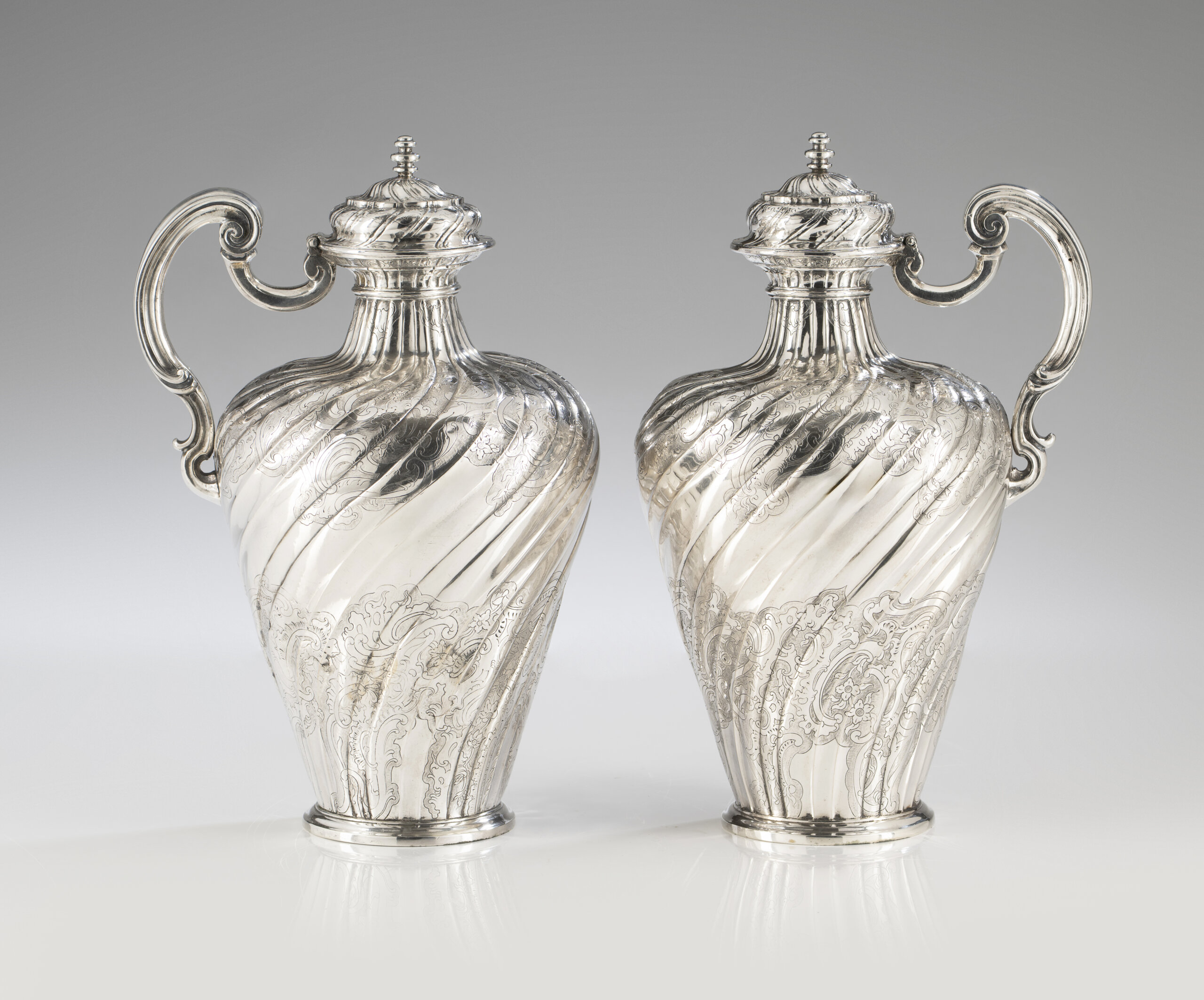
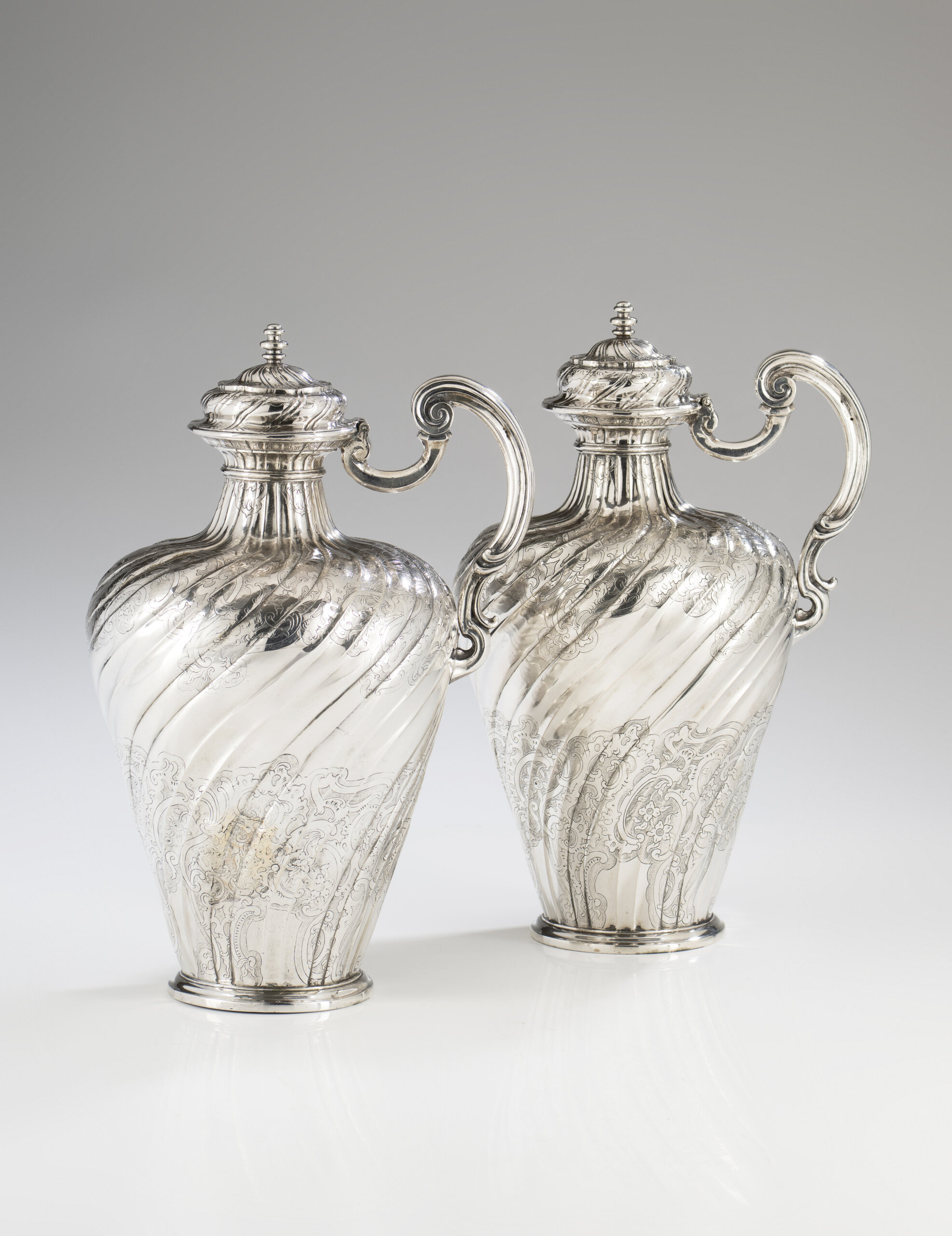
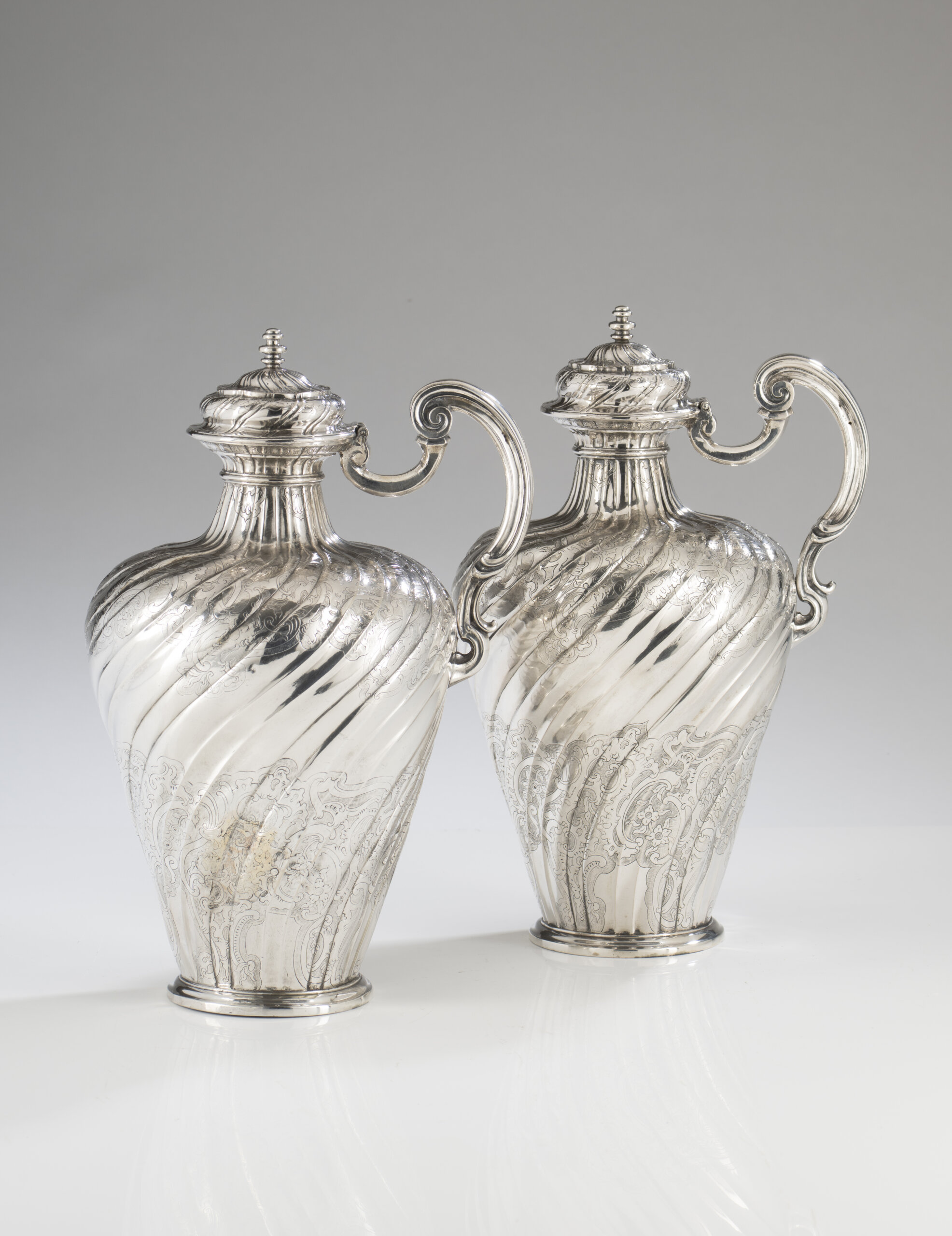
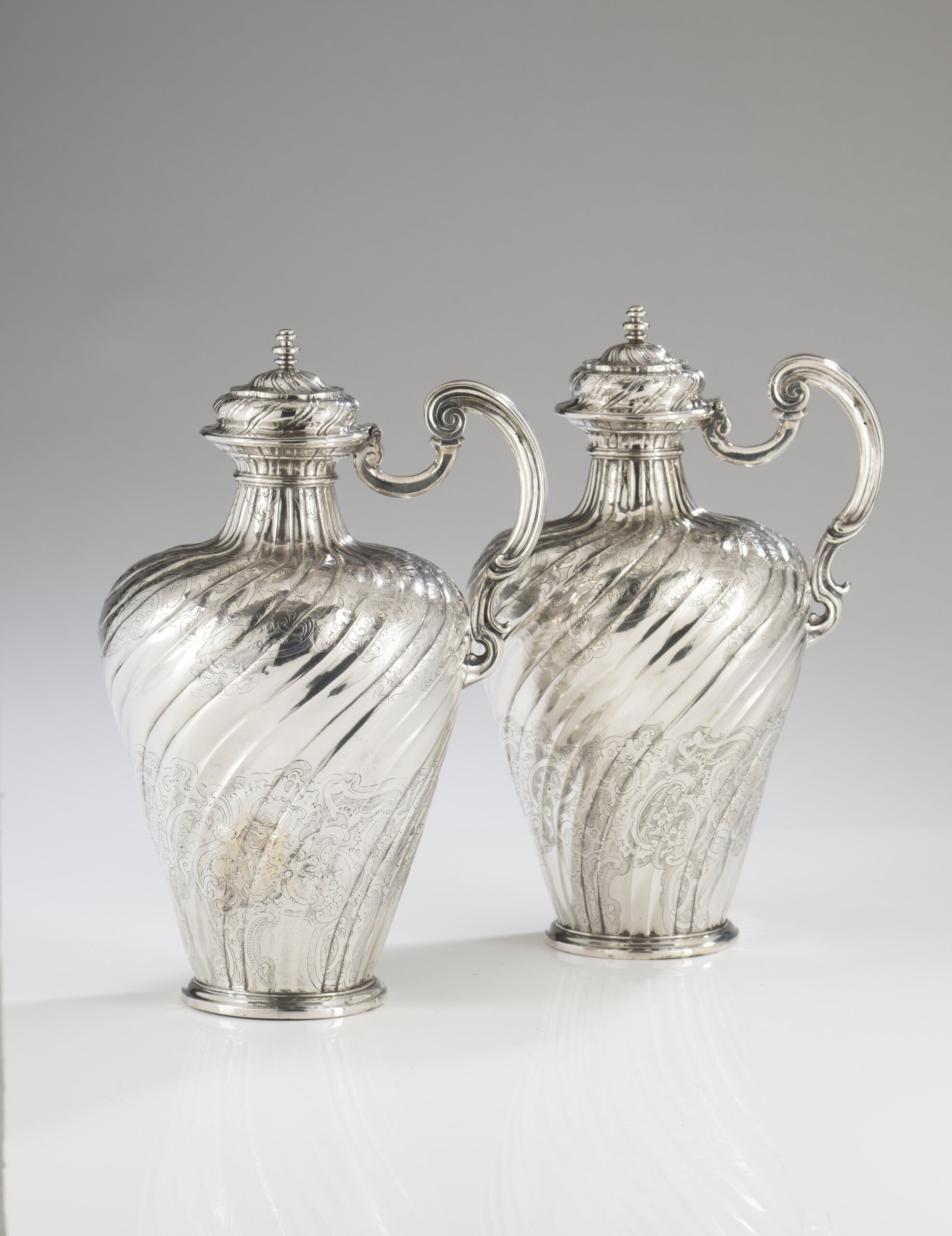
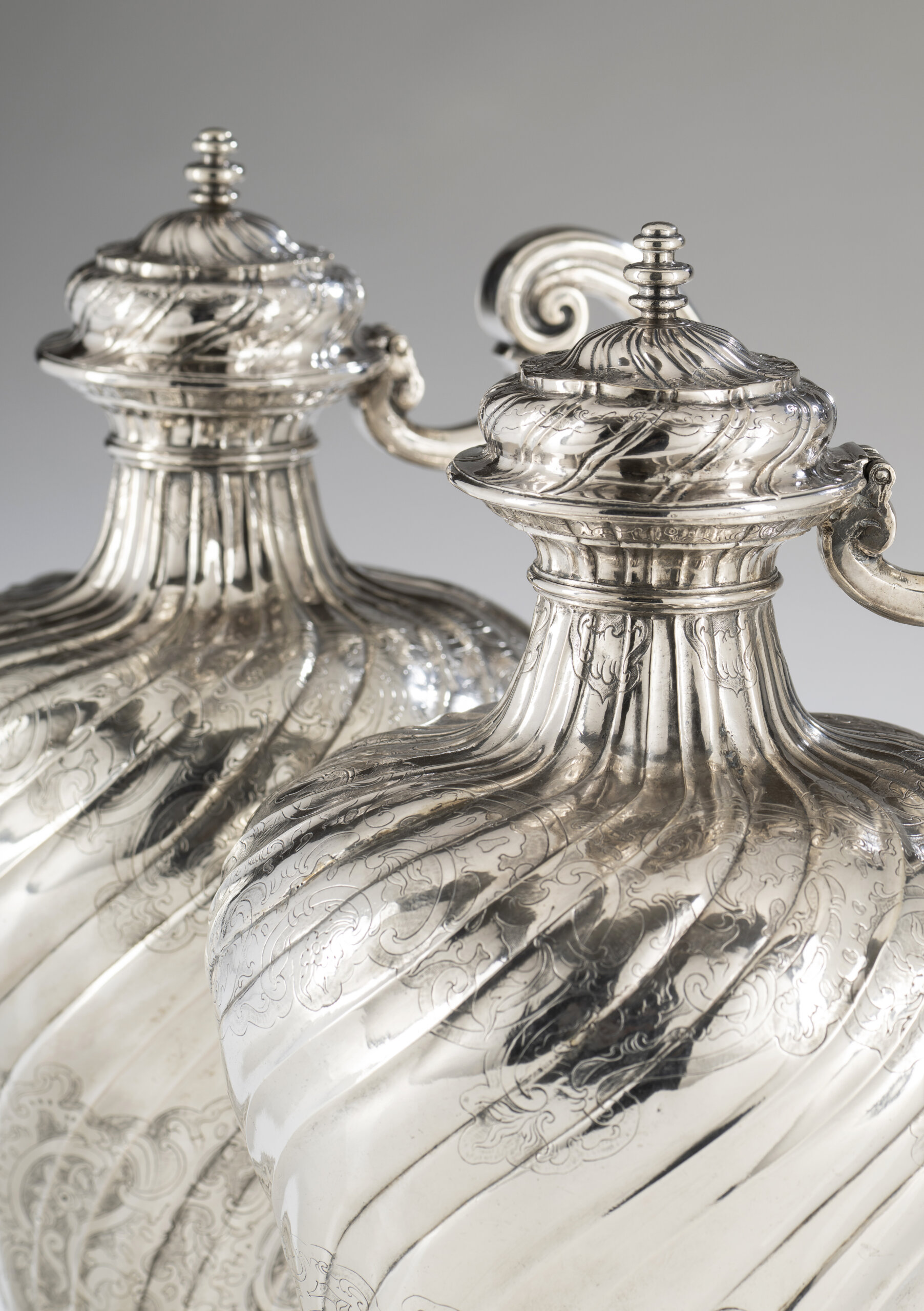
A pair of Portuguese silver ewers
Estimate
Price on request
Session 1
20 July 2026
Hammer Price
Register to access this information.Description
Silver
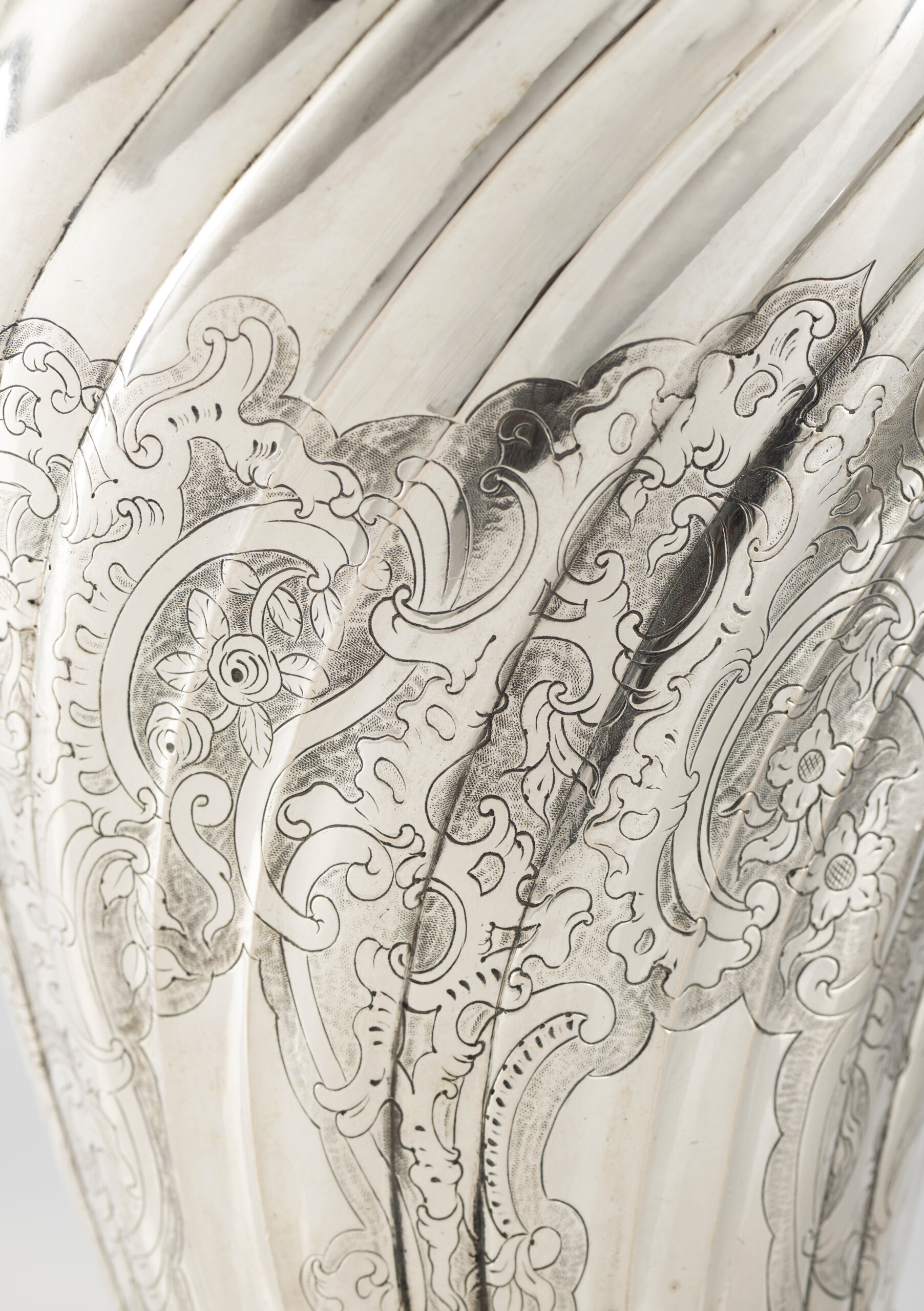
Pyriform shape entirely covered with a deep and dynamic oblique helical fluting
Partially decorated with chiselled reserves and engraving of rocaille motifs
Domed hinged lid surmounted by concentric rings of fluting, culminating in a baluster-shaped finial
Double scroll handle in inverted "S" shape
18th century
Unmarked
(signs of wear, horizontal crack in the neck area, restoration to the hinge)
Height: 38,5 cm
4812 g
Category
Silver
Brief note on a pair of mid-eighteenth-century Rio de Janeiro silver tureens
These silver tureens, produced in Rio de Janeiro and dating from the mid-eighteenth century, belong to the distinguished tradition of Luso-Brazilian ceremonial silver and constitute a particularly significant testament to the material culture associated with elite dining in the colonial period. They follow a well-established typology, comprising an oval body with a recessed, fitted cover and lateral handles, a form specifically devised for table service and intended for the presentation of hot dishes such as soups, rich broths and other foods served with sauces, for which both heat retention and refined presentation were essential elements of formal dining. This type of tureen, however, should not be regarded merely as a utilitarian vessel. In its own time it fulfilled both practical and representational functions, forming an integral component of the ceremonial table service and actively contributing to the visual expression of opulence, order and social privilege that characterised elite dining. While the cover preserved the temperature of its contents until the moment of service, the scale of the vessel, the lustre of the silver and the formal coherence of the ensemble enhanced its prominence within the silver service as a whole. Within the social customs of eighteenth-century Rio de Janeiro's elite, these tureens reflect the gradual adoption of French dining practices, which spread throughout Europe and were embraced by the ruling classes of the Luso-Atlantic world. The dining table was far more than a place for taking meals; it functioned as a carefully regulated setting for sociability, the display of cultivated taste and the affirmation of social hierarchy. The service à la française, based upon the simultaneous and symmetrical presentation of numerous dishes, encouraged the use of specialised serving vessels, among which the tureen occupied a position of particular importance, both for its practical purpose and for its visual contribution to the overall composition of the table. In terms of their placement, tureens of this type would normally have occupied one of the principal axes of symmetry within the table arrangement, often positioned centrally or semi-centrally in conjunction with platters, covered dishes, salvers and other elements of the service. They were never intended to stand in isolation, but rather formed part of a carefully orchestrated visual programme in which every object contributed to the coherence of the overall display and to the image of ordered magnificence that the table was intended to project. Their presence signified a table laid according to fashionable and cultivated conventions closely aligned with those of the European aristocracy. From a formal perspective, these examples follow a model closely related to contemporary Chinese export porcelain tureens of oval form, thereby illustrating the circulation and exchange of designs across different artistic media. It is particularly noteworthy that museum scholarship has recognised that certain typologies of Chinese export porcelain tureens were themselves derived from European metal prototypes—most probably silver—which were subsequently copied and reinterpreted by Chinese manufactories throughout the eighteenth century. This observation demonstrates the truly international character of the model. Rather than reflecting a simple influence of Eastern decorative traditions upon European silver, these objects exemplify a far more complex process of reciprocal exchange involving Europe, the Atlantic world and China. Within this broader context, the production of these tureens in Rio de Janeiro reveals the ability of local workshops to assimilate internationally recognised forms and reinterpret them in silver, the material that above all symbolised domestic prestige and ceremonial display. As Rio de Janeiro emerged during the eighteenth century as one of the principal economic and administrative centres of Portuguese America, it became an active participant in the circulation of precious metals, luxury goods and artistic models. The silver produced there responded to the expectations of a clientele capable of recognising and appreciating cosmopolitan forms while adapting them to the particular social and material circumstances of colonial society. The circulation of these objects must be understood in the broadest sense, encompassing not only the movement of finished pieces but also the transmission of models, drawings, patterns of consumption and formal references. Tureens of this type may have formed part of locally commissioned silver services, circulated through inheritance, been recorded in inventories, and—as is frequently the case with silver—been preserved, altered or melted down in accordance with changing tastes and shifting economic circumstances. Their survival is therefore of particular significance. Moreover, there are relevant typological parallels in international museum collections, particularly within the fields of Chinese export porcelain and European decorative arts. The Museus e Monumentos de Portugal, for example, preserves an eighteenth-century tureen and stand whose catalogue entry notes that this typology likely derives from a European metal prototype, probably in silver, later reproduced in Chinese porcelain. The Museu Medeiros e Almeida similarly observes, in relation to Chinese export tureens, that such forms were designed to meet European taste and formed part of elaborate table services intended for display and visual enjoyment within ceremonial dining contexts. Although these examples are executed in porcelain, they are particularly useful for situating the present silver tureens, as they demonstrate the shared international vocabulary of form and its wide diffusion during the eighteenth century. Concluding Remarks These tureens should therefore be understood both as functional serving vessels and as objects of representation, designed to contain and present hot dishes at the table while simultaneously occupying a prominent place within elite domestic display. Their form, derived from the international tradition of oval tureens, their production in Rio de Janeiro, and their relationship to table customs shaped by French influence as well as by transcontinental exchange with Asia, make them objects of considerable historical, typological and collecting interest. Far from being merely utilitarian objects, they stand as eloquent witnesses to the circulation of luxury goods and artistic ideas across the eighteenth-century Atlantic and global worlds, reflecting the complex networks of taste, trade and cultural exchange that shaped the material culture of the period.
TIAGO FRANCO RODRIGUES
Closed Auction
