
198
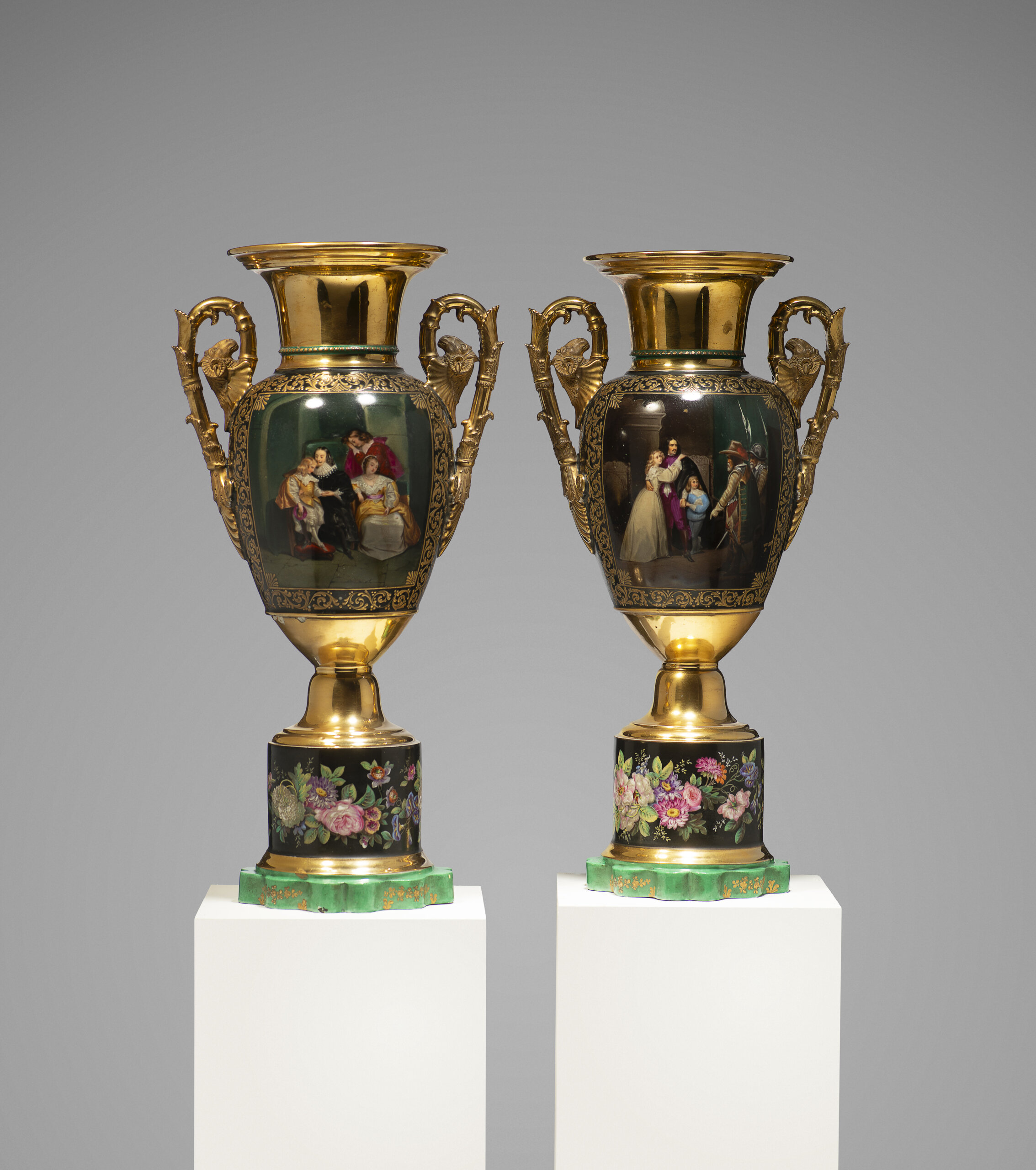
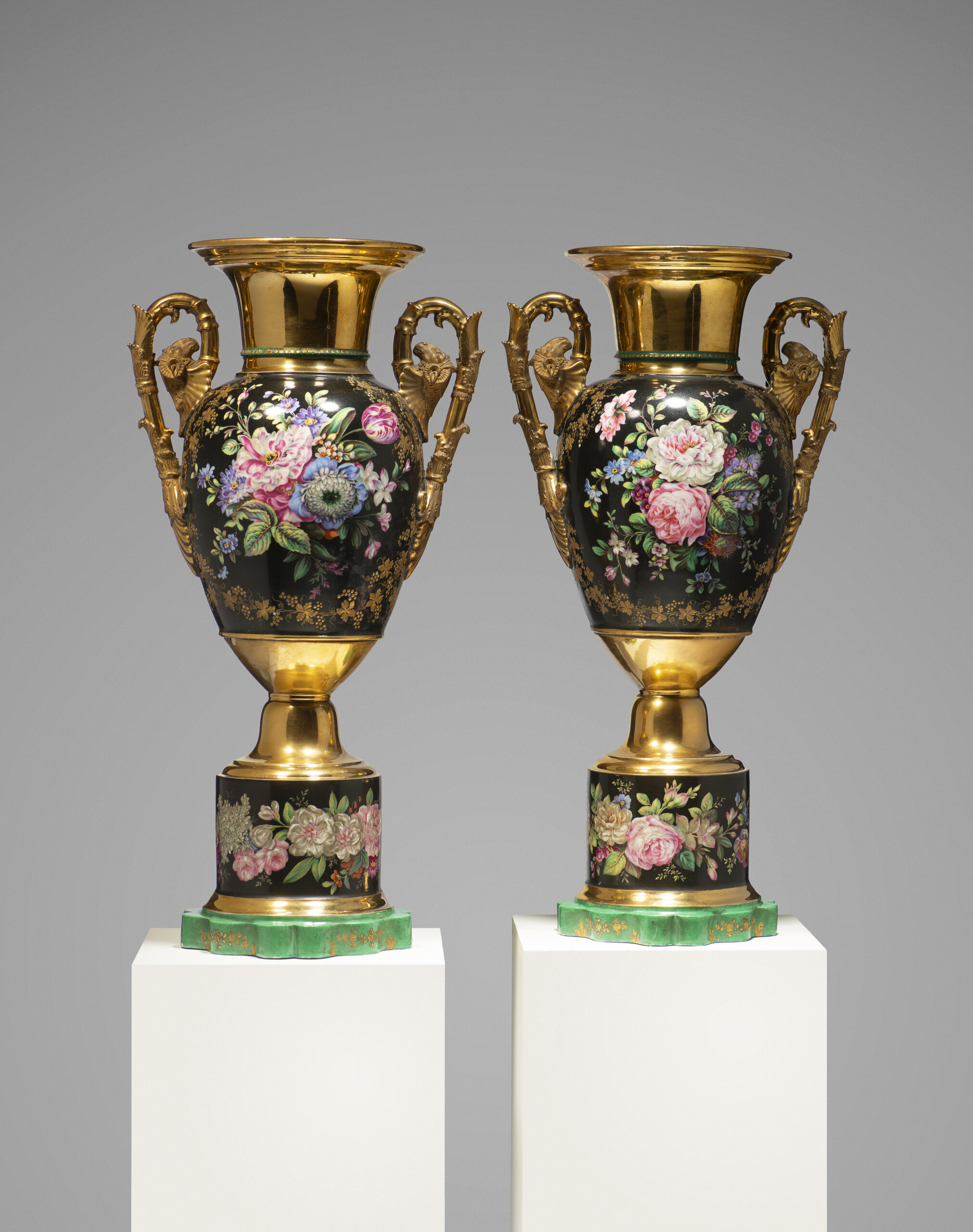
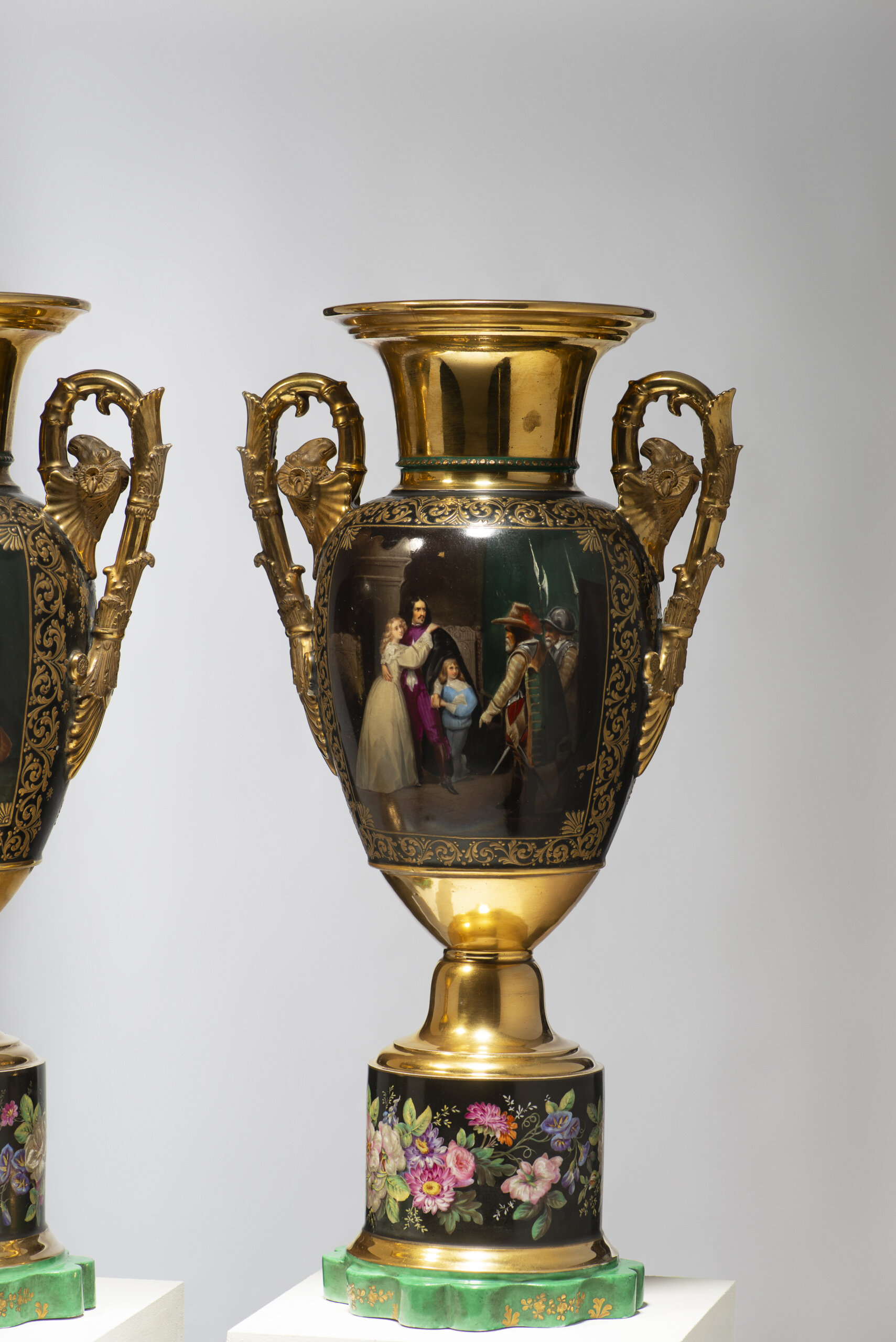
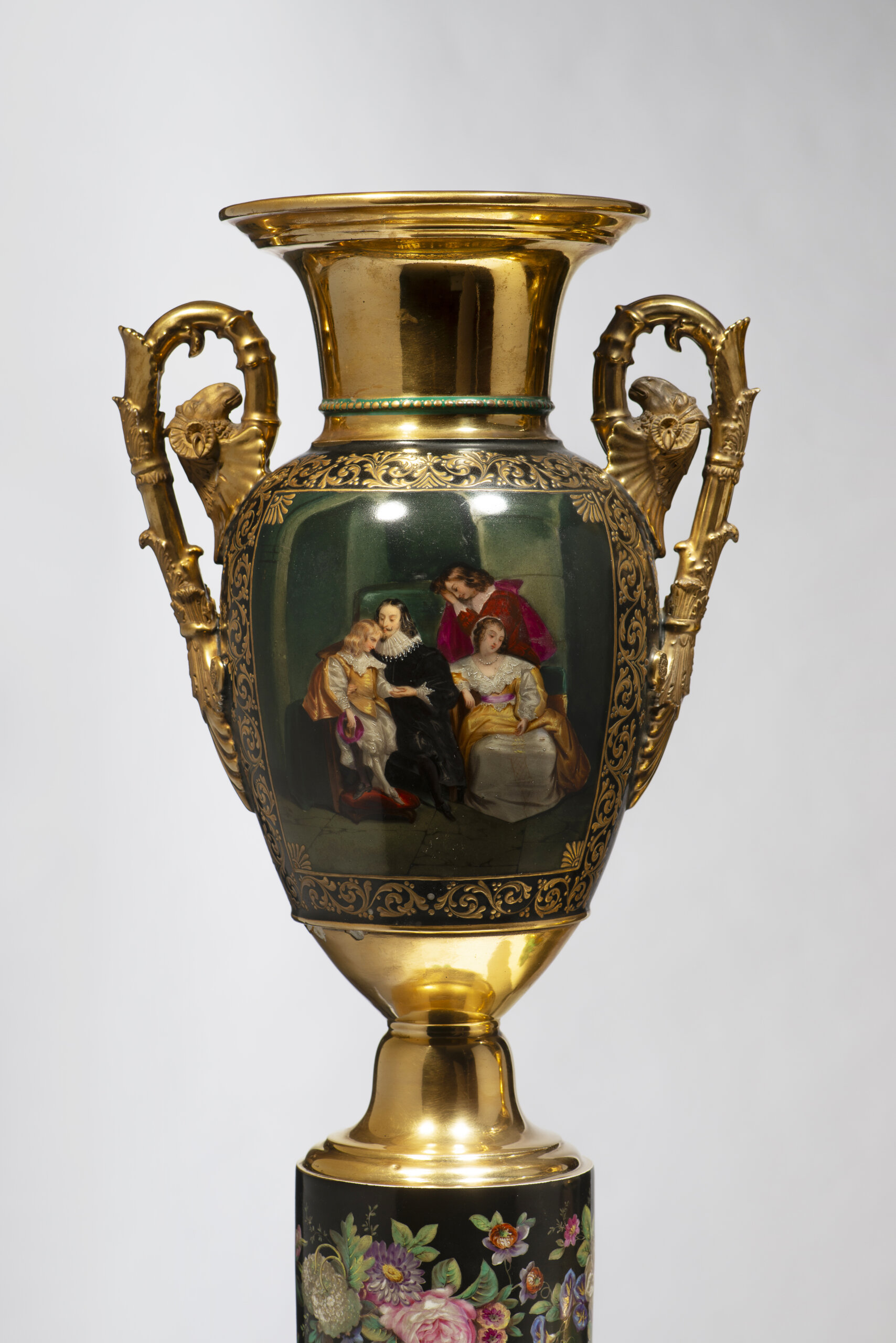
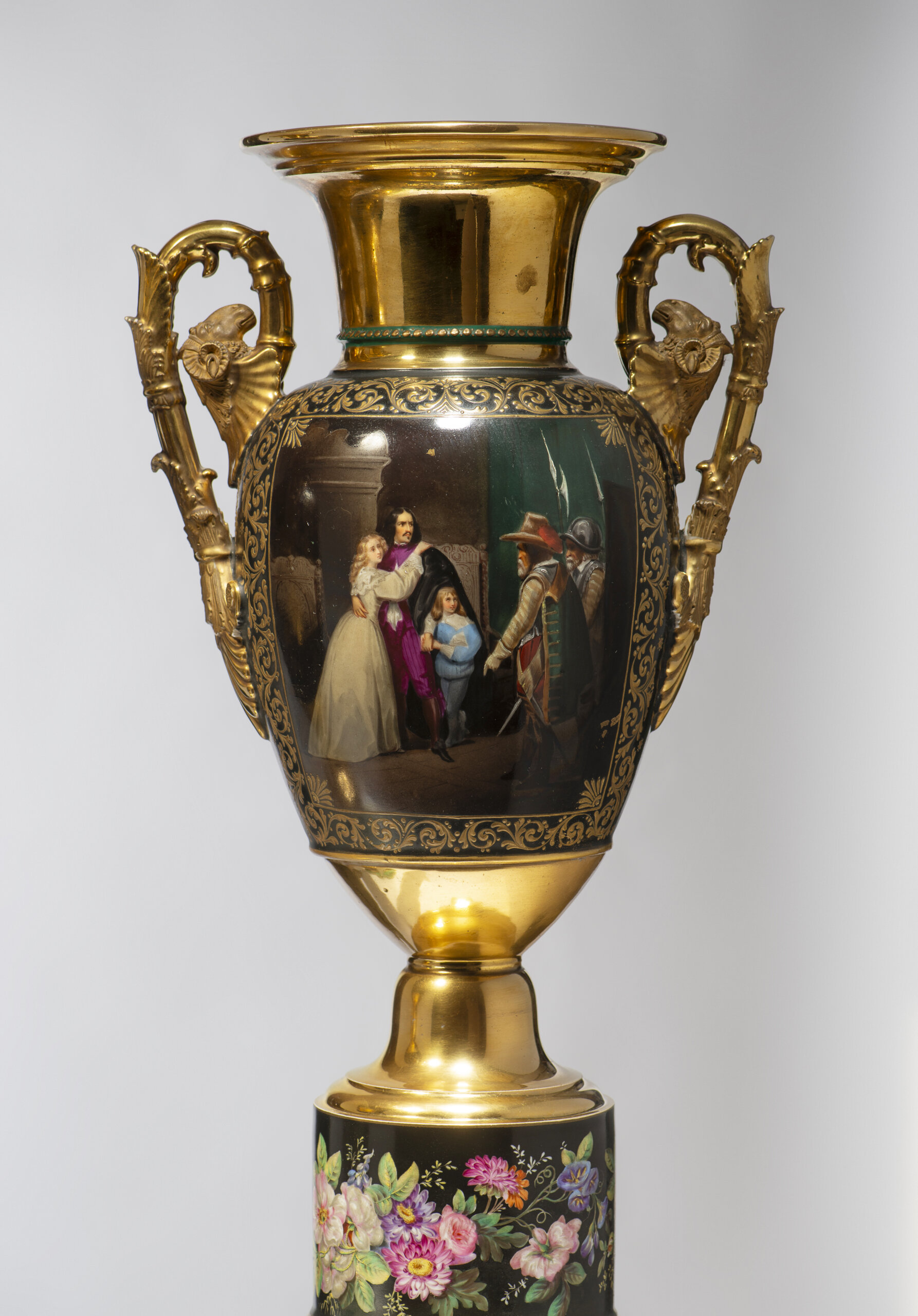
A pair of Paris (Darte Frères) porcelain black-ground two-handled oviform vases
Estimate
8.000 - 12.000
Session 1
16 December 2025
Hammer Price
Register to access this information.Description
French production attributable to the Darte Frères manufactory (Palais Royal)
Of oviform shape, with flaring neck and cylindrical base set on a shaped plinth
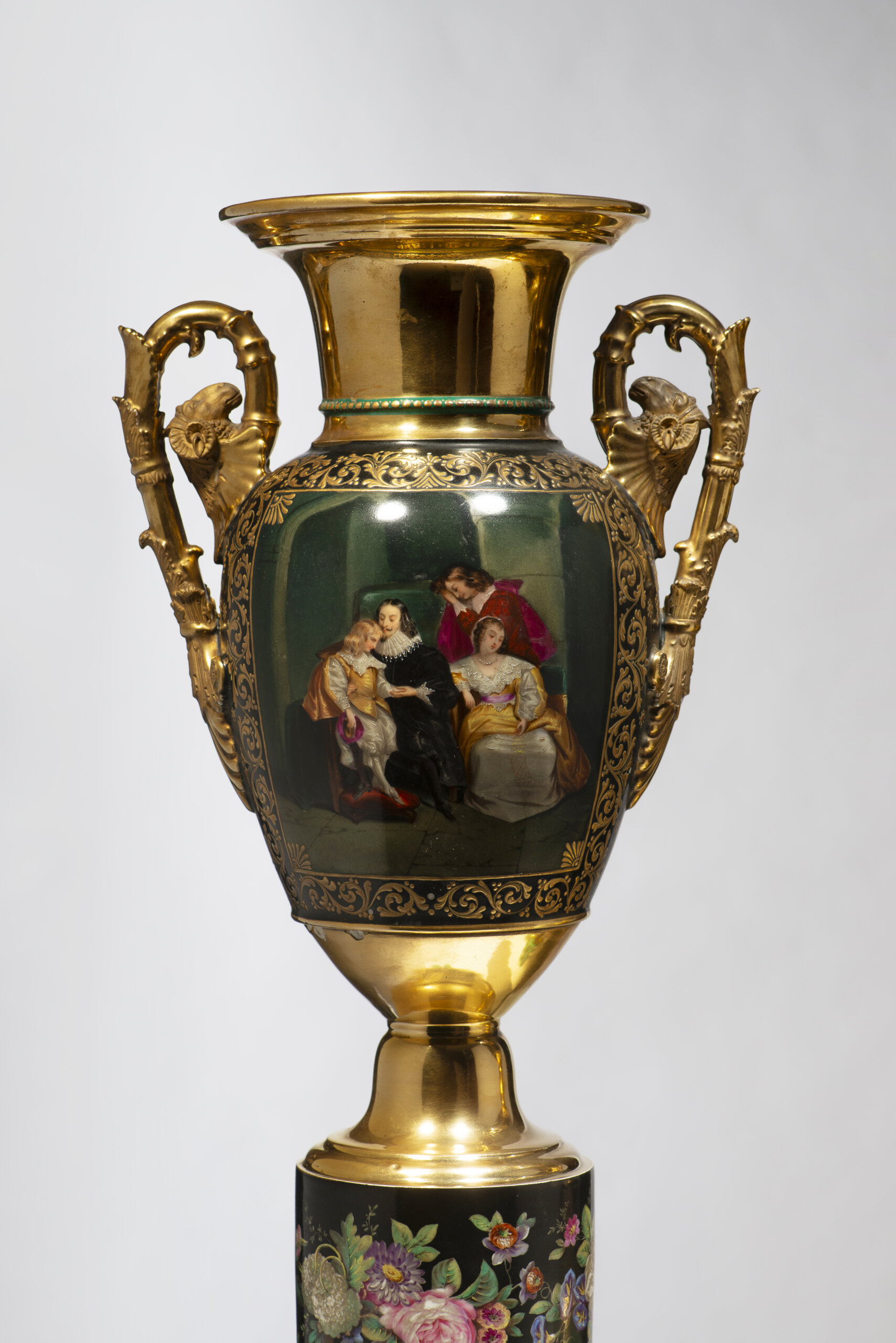
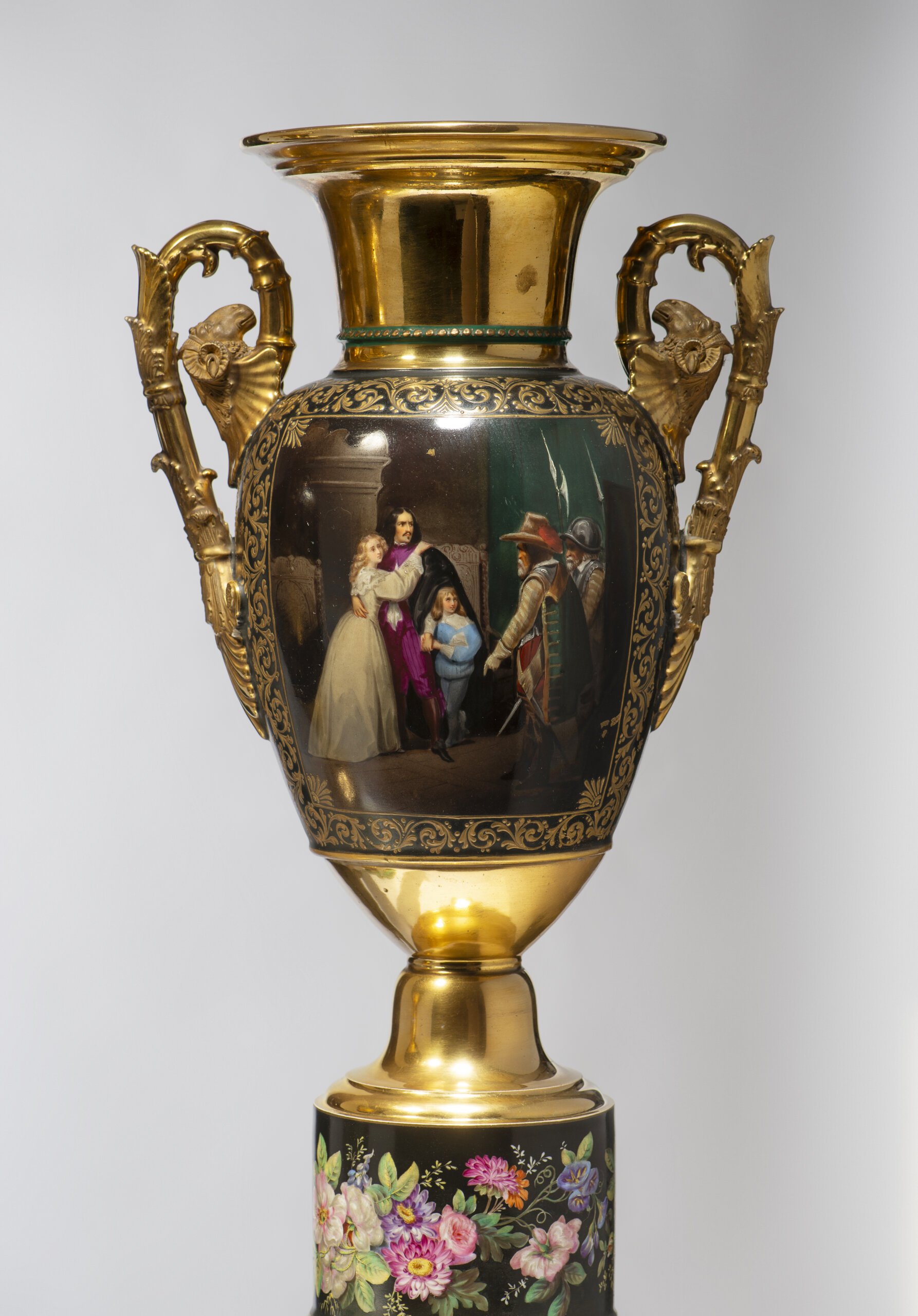
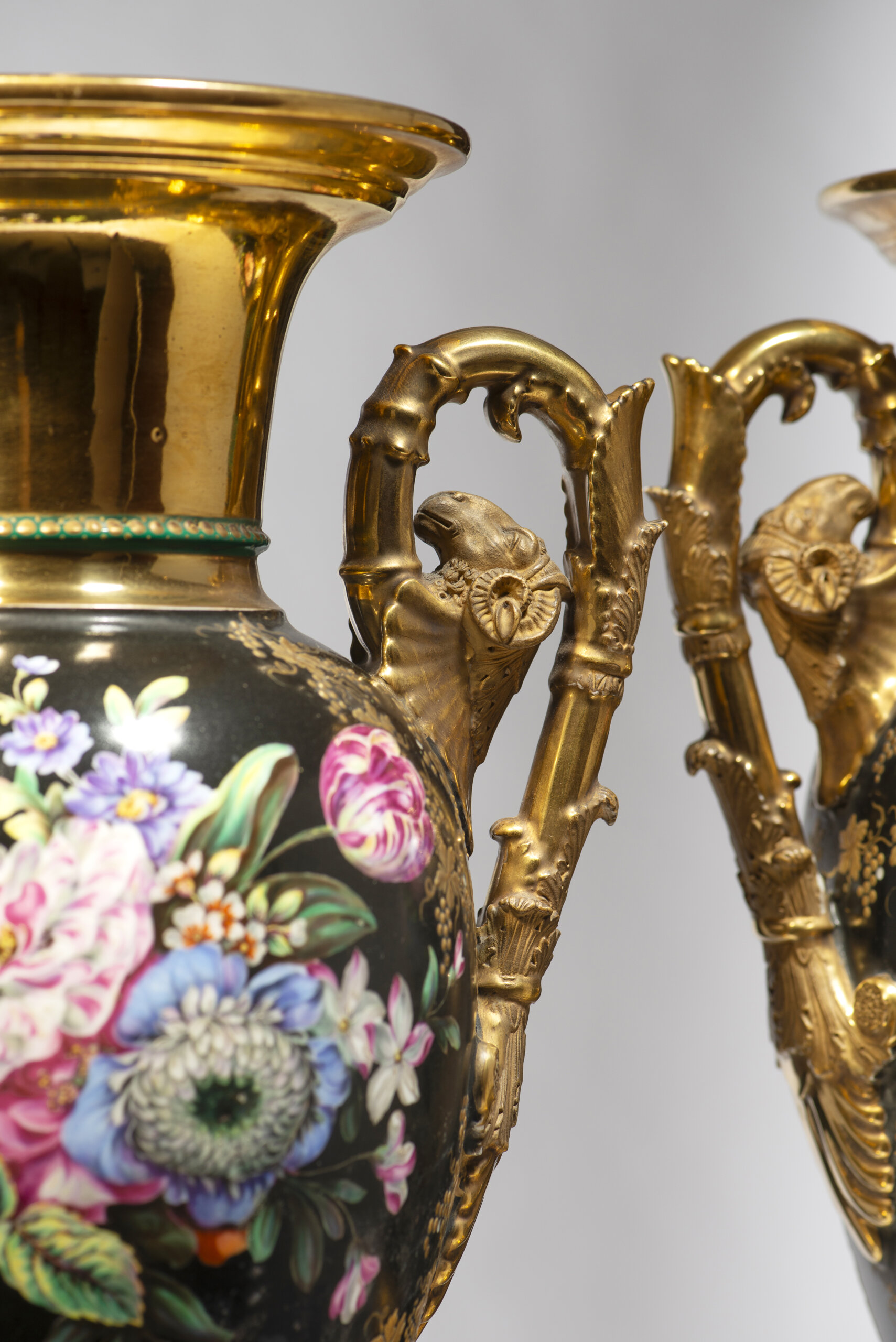
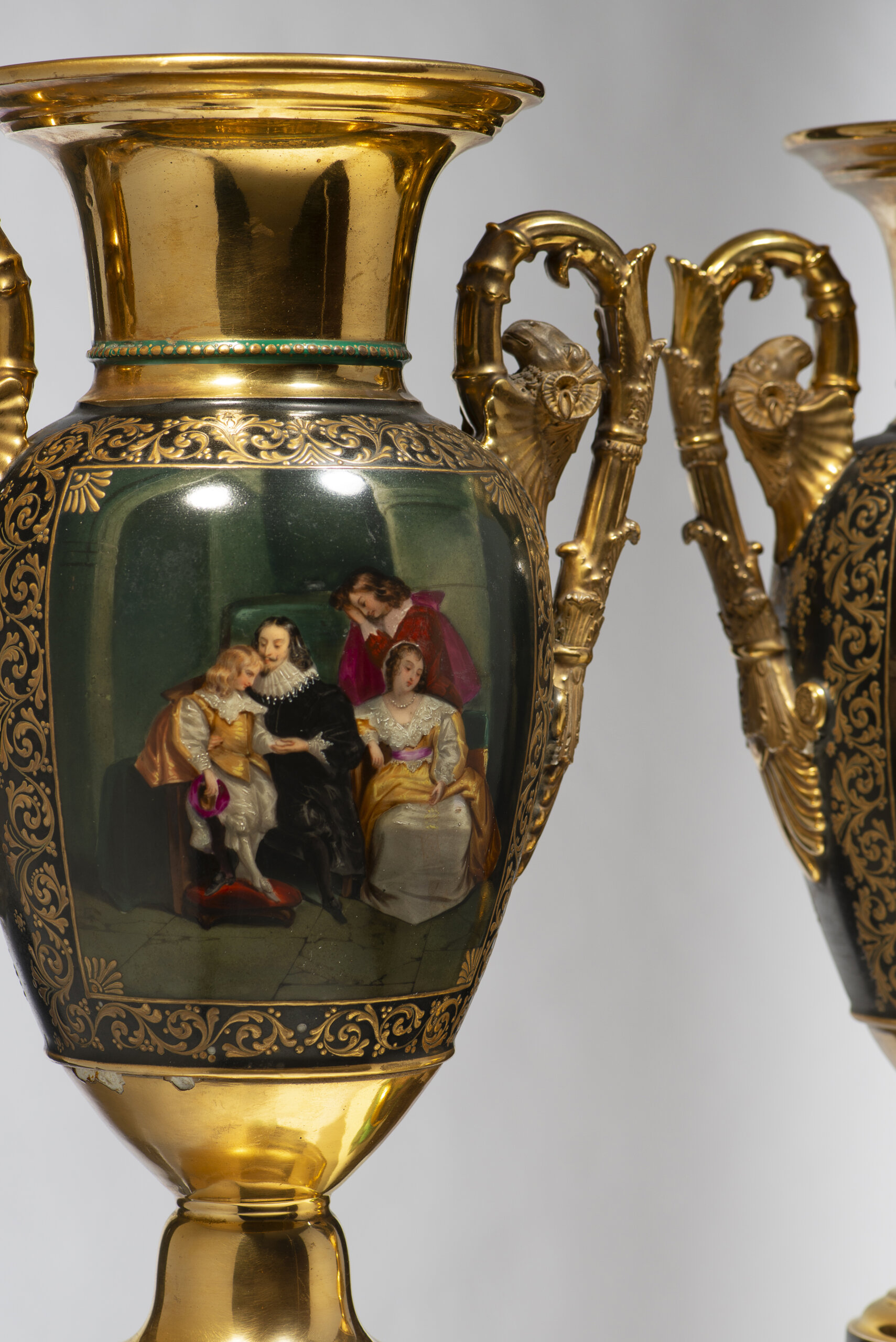
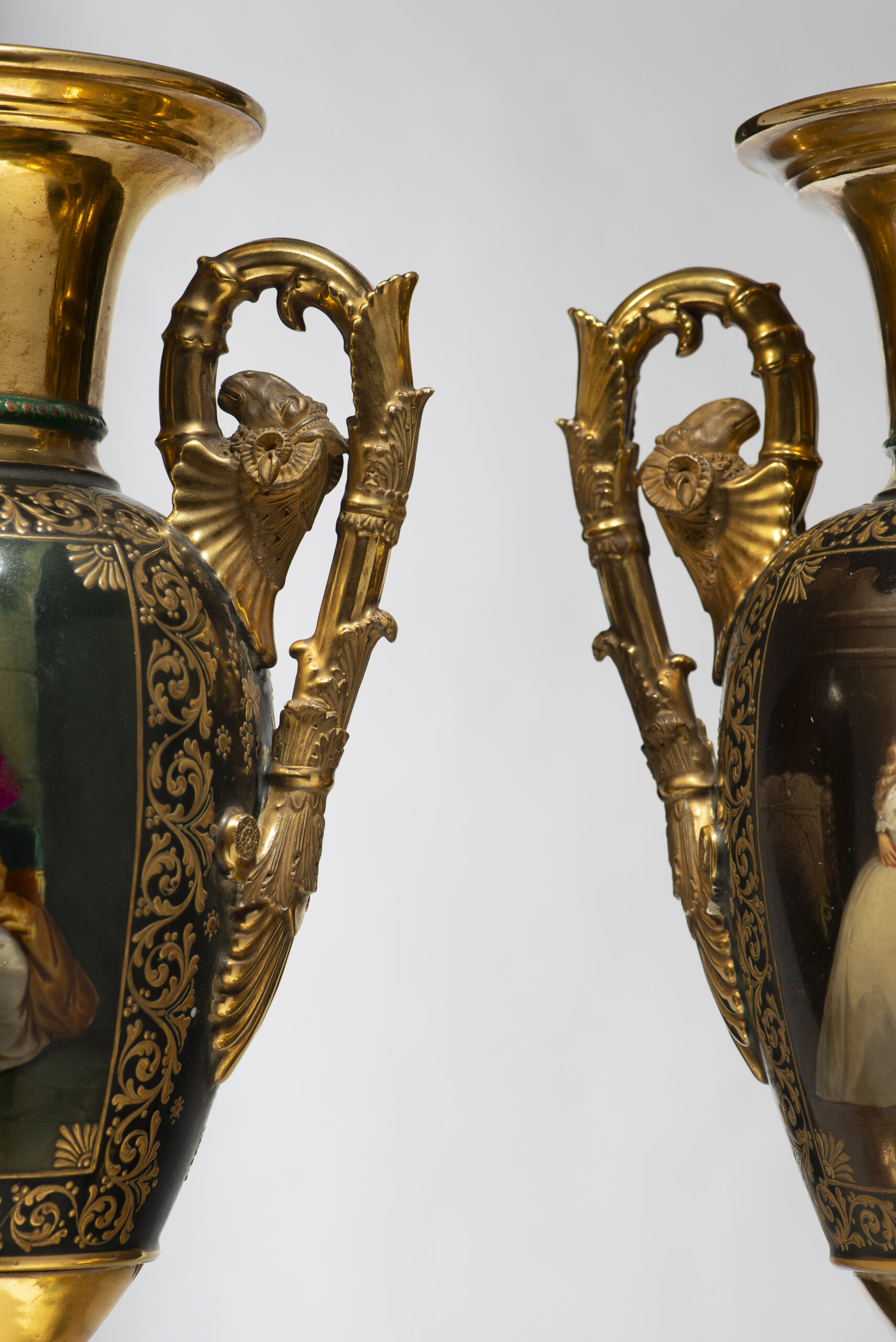
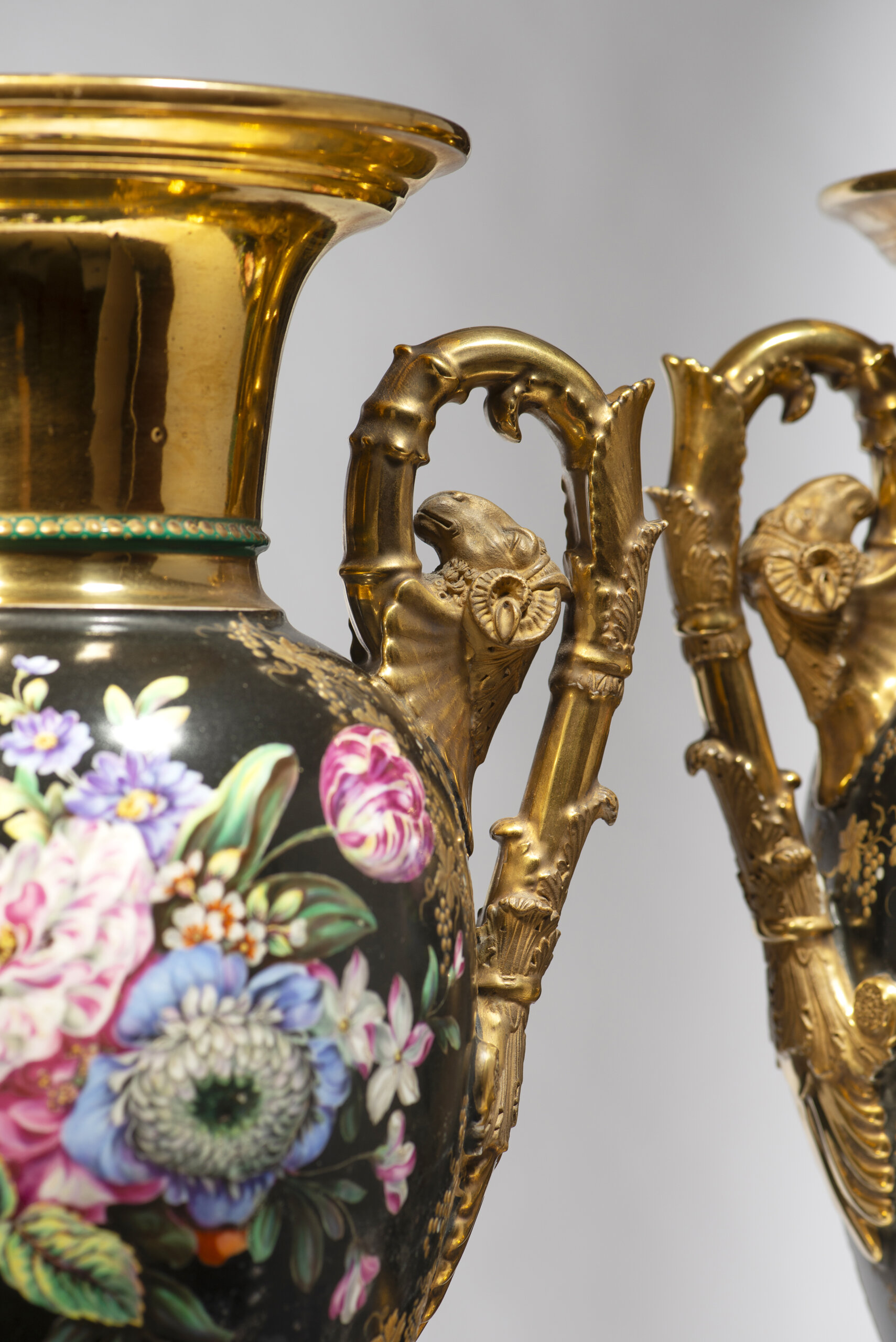
The boldly projecting handles of sinuous outline, sculpturally modelled in relief with vegetal motifs and terminating in ram’s heads
Decorated on a black ground, the neck, handles and foot entirely gilt in matt and burnished gold
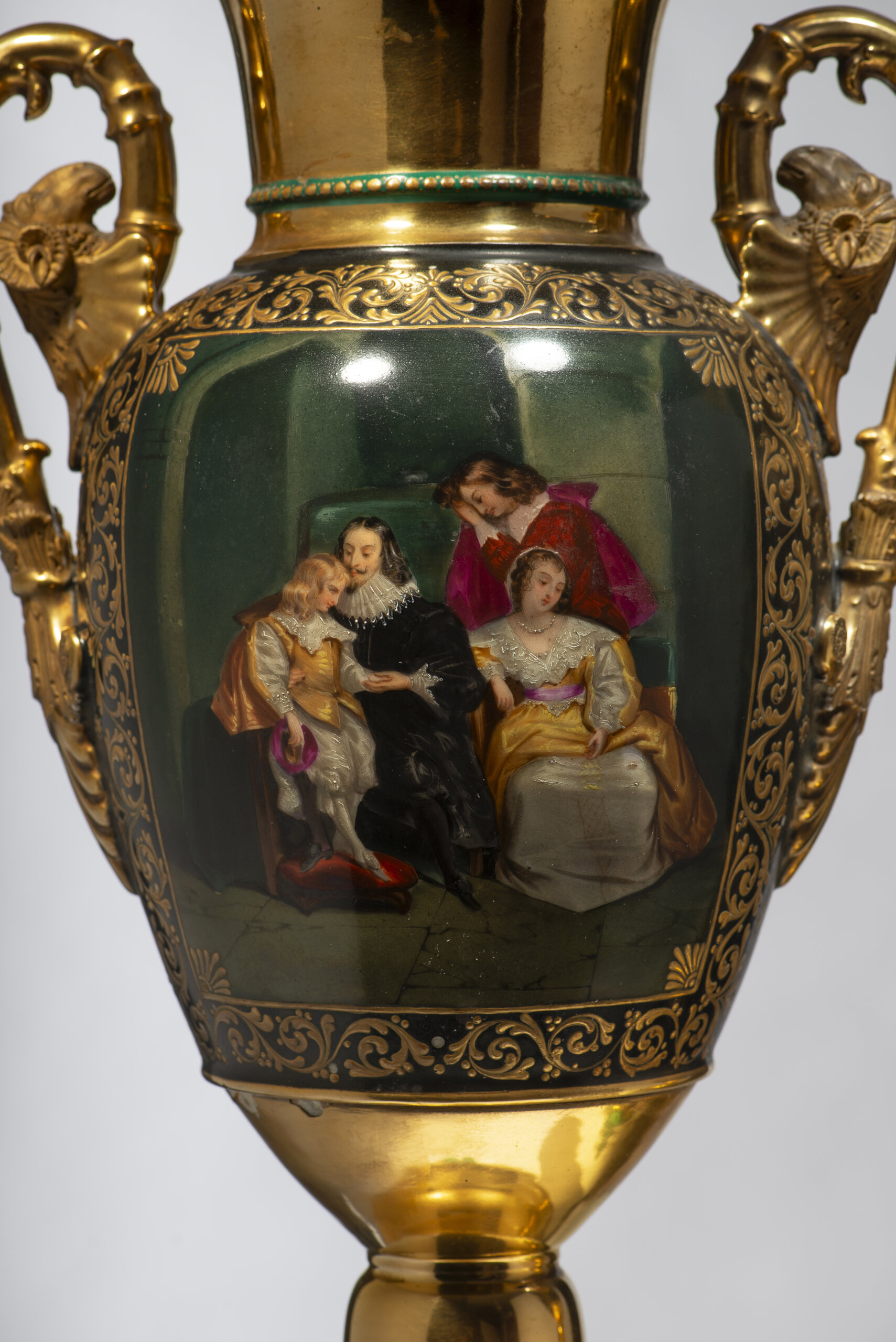
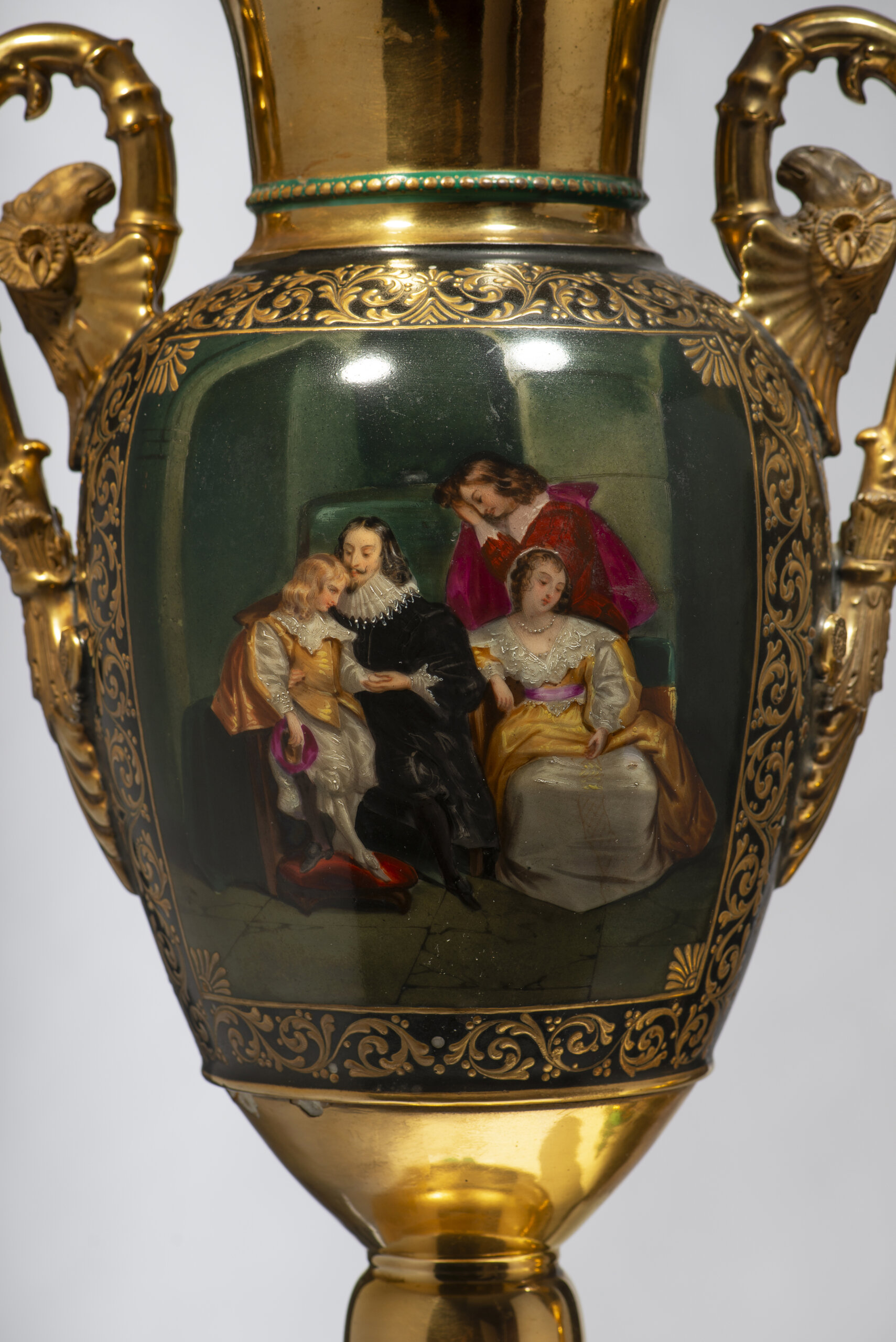
The front with large rectangular reserves depicting Troubadour-style historical scenes from the life of King Charles I of England – “The Royal Family” and “The King’s Imprisonment” – framed by broad gilt bands painted with palmettes and arabesques
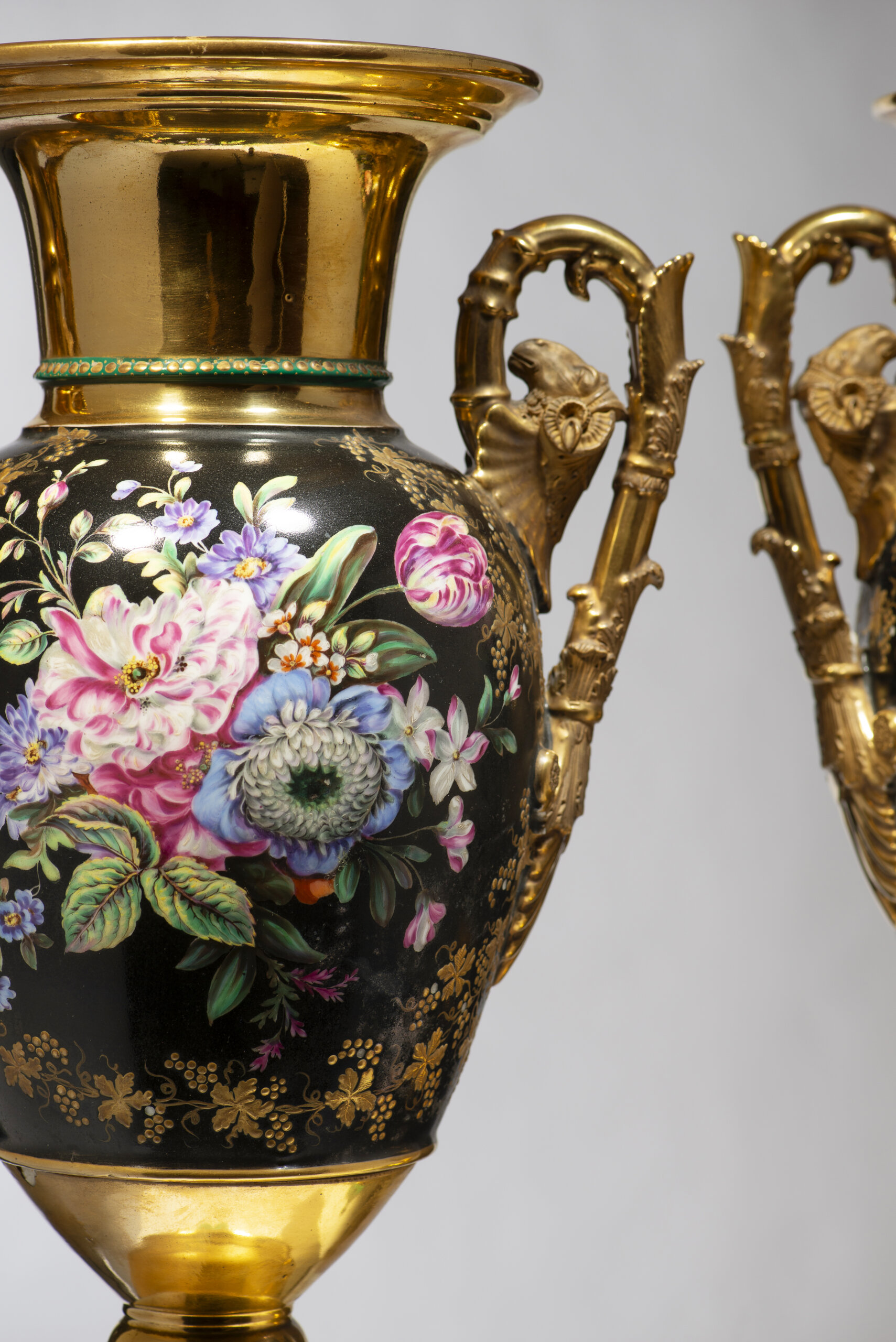
The reverse painted with exuberant bouquets of garden flowers (peonies, Centifolia roses, tulips and forget-me-nots) rendered naturalistically against the black ground
The cylindrical bases encircled by a continuous frieze of polychrome flowers on black, set on shaped plinths in vert chrome with gilt floral ornament
France, Restoration period, circa 1820–1825
Additional Information
Found by the brothers Louis-Joseph and Jean-François Darte in the early nineteenth century, the Darte Frères manufactory became known for producing porcelain of great splendour for an aristocratic clientele, operating a factory in the rue de la Roquette and a retail shop in the Palais Royal under the patronage of Napoleon’s mother. This pair of vases reflects the Parisian taste of the Restoration period, when the Troubadour style revisited episodes of monarchical history through a romantic and sentimental lens. The choice of scenes from the life of Charles I of England resonated in post-Revolutionary France, where his fate was frequently compared with that of Louis XVI and held particular appeal among legitimist circles. The interplay between the narrative reserves and the exuberant floral bouquets painted directly onto the black ground, combined with the use of matt and burnished gilding, enhances the sense of splendour and underscores the rarity of such pieces within Parisian production of the period.
The attribution to the Darte Frères manufactory is supported by the distinctive têtes de bélier handles, documented on works from this factory, together with the close formal and qualitative affinities shared with other large-scale models attributed to their workshops. The execution of this pair appears to date from shortly before the manufactory’s decline in the late 1820s, which reinforces the rarity of the example now offered for sale.
Closed Auction
