
142
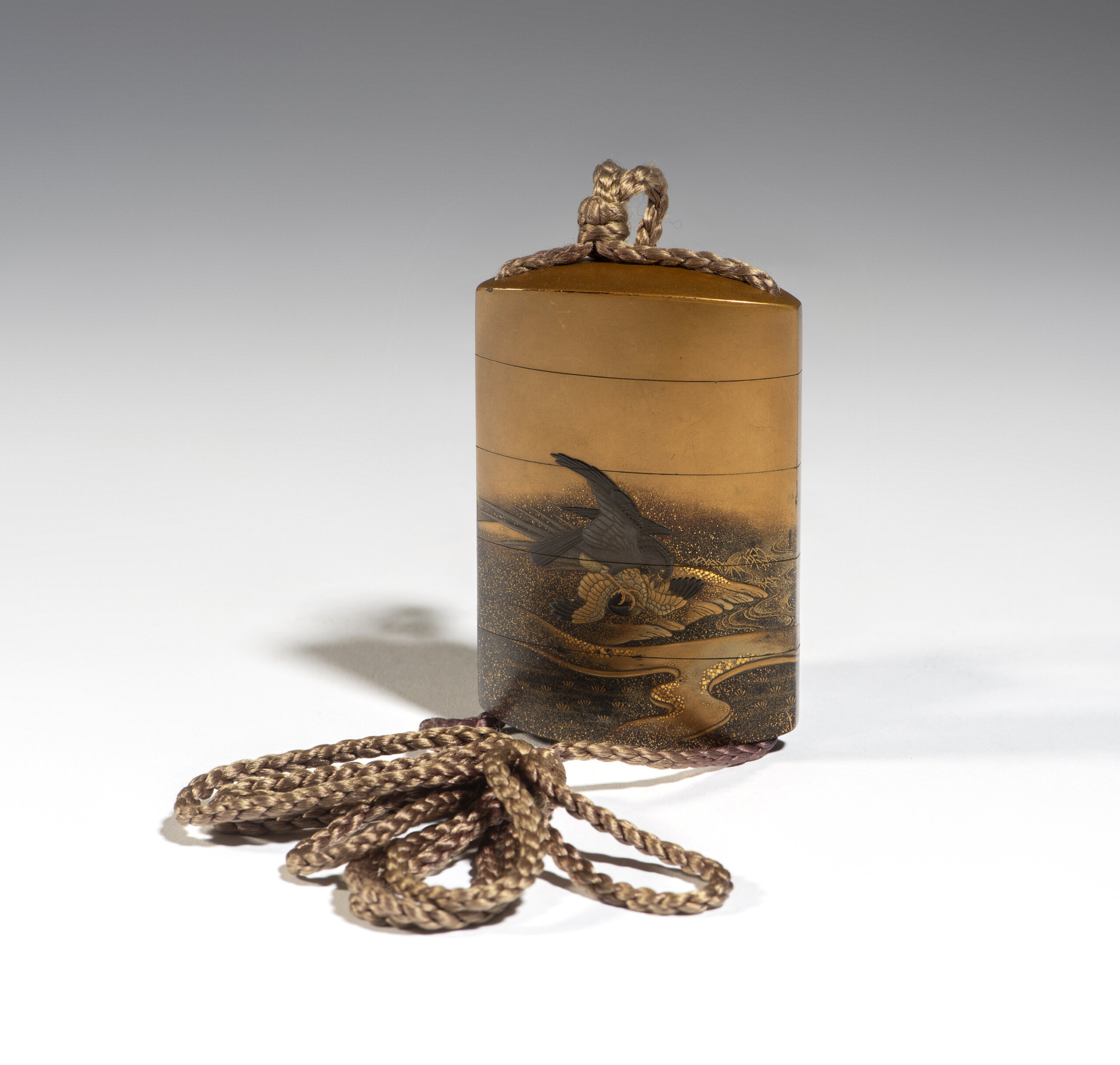
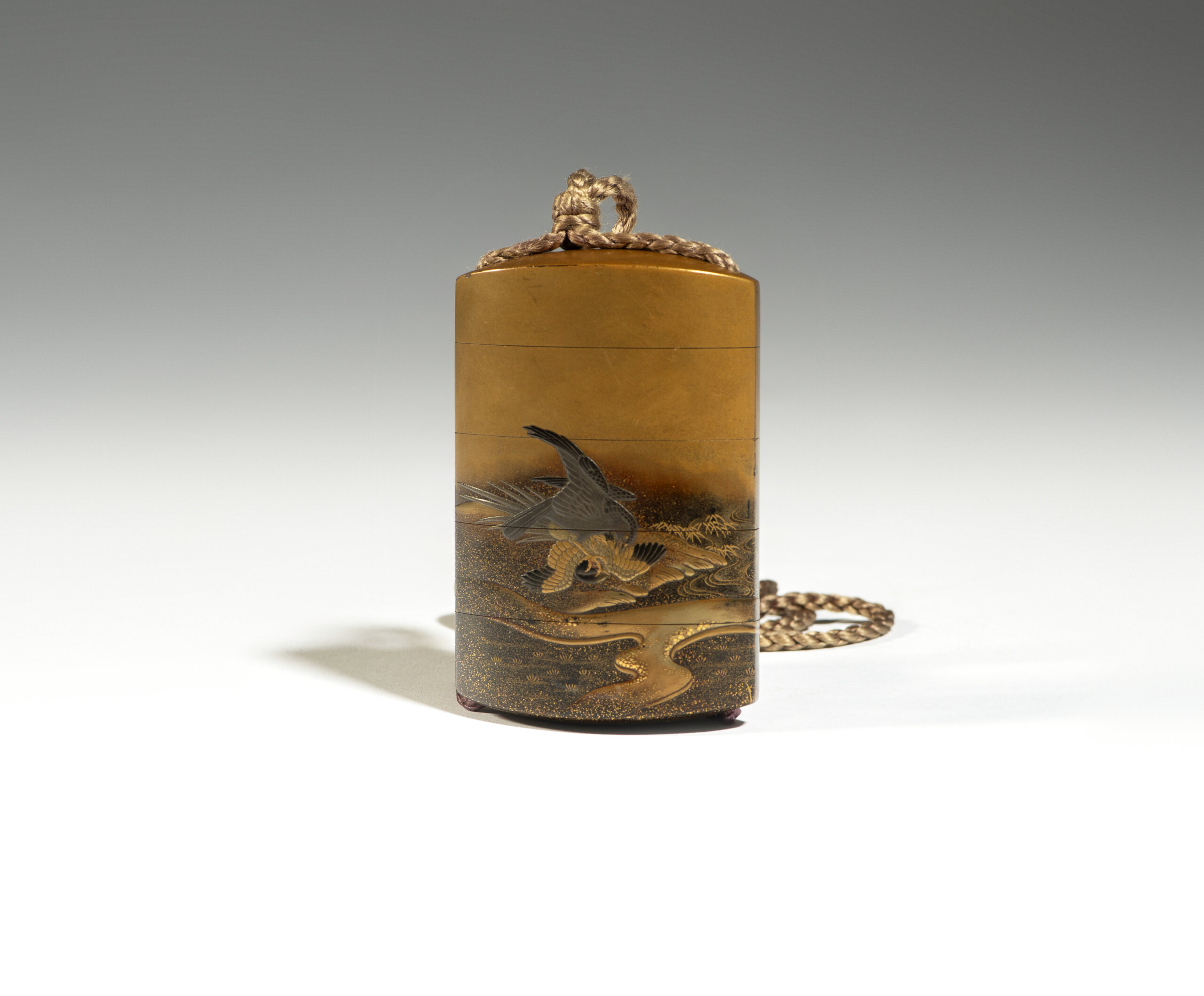
A four-case lacquer inrō, signed Kajikawa Bunryūsai (梶川文龍斎)
Estimate
3.000 - 5.000
Session
8 May 2026
Description
Japan, Edo period, 19th century
Of elongated oval section, with softly rounded corners
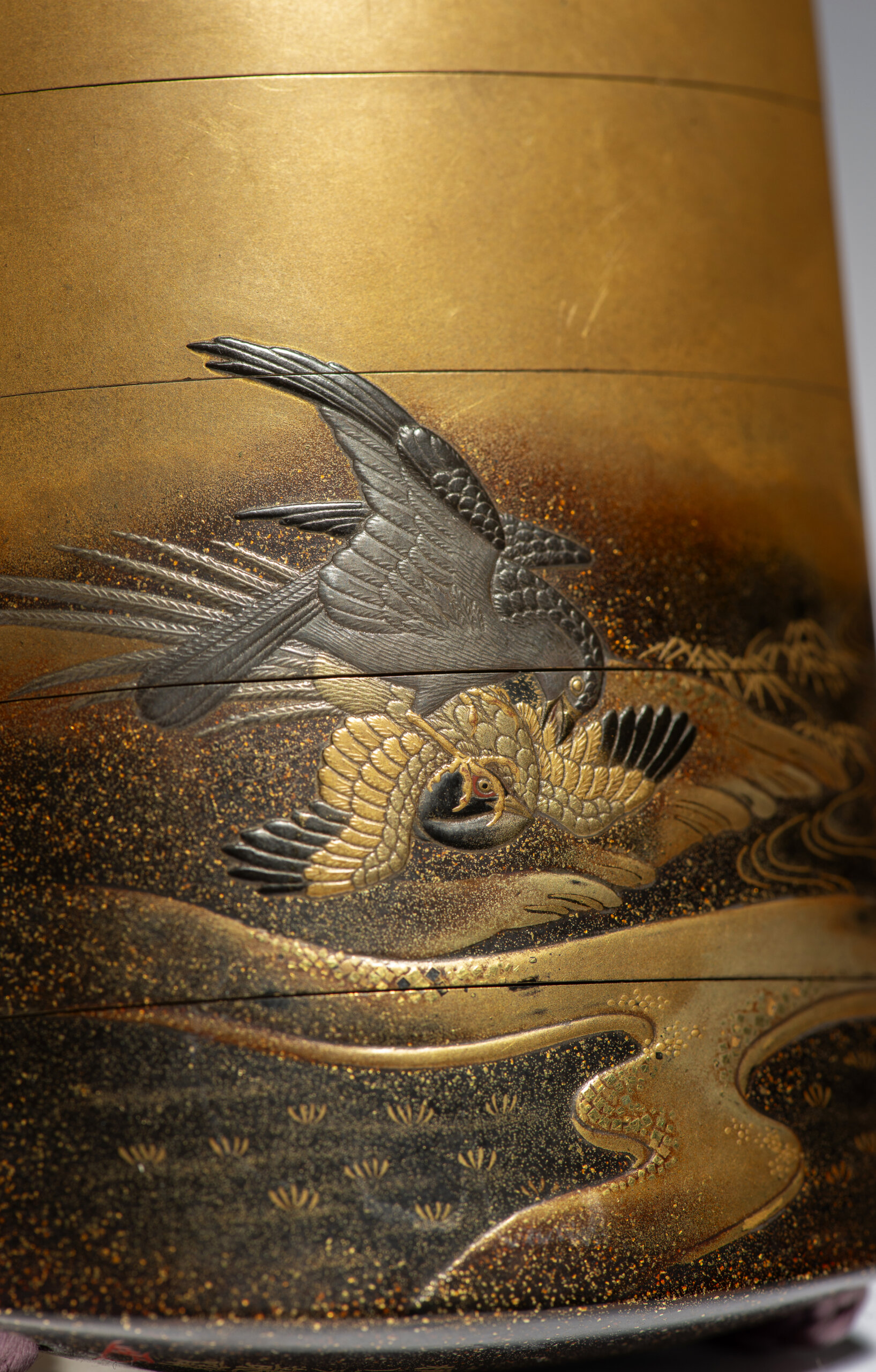
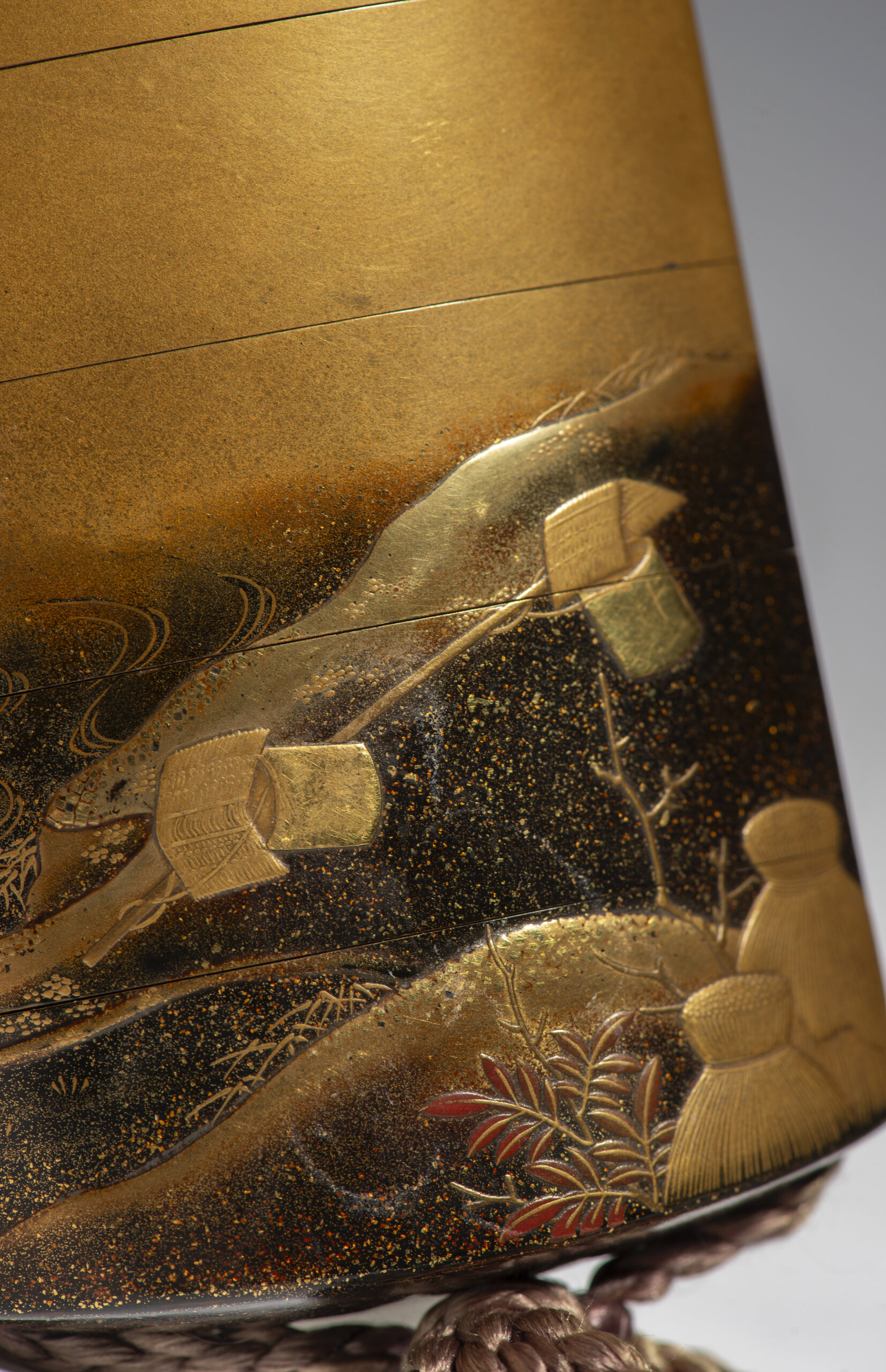
Decorated in iroe-hiramaki-e and takamaki-e, with silver inlays, on a fundame ground with nashiji-bokashi transition
Depicting a continuous lakeside landscape across both sides
One side with an eagle, wings spread, pinning a pheasant beneath its talons by the water's edge
The reverse with sheaves of rice and a fallen tenbinbō
The interiors in nashiji and fundame
The base in nashiji, signed 梶川文龍斎 in gold with a red kaō
四段式莳绘印笼,梶川文龙斋(梶川文龍斎)款,日本江户时代,十九世纪。椭圆形断面,以彩色平莳绘、高莳绘技法及银嵌饰,于平目地配饰梨地晕染,描绘湖畔连景:一面鹰展翅擒雉于水边,另一面绘稻束与倾倒之天秤棒。内壁施梨地与平目地,底部梨地金书梶川文龍斎款,朱书花押。
8,3x5,4x2,2 cm
Additional Information
Note:
Bunryūsai was a gō transmitted across at least three generations within the prestigious Kajikawa lineage, a school of lacquer masters who served as official artisans (goyō-shi) to the Tokugawa shogunate from the early Edo period. The first Bunryūsai was active between the Hōreki (1751-1753) and Bunka (1804-1817) eras, with his successors continuing the style and signature formulas, including the "Official Artisan Kajikawa Bunryūsai" seal found on many known works.
Closed Auction
