
152
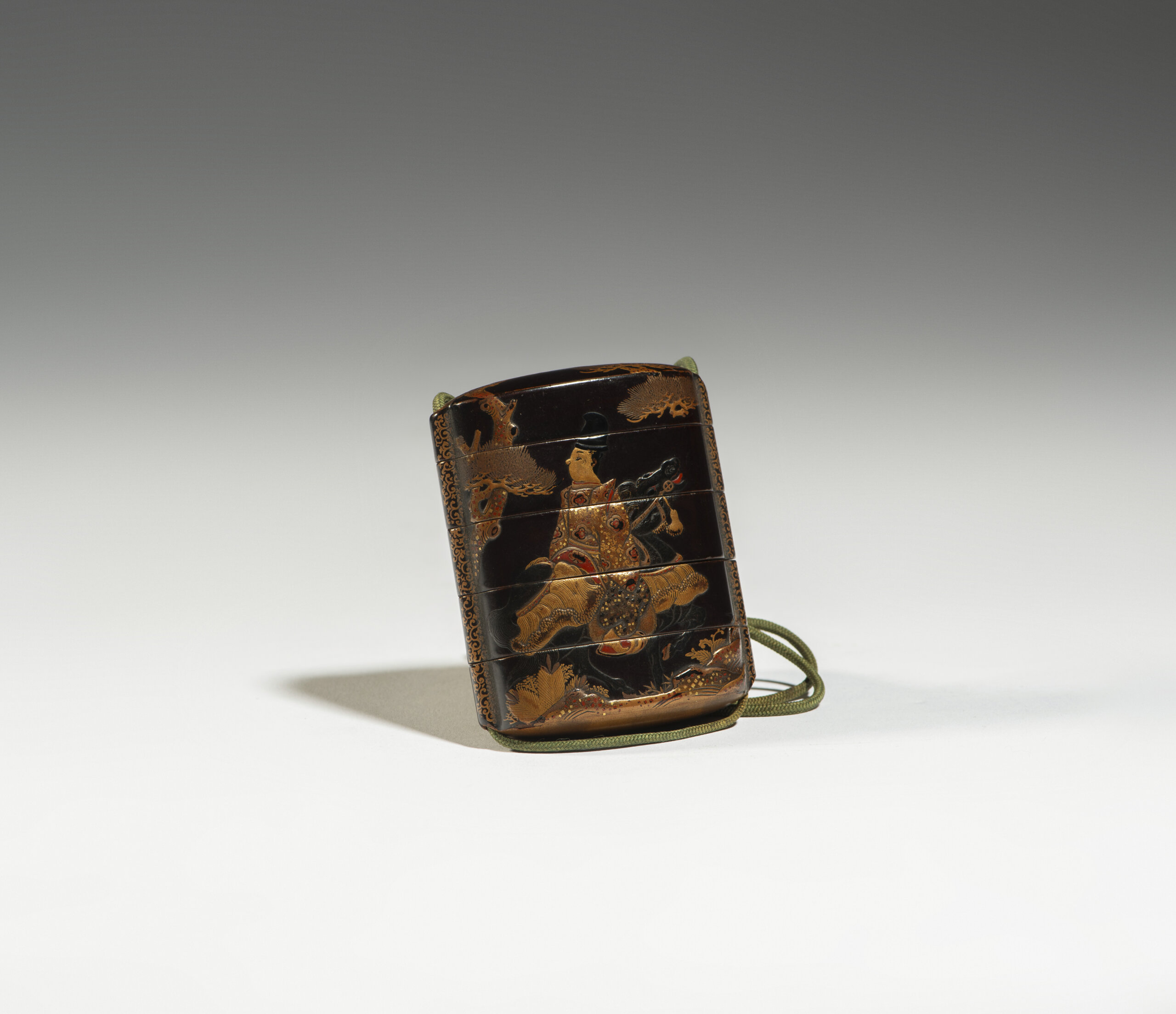
A four-case lacquer inrō
Estimate
2.000 - 3.000
Session
8 May 2026
Description
Japan, Edo period, late 18th / early 19th century
Of rounded rectangular section with gently convex sides
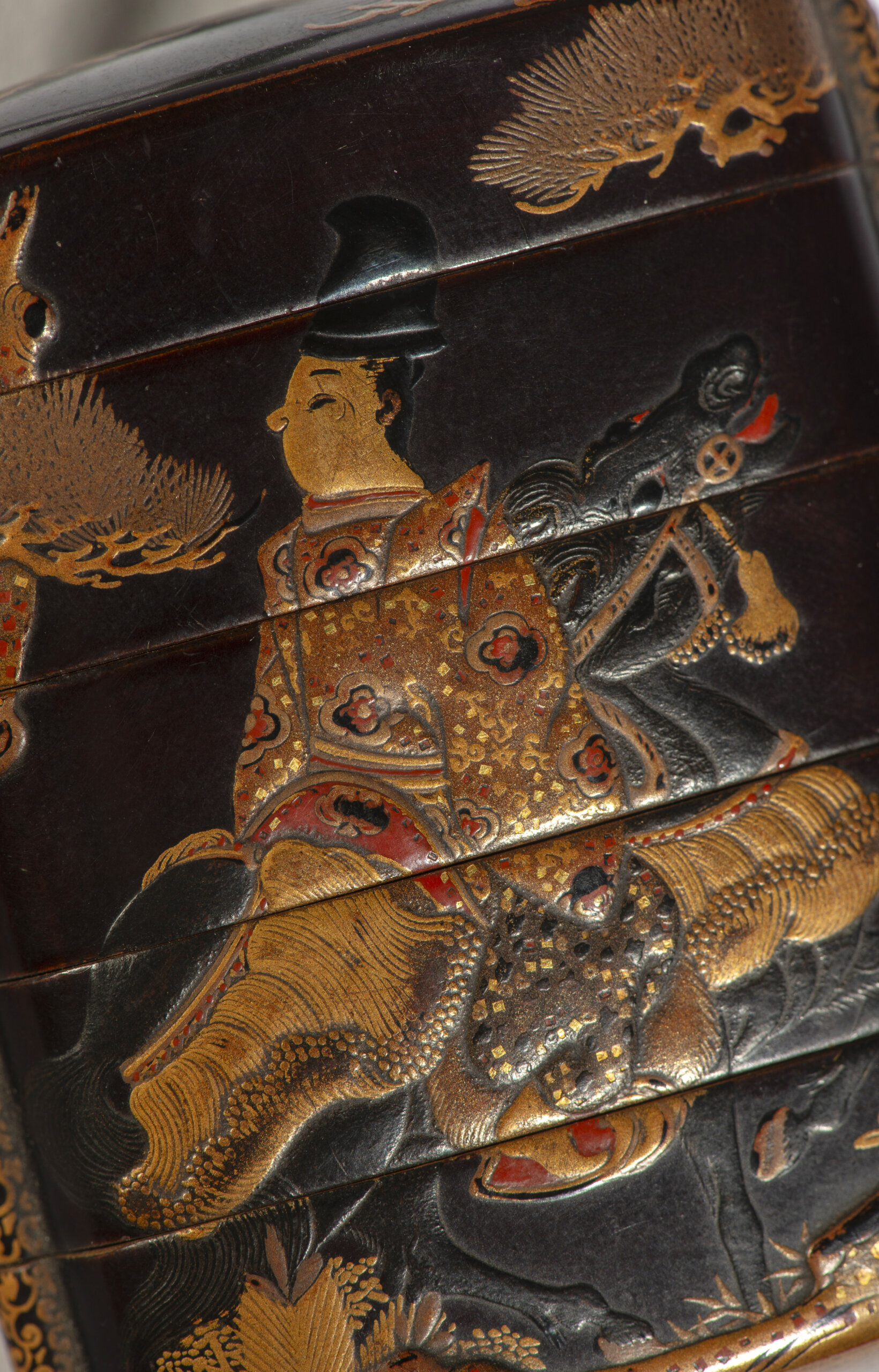
Decorated in iroe-hiramaki-e and takamaki-e on a black lacquer ground, with gold and red highlights
With a continuous scene of a mounted warrior fording a river, towards a pine tree extending over the top to the reverse
On the reverse, the pine continuing above turbulent waves, with two swallows in flight
Himotoshi channels decorated with scrolling foliage evoking ivy (tsuta)
Base in plain gold lacquer and interiors in plain black lacquer
日本 江户时代晚期 十八世纪末至十九世纪初 黑漆地金莳绘武士渡河图四段印笼,以平莳绘及高莳绘技法饰骑马武士涉水及松树海浪双燕,朱金点缀,金漆底,内髹黑漆。
6x5,3x1,9 cm
Additional Information
Note:
The composition, combining a river crossing, pine tree, ivy (tsuta) and birds in flight, evokes episodes from the Ise monogatari associated with the travels of Ariwara no Narihira, particularly chapter 9, in which the protagonist crosses Mount Utsu along a path overgrown with ivy and later reaches the Sumida river, where he composes his celebrated poem on the miyakodori. The depiction of the rider in armour, however, suggests an affiliation with warrior iconography of medieval inspiration, opening the possibility of a layered reading between classical literary tradition and martial epic, a recurrent device in the decorative repertoire of the late Edo period.
Closed Auction
