
7
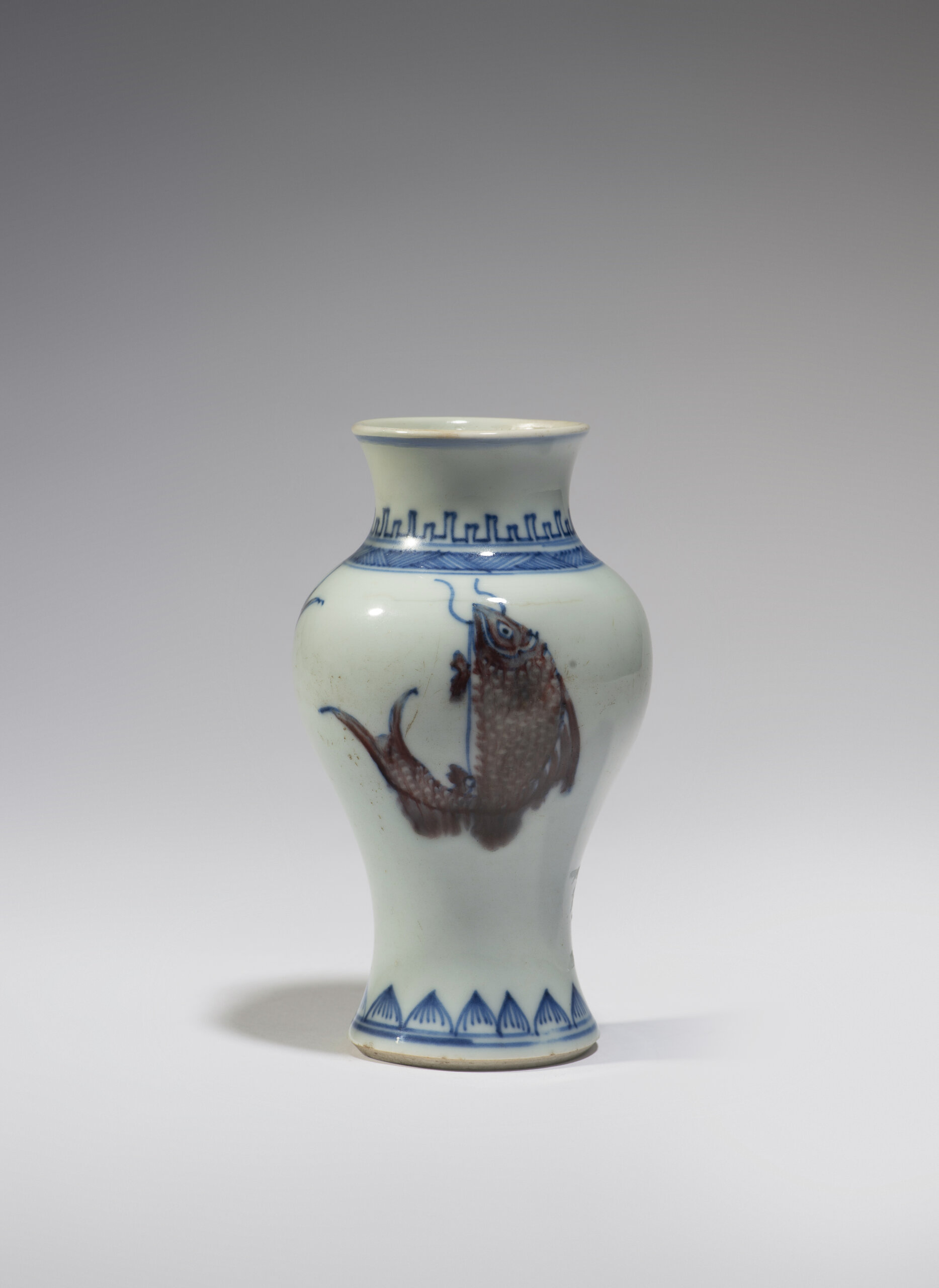
A small copper-red and underglaze blue decorated baluster vase
Estimate
2.800 - 4.000
Session
8 May 2026
Description
China, Qing Dynasty, Kangxi Period (1662-1722)
Of porcelain decorated in underglaze cobalt blue and copper red
Of baluster form, with short neck and everted rim
Decorated with three fish
Two geometric bands to the shoulder and a band of stylised petals to the base
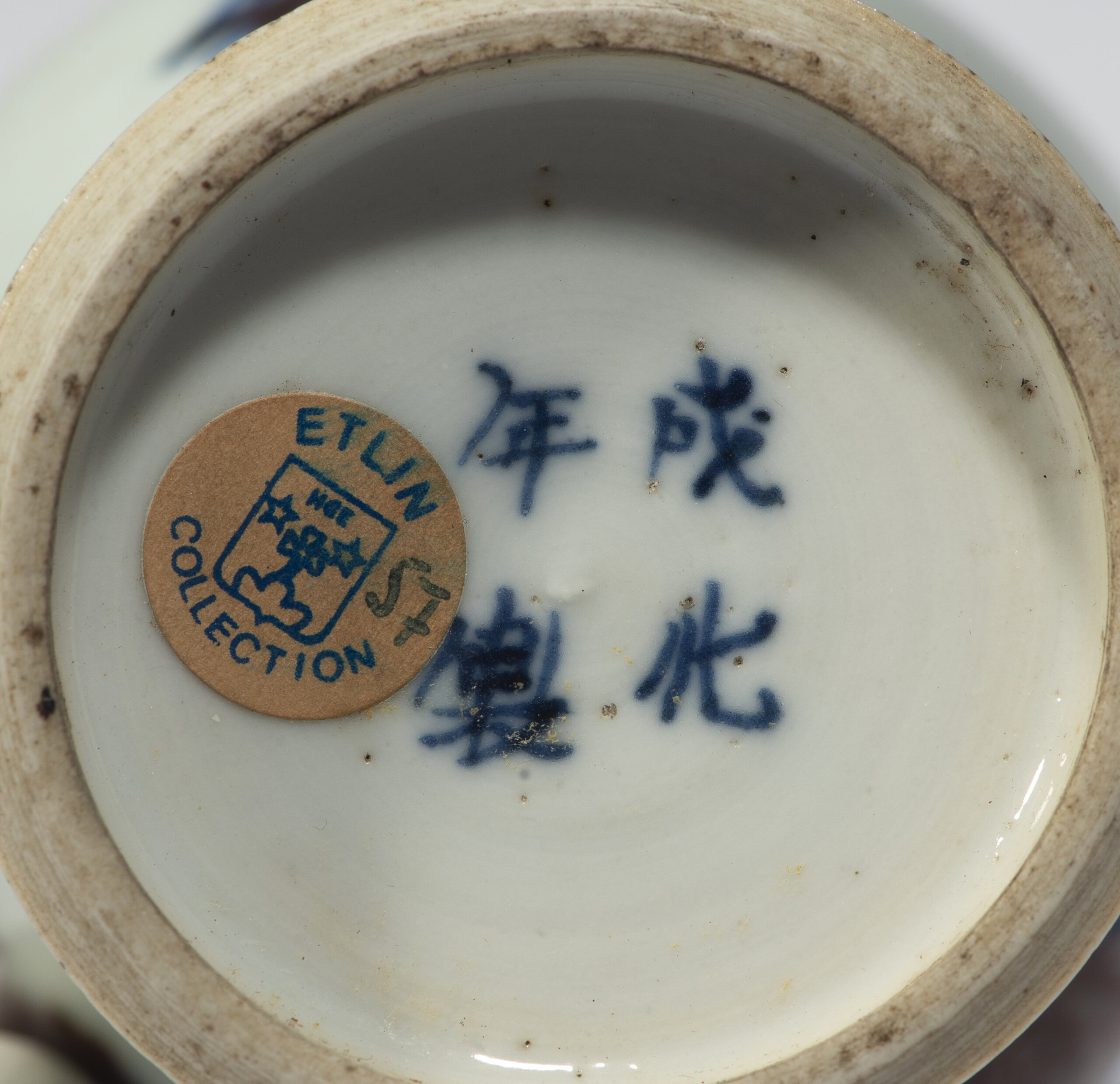
The base bearing an apocryphal Chenghua four-character mark in underglaze blue
(restoration to the neck)
清康熙 釉里红青花三鱼纹小赏瓶,撇口短颈,баluster器形,肩饰几何纹,近足饰变形莲瓣纹,底书青花「成化年制」四字寄托款(颈部修复)
Height: 13,5 cm
Additional Information
Note:
The combination of underglaze cobalt blue and copper red (qinghua youlihong) is one of the most demanding techniques in Chinese porcelain, owing to the difficulty of reconciling both pigments in a single firing. Although both require a high-temperature reducing atmosphere, copper red demands extremely rigorous thermal and reduction control to develop its intended tone, at the risk of volatilising or turning grey and dull, whereas cobalt offers a substantially wider tolerance in the kiln. The mastery of this technique, revived at the imperial Jingdezhen kilns during the Kangxi reign after decades of decline, stands as a testament to the technical excellence achieved in this period. The fish motif is among the most widespread auspicious symbols in Chinese culture, based on the phonetic pun between 魚 (yú, "fish") and 餘 (yú, "abundance"), conveying wishes of prosperity and plenty.
Provenance:
Etlin Collection
Closed Auction
