
106
A Louis XVI silver pot-a-oille by Jean-Baptiste-François Chéret
Estimate
25.000 - 30.000
Session 1
25 March 2026
Hammer Price
Register to access this information.Description
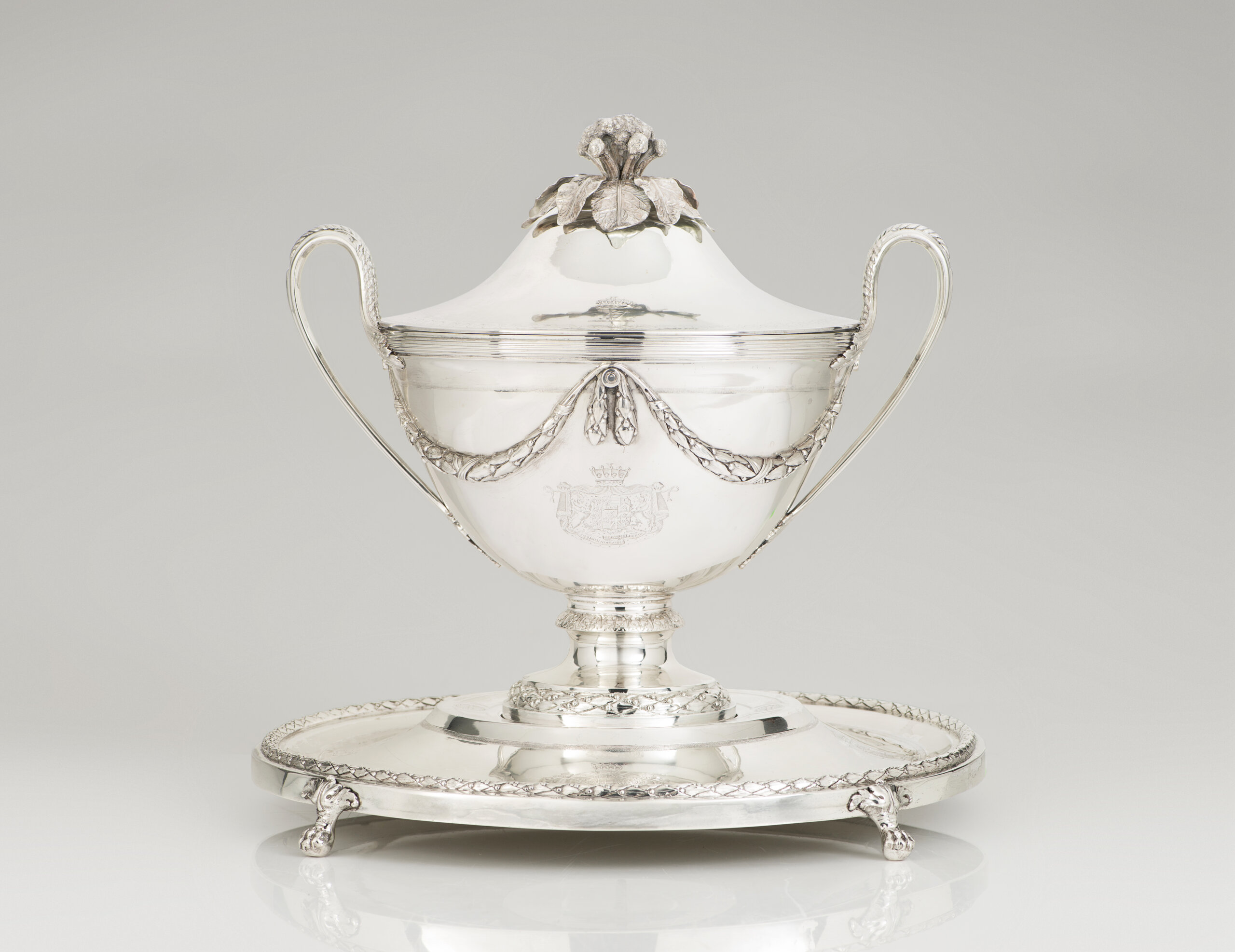
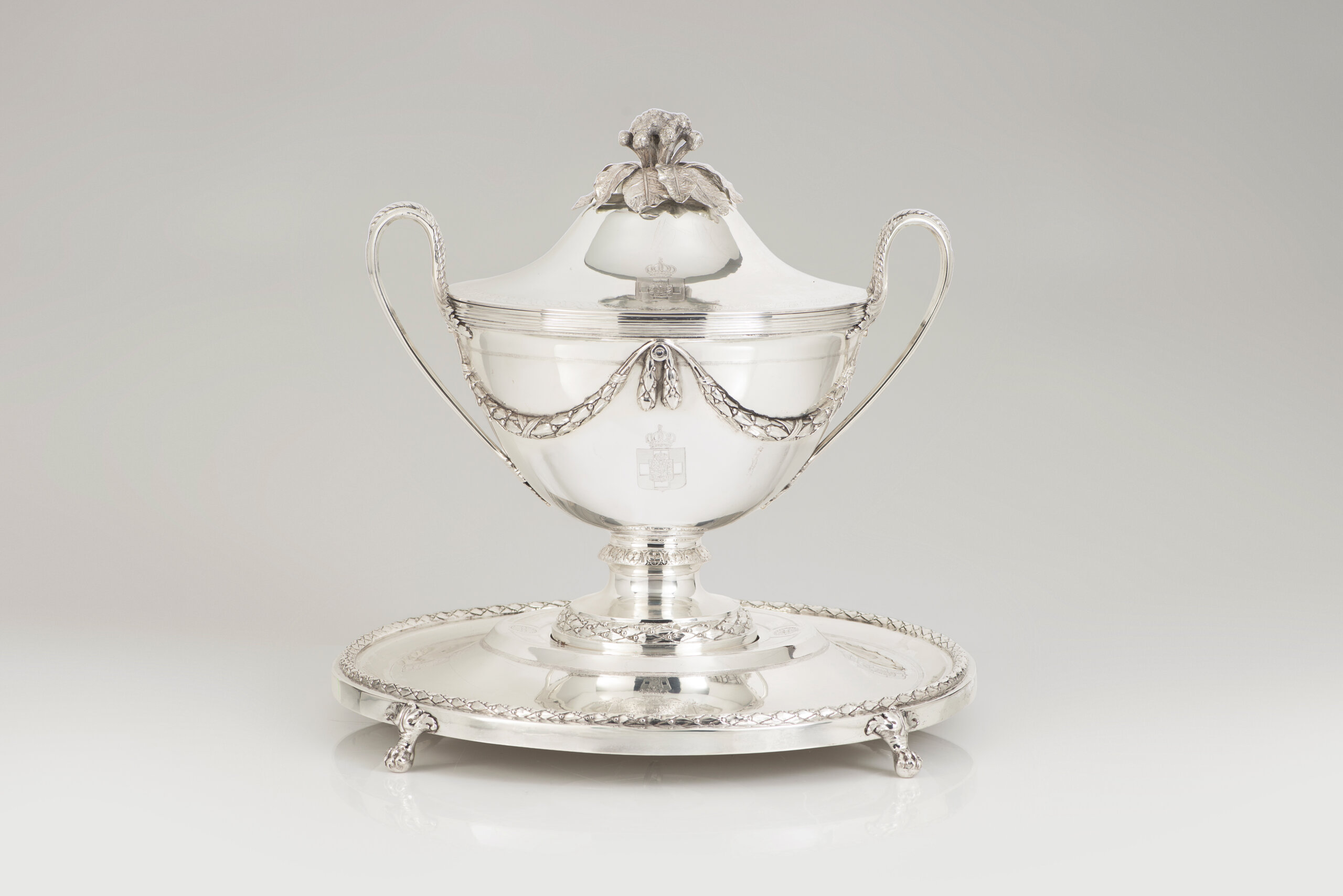
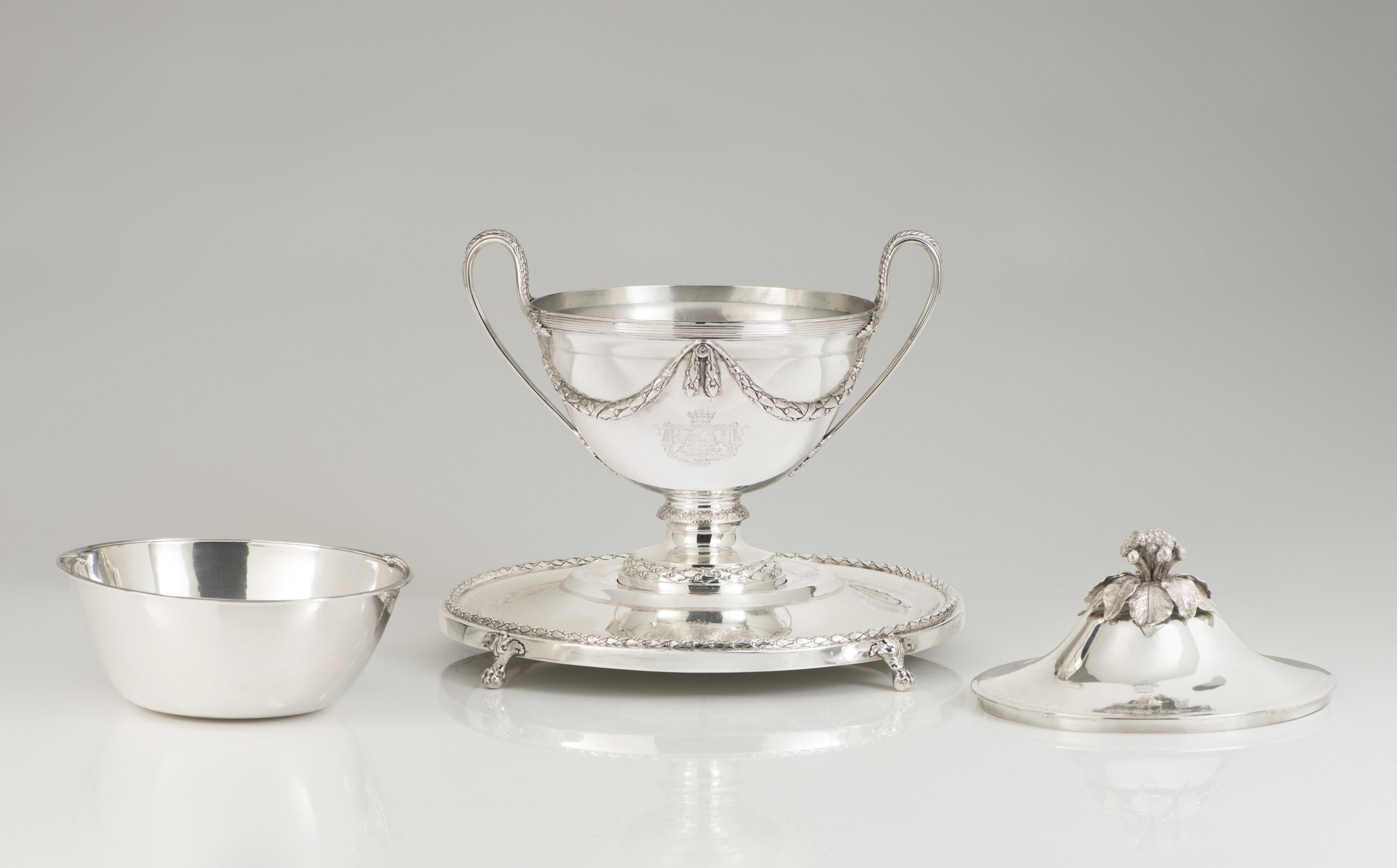
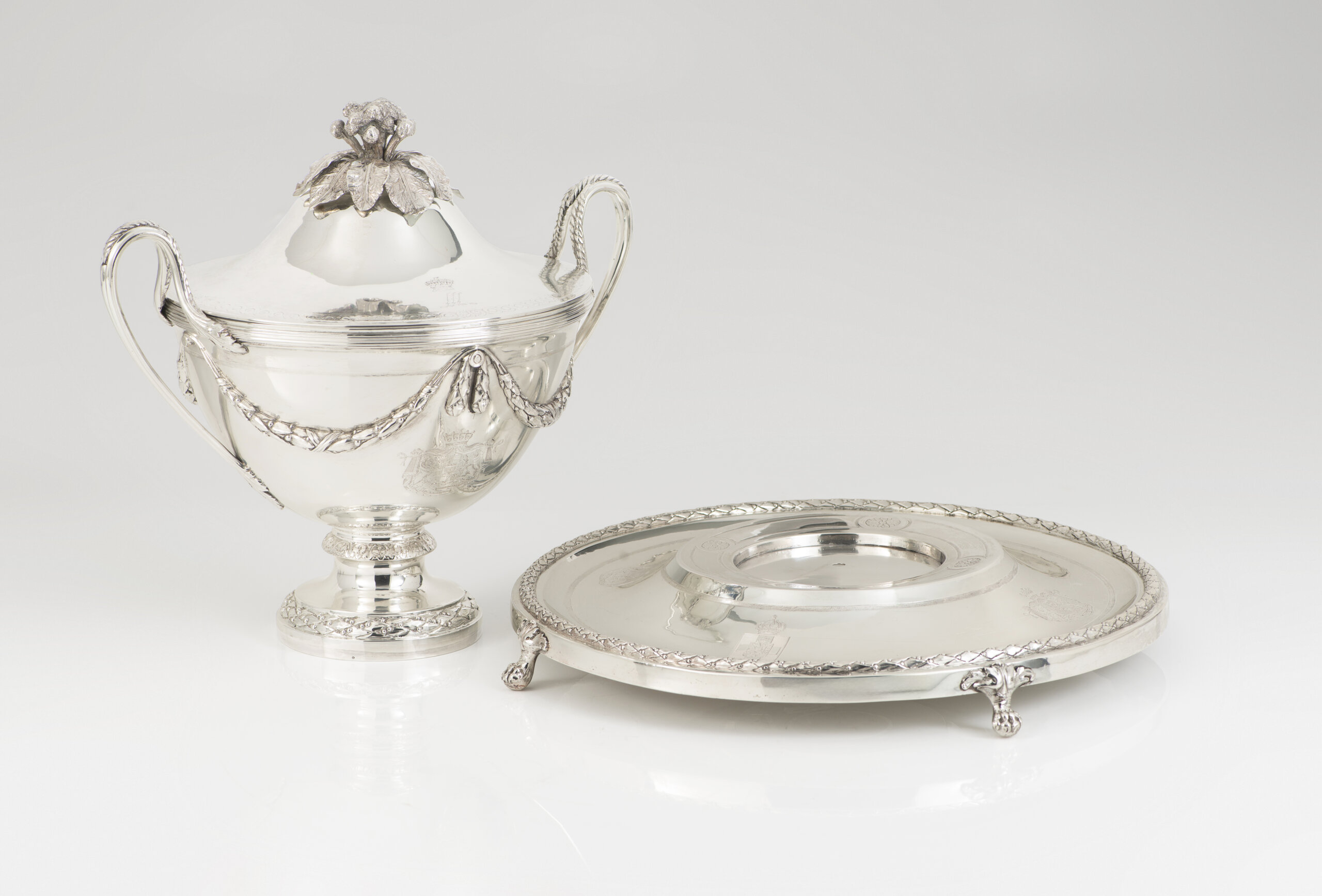
Composed of: stand, tureen, and lid
Silver, fineness .958
Tureen raised on a pedestal, with partially polished decoration, protruding and relief handles
Cover with relief finial in the form of a vegetable with leaves
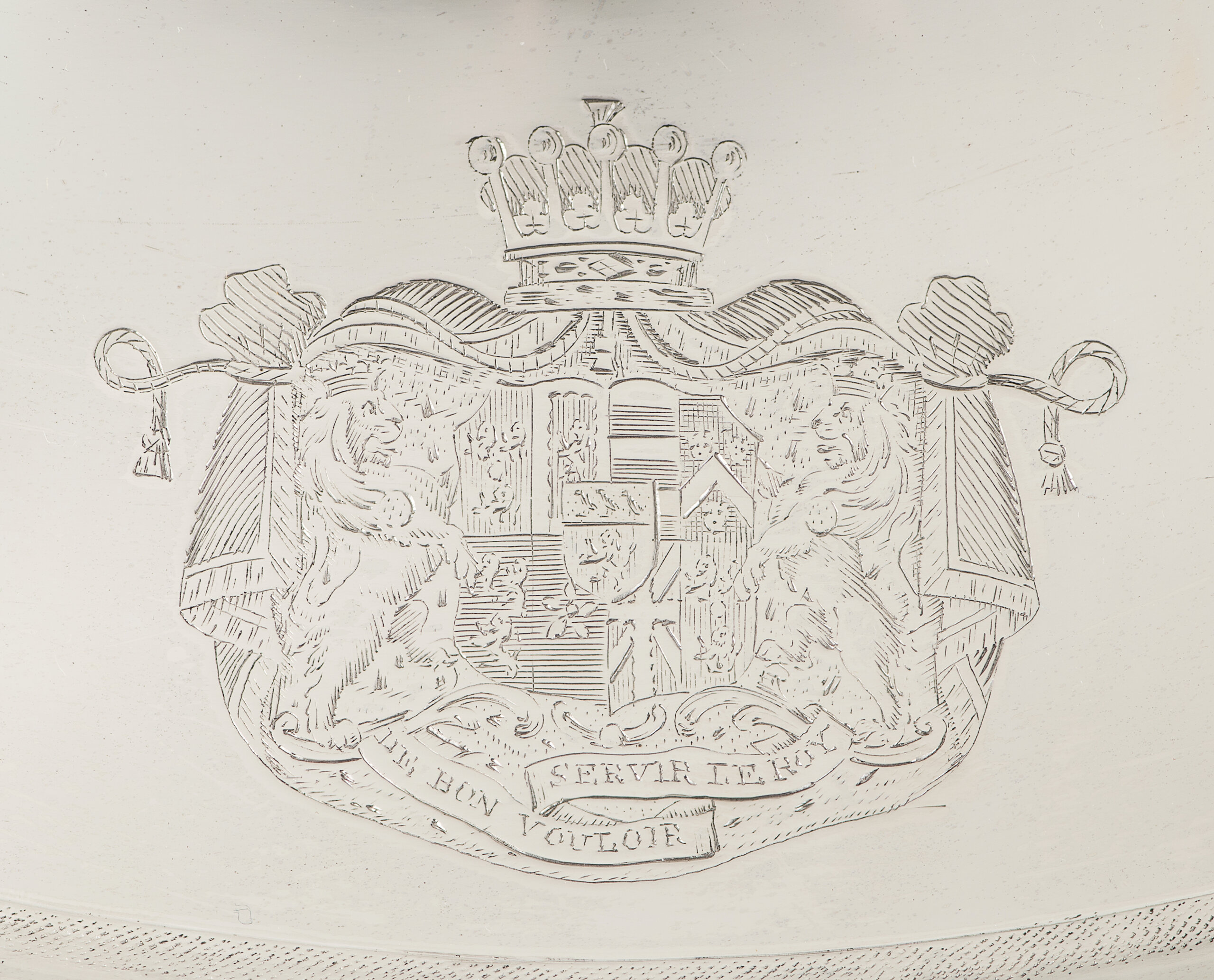
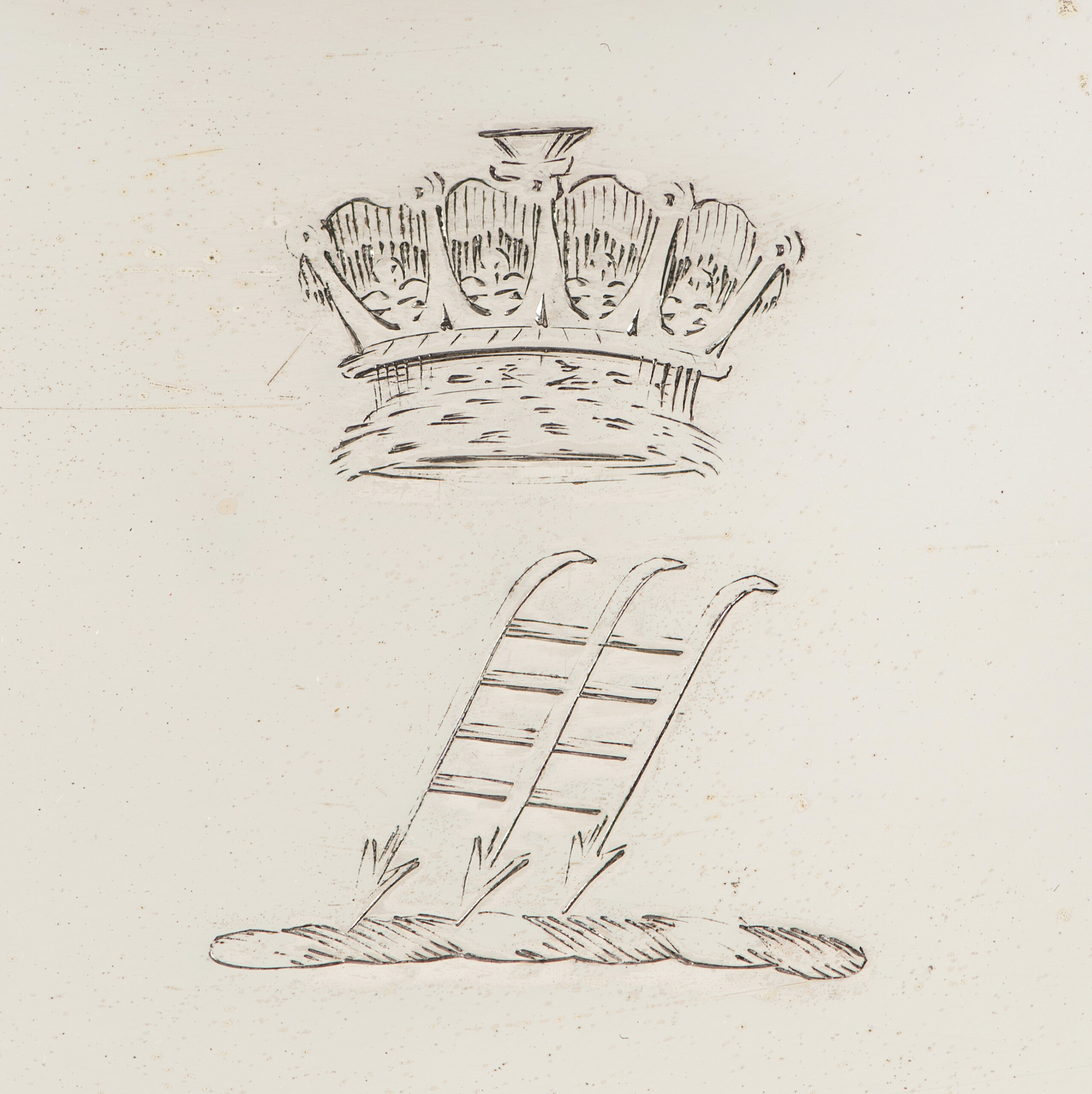
Engraved decoration depicting the arms of Charles Bennet, 4th Earl of Tankerville (1743-1822) and his wife Emma, daughter of Sir James Colebrooke (1722-1761)
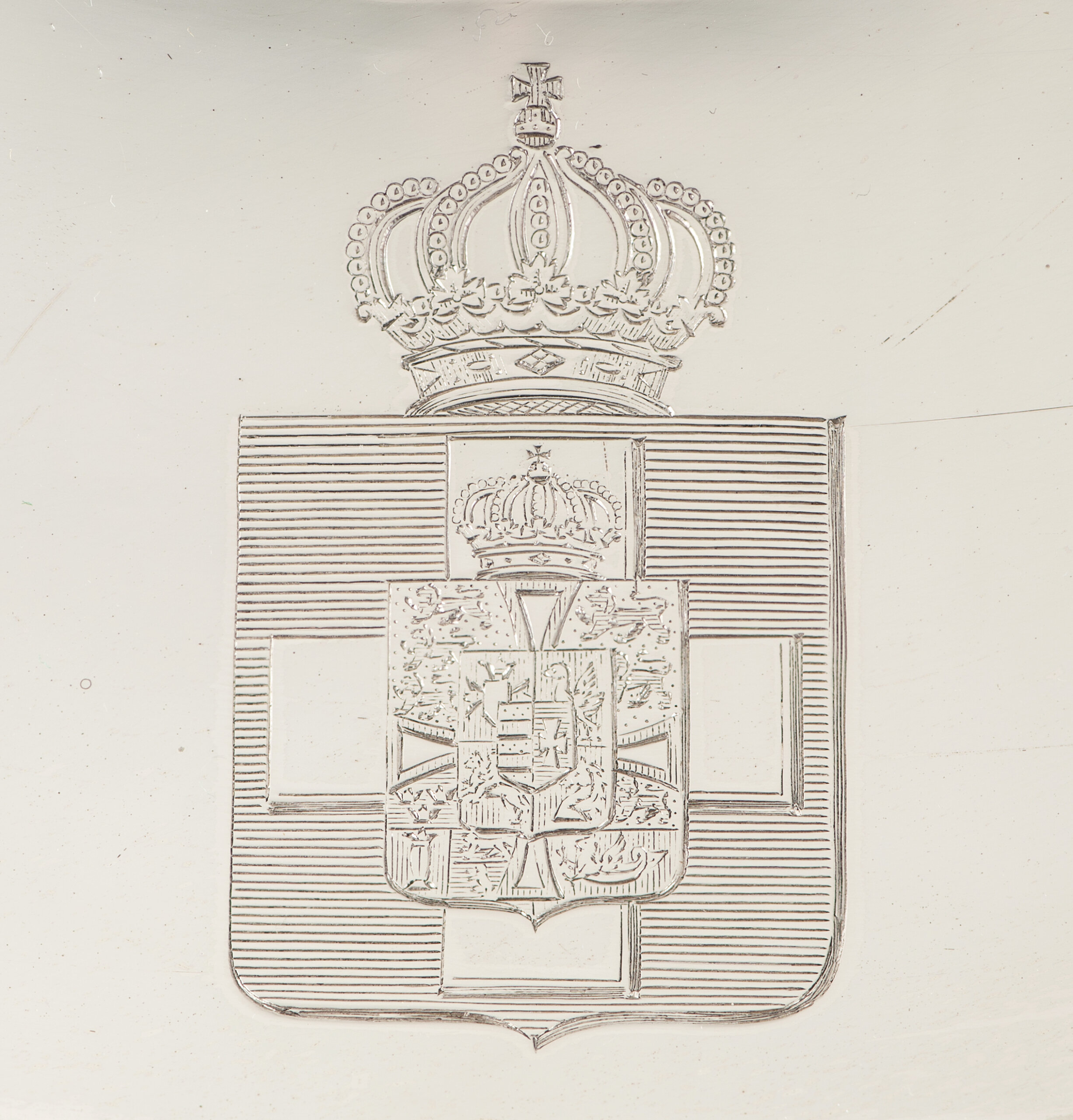
The later arms correspond to those of the Greek royal family, probably of George II, King of the Hellenes (1922-1947)
On a circular stand, decorated with relief laurel leaf motifs, on four claw feet and with identical engraved decoration
France, 18th century
Paris city charge mark (1783-1789), maison commune de Paris mark (1787), tax exemption mark and goldsmith's mark of Jean-Baptiste-François Chéret (reg. 1759)
(later adaptation to the foot, minor signs of wear)
Height: 36 cm
4912,1 g
Category
Silver
Additional Information
Private collection;
Lot 690 from Christie's Paris auction: The collector (April 2023);
Probably descendants of King George II of the Hellenes (1890-1947);
Until the 1930s from the collection of the descendants of Charles Bennet, 4th Earl of Tankerville (1743-1822)
Note about the Lot
FROM ROCOCO TO NEOCLASSICAL SYMMETRY. THE POT-À-OILLE BY JEAN-BAPTISTE-FRANÇOIS CHÉRET
POT-À-OILLE
The designation attributed to the present lot originates from the vessel traditionally used to serve a soup known as oille. This preparation, rich in meats and vegetables, is akin to the traditional Spanish olla podrida and is regarded in French cuisine as one of the precursors of the pot-au-feu. By extension, the term later came to denote the large tureen in which the soup was presented at the table, often covered and, at times, accompanied by an underdish, assuming a position of prominence in the grand table services of the eighteenth century. The example presented here was initially conceived for this purpose; however, subsequent alterations to the base have rendered it unsuitable for that original function.
Within the context of service à la française—where numerous dishes were displayed simultaneously upon the table—the pots-à-oille occupied strategic positions, typically at the extremities or at points reinforcing the overall symmetry, and thus contributing to the scenographic composition of the banquet. Its pronounced volumetry, moulded lateral handles, and sculptural finial conferred strong visual presence, transforming a functional utensil into an instrument of display and social prestige.
From a typological standpoint, the pot-à-oille distinguishes itself from ordinary tureens through its more generous scale, the frequent inclusion of a high domed cover surmounted by a sculptural finial (sometimes in the form of vegetables, flowers, or heraldic motifs), and the possible presence of an underdish, protecting the table linen while enhancing the sense of ceremony. The form may vary between oval and circular profiles, with rounded bodies, accentuated shoulders and pierced or pedestal feet—reflecting the evolving taste from Rococo to Neoclassicism throughout the latter half of the eighteenth century.
FRENCH SILVER PRODUCTION IN THE LATE 18TH CENTURY
This piece belongs to the corpus of French silver of the second half of the eighteenth century, a period that stands as a significant material testimony to the aesthetic and cultural transition during which Neoclassicism was firmly consolidated. Characterised by formal rigour and ornamental restraint, this style emerged in reaction to the excesses of the Rococo, reflecting an increasing appreciation for symmetry, decorative sobriety and archaeological erudition.
Despite this greater austerity of form, the technical excellence of French goldsmiths remained unchanged, sustaining their international reputation and ensuring the continued circulation of their works among the European courts. Paris, as the epicentre of the silversmith’s craft, played a vital role in this process, attracting commissions not only from the French aristocracy but also from foreign sovereigns—notably the courts of Russia and Portugal.
Among the most eminent silversmiths of the period is François-Thomas Germain (1726–1791), silversmith to the King and heir to the prestigious workshop founded by his father, Thomas Germain (1673–1748). His oeuvre, partly preserved to this day, reveals a balance between the final vestiges of the Rococo and emerging Neoclassical trends, demonstrating exceptional mastery of both decorative grammar and technical processes. His work for King José I of Portugal, commissioned shortly after the Lisbon earthquake of 1755, exemplifies this synthesis.
Another paradigmatic instance of the splendour of French silver in this period lies in the commissions of Empress Catherine II of Russia (1729–1796) from the silversmith Robert-Joseph Auguste (1723–1805), of whom a pair of salt cellars and pepper casters survive in the collections of the Calouste Gulbenkian Museum.
THE SILVERSMITH
The present piece was executed by Jean-Baptiste-François Chéret (1728–1791), a Parisian silversmith descended from a long-established dynasty of goldsmiths. His work demonstrates an extraordinary ability to reconcile the late Rococo and early Neoclassical idioms, achieving a harmonious stylistic transition between the two. The continuity of his lineage is notable: his father Jean Chéret (?-c.1740), grandfather François Chéret (?–1720), and great-grandfather Jean Chéret (?–1690) all practised in Paris, contributing to the prestige of the Communauté des orfèvres de Paris.
Chéret began his apprenticeship around the age of twelve, probably under Louis Grouvelle (c.1705–after 1788), a Parisian silversmith who would later become his father-in-law. In April 1759, he married Marie-Catherine Grouvelle (c.1735–1799), and was received as master four months later. From that moment, he established a distinguished career marked by both stylistic innovation and administrative prominence: garde (1775), accountant (1776), conseiller contrôleur du roi at the Hôtel de Ville (1777), conseiller contrôleur général (1783), grand garde of the guild (1787–1788), and receveur des rentes (1789–1790). He died on 25 August 1791, on the threshold of the French Revolution, leaving descendants who perpetuated the family craft.
STYLISTIC LANGUAGE AND INNOVATION
As noted in the Almanachs of 1772, Jean-Baptiste-François Chéret established himself as créateur de modèles de goût de son invention, and, as a member of the Academy of Fine Arts in Marseille, revealed solid expertise as a draughtsman.
An heir to the refined Rococo manner of Jean-Charles Delafosse (1734–1791), Chéret reinterpreted this ornamental vocabulary through early Neoclassical motifs—garlands, pearls, and pine-cone finials—thereby positioning himself as a forerunner of the Transition style, distinct from the more resolutely classical approach of contemporaries such as Robert-Joseph Auguste (1723–1805).
CLIENTELE AND PRODUCTION
Chéret’s clientele was wide-ranging, encompassing both the provincial nobility and the Parisian bourgeoisie. Among his patrons were the minister Charles Alexandre de Calonne (1734–1802), courtiers such as Monsieur de Nicolaÿ (Marquis de Goussainville) and the Duke of Rohan with Élisabeth de Montmorency, as well as distinguished foreign clients, including Count Branicki.
Closely associated with Jacques-Nicolas Roëttiers (1736–1788)—who ceded to him the post of conseiller contrôleur in 1777—Chéret was often entrusted with urgent royal commissions, though he was never formally appointed orfèvre du roi. His production included table services, basins, ewers and presentation pieces, catering to a clientele eager for objects of social representation, frequently embellished with coats of arms and personalised emblems. Unfortunately, his activity unfolded in a period of both aesthetic and political transition, abruptly curtailed by the revolutionary confiscations of 1791.
FINAL CONSIDERATIONS
The present pot-à-oille constitutes an outstanding example of the artistry of Jean-Baptiste-François Chéret. It encapsulates the elegant transition between Rococo exuberance and Neoclassical restraint in eighteenth-century French silver, bearing witness not only to the technical mastery of a Parisian dynasty but also to the ephemeral splendour of the Ancien Régime. Within the context of service à la française, the piece transcends mere functionality to stand as an emblem of social prestige and aesthetic innovation, harmoniously integrated within the broader tradition of royal commissions that linked Paris to the European courts — including those of Portugal, Russia, and, in this instance, members of the British nobility and later the royal family of Greece.
Its value lies in the rare synthesis of formal opulence and erudite refinement, making it a privileged material testimony to an age of unparalleled sophistication, irreversibly transformed by the French Revolution.
Closed Auction
